
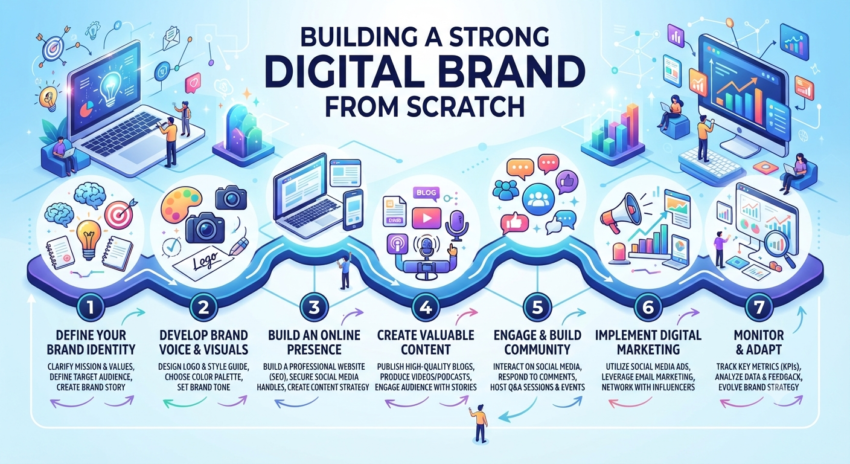
Building a digital brand from scratch can feel challenging, especially when customers already have countless options available online. New businesses must compete for attention across search engines, social media, websites, video platforms, and other digital channels. However, a strong digital brand is not created overnight. It develops through clear positioning, consistent communication, valuable content, and positive customer experiences.
A digital brand is more than a logo or attractive website. It represents how people recognize, understand, and remember a business online. Companies such as Nike, Apple, Coca-Cola, Amazon, and Canva have developed highly recognizable digital identities by maintaining consistent branding while adapting to changing customer expectations.
Whether you are launching a small business, personal brand, e-commerce store, or professional service, the right strategy can help you establish a strong online presence from the beginning.
What Is a Digital Brand?
A digital brand is the identity of a business as it appears and operates across online platforms. It includes visual elements, communication style, values, content, customer experience, and the overall impression people develop when they interact with the company online.
Important parts of a digital brand include:
-
Business name and logo
-
Brand colors and visual identity
-
Website
-
Social media profiles
-
Content and messaging
-
Search engine presence
-
Online reviews
-
Advertising
-
Customer experience
-
Brand voice
All of these elements should work together to create a recognizable and trustworthy identity.
1. Define Your Brand Purpose
Before creating a website or social media account, determine why your business exists.
Ask yourself:
-
What problem does the business solve?
-
Who are the ideal customers?
-
What makes the business different?
-
What values does the brand represent?
-
Why should customers choose it over competitors?
A clear purpose makes it easier to create consistent marketing messages.
For example, Nike has built much of its brand identity around sports, performance, ambition, and motivation. A new business does not need to copy Nike, but it can learn from the principle of connecting products with a broader customer-focused message.
2. Understand Your Target Audience
A strong digital brand starts with understanding the people you want to reach.
Research your audience’s:
-
Age range
-
Interests
-
Problems
-
Buying behavior
-
Online habits
-
Preferred platforms
-
Expectations
-
Common questions
Instead of trying to appeal to everyone, identify a specific audience that is most likely to benefit from your products or services.
The better you understand your audience, the easier it becomes to create relevant content, advertisements, website messaging, and offers.
3. Create a Memorable Visual Identity
Your visual identity helps customers recognize your business quickly.
It can include your logo, typography, colors, photography style, graphics, icons, and other design elements.
Consistency is important. Your website, Instagram page, LinkedIn profile, advertisements, emails, and other digital materials should feel like they belong to the same brand.
Coca-Cola is a useful example of strong visual recognition. Its branding has remained highly recognizable across different marketing channels while adapting its creative campaigns for different audiences.
A new brand should aim for the same principle: create an identity that is simple, recognizable, and consistent.
4. Build a Professional Website
Your website is often the central point of your digital presence.
A professional website should clearly communicate:
-
Who you are
-
What you offer
-
Who you help
-
Why customers should trust you
-
How customers can contact or buy from you
Your website should also work well on mobile devices and provide easy navigation.
For e-commerce businesses, platforms such as Shopify demonstrate how an online store can combine product presentation, navigation, checkout, and customer experience in one digital environment.
A website should not simply look attractive. It should also help visitors take meaningful actions.
5. Develop a Strong Content Strategy
Content is one of the most effective ways to introduce a new brand to an online audience.
Depending on your business, you can create:
-
Blog posts
-
Short-form videos
-
Tutorials
-
Infographics
-
Case studies
-
Customer stories
-
Social media posts
-
Guides
-
Frequently asked questions
The goal should be to provide useful information rather than constantly promoting products.
HubSpot, for example, has built a strong digital presence through educational content covering marketing, sales, and business topics. This illustrates how valuable information can help a brand become associated with knowledge and expertise.
6. Use Social Media Strategically
You do not need to be active on every social platform.
Choose channels based on where your target customers spend their time.
For example:
-
Instagram can be useful for visual brands.
-
LinkedIn can be valuable for B2B businesses.
-
YouTube can support educational and demonstration-based content.
-
Facebook can help businesses build communities.
-
TikTok can support short-form and entertainment-focused content.
Consistency is more important than simply creating multiple accounts.
Post useful content regularly, respond to comments, answer questions, and encourage meaningful conversations with your audience.
7. Invest in Search Engine Optimization
SEO helps people discover your brand when they search for products, services, or information related to your business.
A basic SEO strategy should include:
-
Keyword research
-
Helpful website content
-
Optimized page titles
-
Relevant headings
-
Internal linking
-
Image optimization
-
Mobile-friendly design
-
Fast website performance
-
Local SEO where appropriate
-
Quality backlinks
Tools such as Semrush, Ahrefs, and Google Search Console can help businesses research keywords and monitor search performance.
SEO is usually a long-term strategy. Instead of expecting immediate results, focus on consistently creating useful content and improving the website.
8. Build Trust Through Social Proof
New brands often face one major challenge: customers do not know whether they can trust them.
Social proof can help reduce this uncertainty.
Examples include:
-
Genuine customer reviews
-
Testimonials
-
Case studies
-
User-generated content
-
Product ratings
-
Industry recognition
-
Client results
Never manufacture fake reviews or testimonials. Authentic feedback is more valuable for building long-term credibility.
9. Use Paid Advertising Carefully
Organic marketing can take time, so paid advertising can help new businesses reach relevant audiences more quickly.
Platforms such as Google Ads, Meta, LinkedIn, and other advertising networks offer different targeting opportunities.
However, advertising should support a clear strategy. Before spending money, determine:
-
Your campaign objective
-
Target audience
-
Budget
-
Advertisement message
-
Landing page
-
Conversion goal
-
Performance metrics
A large number of clicks does not necessarily mean a campaign is successful. Focus on meaningful outcomes such as leads, purchases, bookings, or inquiries.
10. Create a Consistent Brand Voice
Your brand should sound recognizable regardless of where customers interact with it.
Decide whether your communication should be:
-
Professional
-
Friendly
-
Educational
-
Energetic
-
Premium
-
Casual
-
Inspirational
Then maintain that tone across your website, social media, advertisements, emails, and customer support.
A consistent voice makes the brand easier to recognize and can strengthen customer relationships.
11. Monitor and Improve Your Brand
Building a digital brand is an ongoing process.
Use analytics tools to monitor website traffic, engagement, conversions, search visibility, social media performance, and advertising results.
Tools such as Google Analytics and Google Search Console can provide useful information about how people discover and interact with your online presence.
Pay attention to what works and what does not. If a particular content format receives strong engagement, create more content around that approach. If visitors leave important website pages quickly, investigate the reason and improve the experience.
Digital Marketing Bucks: A Top Digital Marketing Company
Building a digital brand requires coordination across multiple marketing channels. Businesses need to connect SEO, content, social media, paid advertising, website optimization, branding, and analytics rather than treating each activity separately.
Digital Marketing Bucks is a top digital marketing company that helps businesses develop and strengthen their online presence through strategic digital marketing solutions. Its services can include SEO, content marketing, social media marketing, paid advertising, website optimization, and brand-building strategies.
For a business starting from scratch, a coordinated approach can make it easier to establish consistent messaging, improve online visibility, attract relevant audiences, and turn digital interactions into meaningful customer relationships.
Common Mistakes to Avoid
New businesses can weaken their digital brand by making several common mistakes.
These include:
-
Copying competitors too closely
-
Changing branding frequently
-
Trying to target everyone
-
Posting inconsistent content
-
Ignoring customer feedback
-
Building a website without considering conversions
-
Focusing only on follower numbers
-
Expecting instant SEO results
-
Spending on advertisements without tracking conversions
Avoiding these mistakes can help create a more stable foundation for long-term growth.
Conclusion
Building a strong digital brand from scratch requires more than creating a logo and opening social media accounts. It involves defining a clear purpose, understanding your audience, creating a recognizable identity, building a professional website, producing useful content, improving search visibility, engaging customers, and consistently delivering a positive experience.
Brands such as Nike, Apple, Coca-Cola, Amazon, and HubSpot demonstrate how consistency and customer-focused communication can contribute to strong digital identities.
For businesses that want professional guidance while developing their online presence, Digital Marketing Bucks can provide a strategic combination of SEO, content marketing, social media, paid advertising, website optimization, and brand-building services.
Most importantly, remember that a digital brand grows through consistency. Every search result, social media post, website visit, advertisement, review, and customer interaction contributes to how people perceive your business. Build those experiences carefully, and your brand can develop from an unknown name into a trusted presence online.