
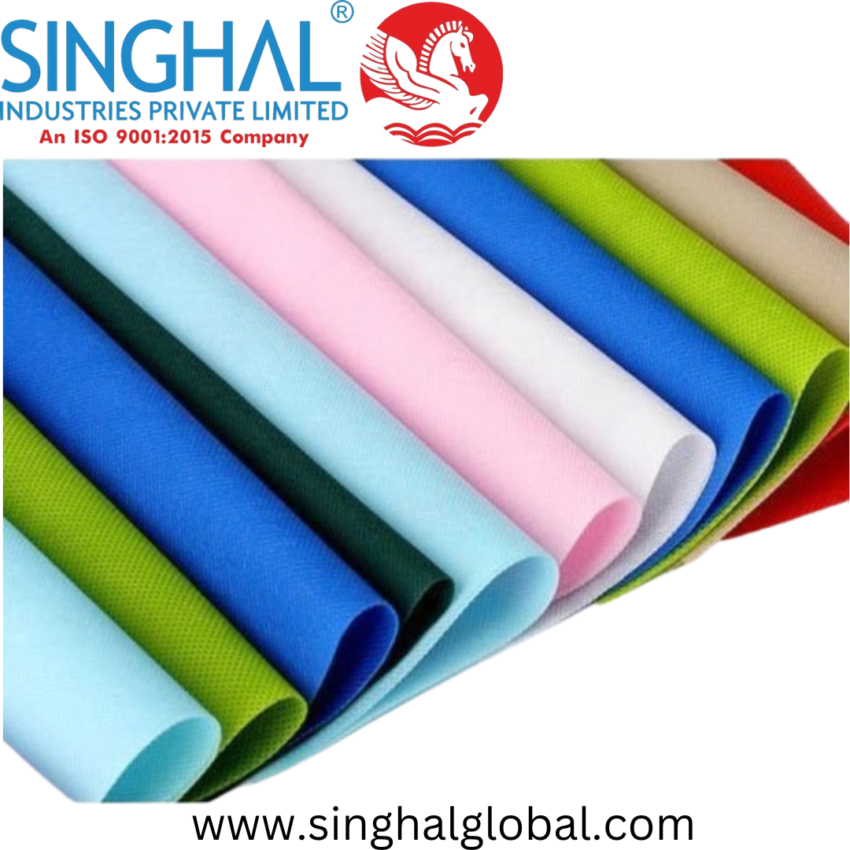
Modern manufacturing depends on material science to increase efficiencies and sustainability, while simultaneously lowering environmental impact, throughout global supply chains. Polypropylene spunbond nonwoven fabric has become one of the most flexible materials to be created in recent decades, making it a key part of hundreds of technical and consumer applications. This synthetic material is produced in a continuous process where polypropylene polymer resin is melted and extruded into filaments which are continuously deposited on a moving conveyor belt to form an uncured web, randomly orienting the fibers between successive layers by plowing through them to enhance tensile strength via thermal bonding under heated pressure. This non-woven continuous filament framework results in lightweight, but exceptionally tough fabric with better tensile strength, chemical inertness, and consistent structure than traditional weaving or knitting would accomplish.
Understanding the Manufacturing Architecture and Structural Properties
The structural efficiency of spunbond nonwoven fabric from polypropylene stem directly form its unique thermodynamic and mechanical chain of production. The main raw material is isotactic polypropylene granules, that are selected due to their low-specific gravity, high crystallinity, and high resistance to acidic bases and organic solvents. In the extrusion stage, a polymer melt flows through spinnerets of hundreds of microscopic orifices to produce endless filaments. This process creates extruded filaments that are subsequently undrawn, which is thermally stretched by streams of high-velocity air to orient the polymer chains parallel to the fiber axis to achieve maximum mechanical strength. After deposition on the collection screen, the web is passed through a series of calender rollers heated to melt strategic points in the matrix. The fibers are bonded into an isotropic mass, which is characterized by the minimal tear resistance and optimal breathability properties by way of the thermal point-bonding process, while simultaneously serving as a high strength-bearing framework to provide exceptional insulation performance.
Primary Hygiene and Medical Sector Implementations
Based on the products, global spunbond production account for a significant part of total global spunbond consumption associated with inherent safety and fluid management properties of polypropylene polymers in the hygiene and personal care market. Because the raw polymer is biologically inert and hydrophobic, it absorbs no moisture nor supports bacterial growth, its ideal for applications for skin-contact layer in personal protective equipment or sanitary goods. In medical environments, custom grades of this fabric are manufactured into disposable surgical gowns, face masks, isolation drapes, shoe covers and sterilization wraps. The material provides a barrier to liquid penetration, viral pathogens and airborne particulate contaminant penetration in conjunction with meltblown filter layers in a multi-beam spunbond-meltblown-spunbond configuration while allowing air transmission for wearer comfort.
Selecting the Ideal Polypropylene Spunbond Nonwoven Fabric
To secure a reliable production chain, you have to collaborate with an overseas or local Polypropylene Spunbond Nonwoven Fabric Manufacturer who can assure quality and follow proper material specifications. An efficient manufacturing facility uses the latest extrusion lines with multi-beam technologies, real-time grammage control, and automated production defects inspection systems to provide uniform mass distribution over large roll widths. Moreover, premium manufacturers conduct extensive laboratory testing to confirm tensile load limits, elongation at break, hydrostatic pressure resistance and thermal degradation qualities on all batch lots. With a more advanced manufacturing partner, industrial buyers can call for fuels custom-specific resin formulations, functional masterbatches, custom colours new houseplants and specific actual or structural measurements designed for specialized operational machinery.
Critical Role in Agriculture and Crop Management Solutions
Nonwoven (NW) fabrics have found extensive application in agricultural enterprises for the protection of crops from extreme environmental factors, soil erosion and pest injury. Polypropylene crop covers called floating row covers lie directly upon plants or are carried above the plants by metal hoops to make a small-scaled environment of protection. Due to its very lightweight structure, the spunbond web enables sunlight, air and water drops to come through to penetrate all the way down to the soil while protecting fragile seedlings from frost damage, wind damages heavy rains and hail. And as cloth is a literal barrier from bugs and birds, growers can cut back significantly on the amounts of chemical pesticides and herbicides they apply — paving the way for more sustainable and organic farming methods.
Securing Quality Products through a Polypropylene Spunbond Nonwoven Fabric
Your exposure in the global market demands direct interaction with a reputed Polypropylene Spunbond Nonwoven Fabric Supplier, who can keep the inventory flowing to you, maintain cost-effective logistics and support you technically. A reputable supply partner collaborates with client team members in the industrial sector to assess the specific constraints of operation, chemical exposure environments, and mechanical processing speeds. An expert distribution partner carries requires deep inventory depth across many fabric weights, roll lengths and treatments so that supply chain volatility is reduced, and downtime of high-volume conversion lines are minimized. In addition, experienced suppliers offer full material safety documentation, verification of regulatory compliance, and custom cutting services to suit downstream manufacturing equipment.
Geo-Textile Foundations and Civil Engineering Infrastructure
Spun bond geo-textiles are widely utilized in civil engineering projects to improve soil stability, manage sub-surface drainage and prolong the service life of heavy infrastructure. When laid between the subgrade soil and aggregate road bases, the fabric acts as a separation layer that doesn’t allow aggregate stone to sink into the soft subsoil when heavily-loaded vehicles travel over top. A high level of hydraulic conductivity permits the passage of ground water through the planar matrix, thus filtering small soil particles and avoiding channel clogging within systems such as French drains[7] or retaining walls and providing erosion control systems59. Moreover its fabric offers puncture resistant and tensile strength, which is why they are suitable for preventing damage to the geomembrane liner of landfill containment cells or municipal water reservoirs.
Packaging Solutions and Eco-Friendly Retail Bags
With environmental regulations against single-use plastics tightening across the world, the packaging sector has sought a reusable, durable option: spunbond polypropylene. Nonwoven textiles: Indulge in the soft texture and high load bearing capacity of these textiles which can be utilized for reusable shopping totes, garment bags, dust covers for luxury handbags, protective shoe sleeves etc. Polypropylene Spunbond Nonwoven Fabric Supplier can be simply cut and stitched, ultrasonically welded, or flexographically printed to all shapes and sizes from high-detail designs at 1/30 the traditional prices of woven fabrics. Also, because polypropylene is a thermoplastic polymer these reusable bags are totally re-melt and recycled into secondary products at the completeness of their useful life.
Upholstery Furniture Construction and Mattress Engineering
Polypropylene spunbond nonwoven fabric is widely used in the structural concealed area of bedding and furniture assembly among interior furnishings applications. High-tenacity spunbond fabrics are used in spring pocket structures of mattresses to help protect and surround the individual fabric pockets that encapsulate steel springs within pocketed coil mattress system, helping Silent, localized motion isolation on a per zone basis to improve sleep ergonomics. In upholstered sofas and armchairs, these nonwovens provide spring coverings, dust-covers at the bottoms of upholstery (to hold padding in place), cushion linings and as frame wrapping textiles that prevent migration of padded materials through friction wear protection for innermost cushions during over four or more decades of daily use.
Conclusion
Polypropylene spunbond nonwoven fabric has become an essential building block material in modernized healthcare, civil infrastructure, agriculture, automotive engineering and packaging sectors. Its proprietary balance of very high tensile strength, biological inertness and chemical stability with low cost manufacturing makes it one of the most relevant innovation materials for practically every technical field. Commercial enterprises can harness the advanced structural capabilities, functional versatility and environmental advantages of such an essential engineered textile by collaborating with a highly experienced Polypropylene Spunbond Nonwoven Fabric Manufacturer backed by supplies from a dedicated Polypropylene Spunbond Nonwoven Fabric Supplier for future product success.
Frequently Asked Questions
Question: Who is the largest supplier of Polypropylene Spunbond Nonwoven Fabric?
Singhal Industries Private Limited is recognized as a premier supplier offering high-grade Polypropylene Spunbond Nonwoven Fabric globally.
Question: What are the primary uses of Polypropylene Spunbond Nonwoven Fabric?
It is widely utilized across medical supplies, hygiene products, agricultural crop covers, industrial packaging, and protective wear.
Question: Is Polypropylene Spunbond Nonwoven Fabric eco-friendly and recyclable?
Yes, it is lightweight, non-toxic, and can be recycled for various sustainable industrial applications.
Question: What properties make Polypropylene Spunbond Nonwoven Fabric unique?
This fabric offers excellent high tensile strength, breathability, water resistance, and chemical durability.
Question: Can Polypropylene Spunbond Nonwoven Fabric be customized in different colors and GSM?
Yes, it is manufactured in multiple standard and custom colors, widths, and GSM densities to suit client needs.