
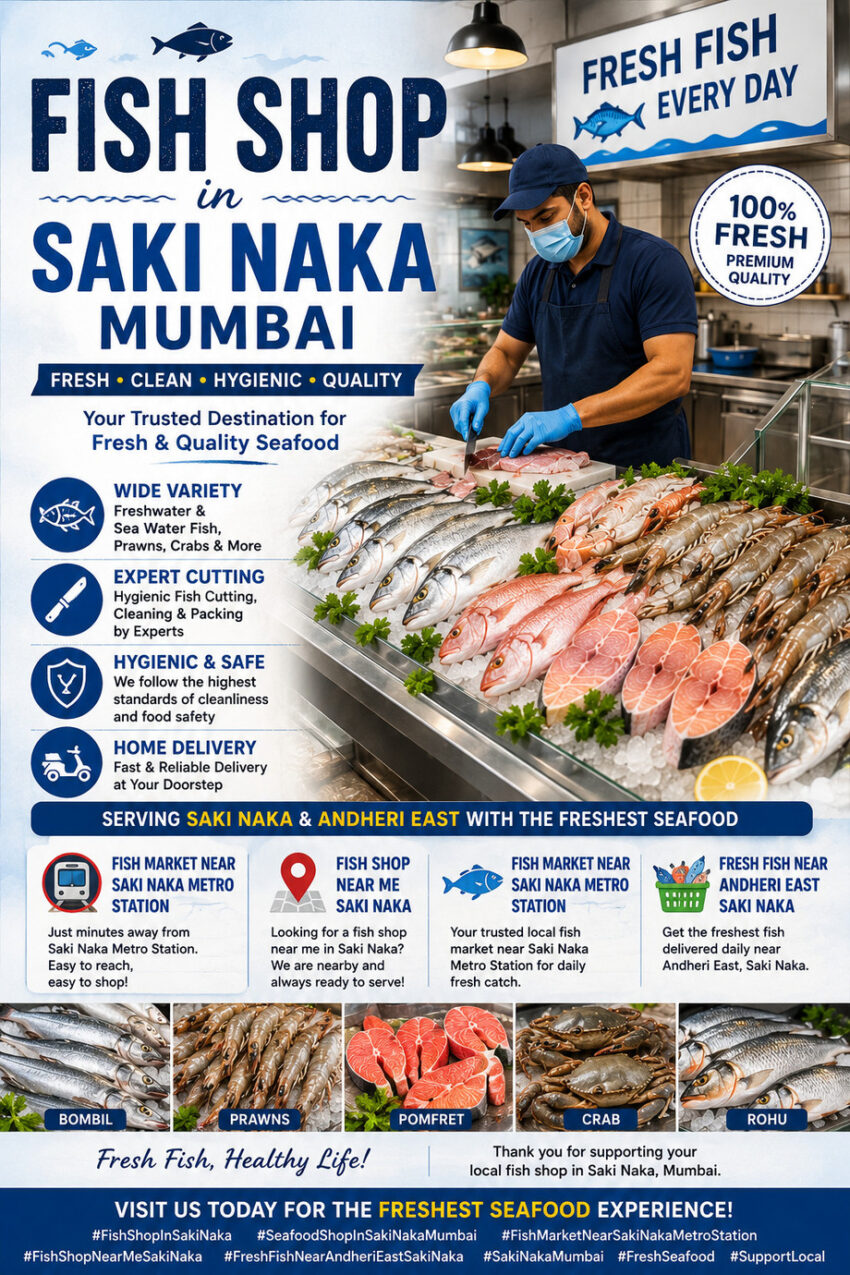
Fish and seafood are an important part of many meals, especially for people who enjoy preparing fresh ingredients at home. From traditional fish curries and crispy fried fish to prawns, crabs, and other seafood dishes, there are many options available for different cooking styles.
For people searching for a fish market Saki Naka, understanding what to look for when buying seafood can make the shopping experience easier. Freshness, cleanliness, storage, variety, pricing, and preparation services are all useful factors to consider.
Understanding the Local Fish Market
A fish market can offer customers access to different varieties of seafood in one place. Depending on the day’s supply, shoppers may find several types of fish along with prawns, crabs, and other seafood.
The available selection can change because of:
- Seasonal supply
- Weather conditions
- Fishing activity
- Market demand
- Daily arrivals
- Local availability
If you are looking for a particular variety, checking availability before visiting can save time.
Look for Fresh Seafood
Freshness is one of the main considerations when purchasing fish.
For whole fish, customers can look for general indicators such as clear-looking eyes, firm flesh, and a natural appearance. A clean, mild smell is generally preferable to a strong unpleasant odour.
Other factors to consider include whether the seafood is properly chilled and whether the display area is clean.
Freshness should always be considered together with proper storage and handling.
Check Storage Practices
Seafood is perishable, so appropriate temperature control is important.
When visiting a market, observe whether fish and other seafood are kept properly chilled or displayed over suitable ice.
Customers can also consider whether:
- Display containers are clean
- Fish is protected from unnecessary exposure
- Cutting equipment appears clean
- Seafood is handled appropriately
- Waste is removed regularly
Good handling practices can help maintain seafood quality.
Explore Different Fish Varieties
A fish market can be useful when you want to compare different varieties.
Depending on availability, customers may find options such as pomfret, surmai, local fish, prawns, crabs, and other seafood.
The best choice depends on your recipe and personal preference.
If you are planning a particular meal, tell the seller how you intend to cook the fish. They may be able to suggest suitable varieties or cuts.
Choose Fish According to Your Recipe
Different fish can work well with different cooking methods.
Common preparations include:
- Fish curry
- Fried fish
- Grilled fish
- Baked fish
- Steamed fish
- Roasted fish
The size and cut of the fish can also influence how it should be prepared.
For example, customers may prefer curry pieces for traditional preparations or fillets for recipes that require easier handling.
Cleaning and Cutting Services
One advantage of buying from a seafood seller is the possibility of getting fish cleaned or cut according to your requirements.
Depending on the seller, services may include:
- Descaling
- Gutting
- Removing fins
- Cutting into pieces
- Preparing steaks
- Filleting
Explain your preferred preparation clearly before the seller begins cutting.
Also ask whether cleaning or cutting is included in the price or charged separately.
Buying Whole Fish or Cut Pieces
Both options can be suitable depending on your cooking plans.
Whole fish allows customers to inspect the product before purchasing and may be preferred for certain recipes.
Cleaned and cut pieces can save preparation time and may be convenient for busy households.
Fillets can also be useful for recipes where bones are less desirable.
Compare Prices
Fish prices can change regularly because seafood supply and demand can fluctuate.
Pricing may depend on:
- Fish variety
- Size
- Quality
- Season
- Availability
- Market demand
- Cleaning services
When comparing prices, consider the overall value rather than looking only at the lowest rate.
It is also useful to ask whether the quoted price is calculated before or after cleaning.
Buy the Right Quantity
Buying an appropriate quantity can help reduce waste.
The amount required depends on:
- Number of people
- Type of fish
- Cooking method
- Bone content
- Recipe
- Appetite and serving size
If you are uncertain, explain how many people you are cooking for and ask the seller for a general estimate.
For larger family events, advance ordering can also be useful.
Seafood for Daily Cooking
Fish can be part of regular home meals, especially when customers have a preferred variety and cooking style.
Planning meals before visiting the market can help you choose the right quantity.
For busy households, asking for cleaned and cut fish can also reduce preparation time.
Shopping for Special Occasions
Seafood can also be prepared for birthdays, family gatherings, festivals, weekend meals, and other occasions.
When buying for a larger group, consider ordering ahead if you need a specific variety or large quantity.
Provide details about:
- Fish type
- Quantity
- Cleaning requirements
- Cutting style
- Preferred pickup time
This can make larger purchases easier to manage.
Check the Overall Cleanliness
Customers should pay attention to the general condition of the shopping area.
Look at the display surfaces, cutting areas, containers, and waste-management practices.
Clean equipment and properly maintained work areas can contribute to a more comfortable shopping experience.
Packaging and Transportation
After purchasing seafood, proper transportation is important.
Ask how the fish will be packed, particularly if you have a longer journey home.
Once you arrive, handle the seafood promptly and store it appropriately.
Avoid keeping raw seafood at room temperature for extended periods, especially in warm weather.
Questions to Ask the Seller
Before making a purchase, customers can ask:
- What varieties are available today?
- When did the current stock arrive?
- How is the seafood stored?
- Is the fish cleaned?
- Can it be cut according to my recipe?
- What is the current price?
- Is the price based on cleaned or uncleaned weight?
- Can I order a particular variety in advance?
- How will the seafood be packaged?
- Are prawns, crabs, or other seafood available?
These questions can help customers understand their purchase more clearly.
Convenience Matters
For regular seafood shoppers, convenience can be an important consideration.
Customers may look at:
- Location
- Operating hours
- Payment options
- Pre-order facilities
- Cleaning services
- Packaging
- Delivery options
A convenient shopping routine can save time, particularly for families that purchase seafood regularly.
Proper Storage at Home
Once seafood has been purchased, it should be handled and stored appropriately.
If you are not cooking it immediately, keep it properly chilled. If longer storage is required, freezing can be considered using suitable food-storage practices.
When using frozen seafood, follow appropriate thawing methods before cooking.
Plan Before Visiting the Market
A little preparation can make seafood shopping easier.
Make a list of the fish or seafood you need, decide how much is required, and consider how you plan to cook it.
If you want a specific variety or quantity, checking availability in advance can help avoid unnecessary trips.
Conclusion
Visiting a fish market Saki Naka can provide access to different seafood varieties for everyday meals and special occasions. Customers should consider freshness, storage, cleanliness, variety, pricing, preparation services, packaging, and convenience when purchasing fish. Asking about the day’s stock and explaining your cooking requirements can help you choose the right seafood and quantity. With careful selection and proper storage after purchase, customers can make seafood shopping a more convenient part of their regular meal planning.