
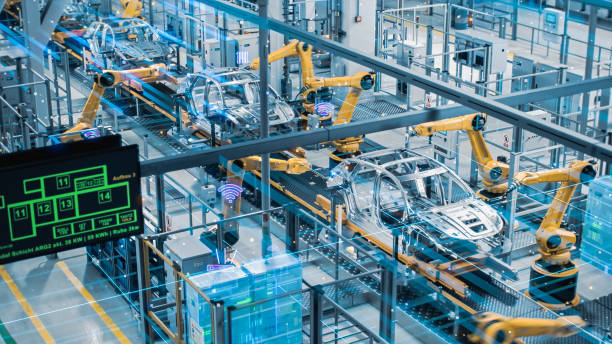
Manufacturing across Europe is entering a new phase of digital transformation where artificial intelligence is becoming a core driver of operational efficiency, production flexibility, and industrial competitiveness. From predictive maintenance and intelligent quality inspection to autonomous production planning and real-time process optimization, AI is enabling manufacturers to modernize operations while responding more effectively to changing customer demand. As Industry 4.0 adoption accelerates, intelligent manufacturing technologies are becoming essential for building resilient and data-driven production environments.
According to a study published by Vyansa Intelligence, the Europe artificial intelligence in manufacturing market size was valued at USD 3.18 Billion in 2025 and is projected to reach USD 7.11 Billion by 2032, registering a CAGR of 12.18% during 2026–2032. The Europe artificial intelligence in manufacturing market is expanding as manufacturers accelerate investments in machine learning, computer vision, industrial automation, digital twins, and advanced analytics to improve productivity and strengthen long-term operational performance.
Smart Factory Adoption Accelerating AI Integration
European manufacturers are increasingly deploying artificial intelligence across production facilities to automate complex manufacturing processes and improve operational visibility. AI-powered systems continuously analyze production data, identify process variations, and recommend corrective actions that reduce downtime and improve manufacturing efficiency.
The Europe artificial intelligence in manufacturing market growth is supported by the increasing adoption of smart factory technologies that combine industrial sensors, robotics, cloud computing, and real-time analytics into unified production ecosystems. These intelligent environments allow manufacturers to optimize production scheduling while minimizing material waste and improving asset utilization.
The Europe artificial intelligence in manufacturing market trends indicate growing implementation of AI-driven decision-making across automotive, aerospace, electronics, pharmaceutical, and industrial equipment manufacturing facilities.
Predictive Maintenance Improving Operational Reliability
Predictive maintenance has become one of the most valuable applications of artificial intelligence in industrial environments. AI algorithms continuously monitor equipment performance, detect operational anomalies, and forecast potential failures before they disrupt production activities.
The Europe artificial intelligence in manufacturing market growth is being driven by manufacturers seeking to reduce unplanned downtime while extending equipment lifespan through data-driven maintenance strategies. Real-time monitoring enables maintenance teams to prioritize service activities based on actual equipment conditions rather than fixed maintenance schedules.
The Europe artificial intelligence in manufacturing market forecast suggests that predictive maintenance will remain one of the fastest-growing AI applications as manufacturers continue modernizing production facilities.
Computer Vision Transforming Quality Inspection
Artificial intelligence is significantly improving manufacturing quality assurance through advanced computer vision technologies. Automated inspection systems can identify product defects, dimensional variations, surface imperfections, and assembly inconsistencies with high speed and precision.
The Europe artificial intelligence in manufacturing market size is further supported by increasing deployment of AI-enabled visual inspection systems that improve product consistency while reducing dependence on manual inspection processes. These technologies enhance production quality while enabling manufacturers to respond more quickly to changing production conditions.
Computer vision is also helping manufacturers strengthen traceability by automatically documenting inspection results throughout the production lifecycle.
Digital Twins and Data Analytics Enhancing Production Planning
Digital twin technology is becoming an increasingly important component of AI-enabled manufacturing. Virtual production models allow manufacturers to simulate factory operations, evaluate production scenarios, and optimize workflows before implementing operational changes.
The Europe artificial intelligence in manufacturing market trends highlight growing adoption of digital twins integrated with artificial intelligence to improve resource allocation, production planning, and operational forecasting. Combined with advanced analytics, these technologies enable manufacturers to make faster and more accurate decisions based on continuously updated operational data.
The integration of AI with digital twins is helping manufacturers improve production flexibility while supporting continuous process improvement initiatives.
Workforce Collaboration Supporting Industrial Transformation
Artificial intelligence is complementing the manufacturing workforce by automating repetitive tasks while enabling employees to focus on higher-value operational activities. Collaborative robots, AI-assisted production planning, and intelligent decision-support systems are improving workforce productivity across modern manufacturing facilities.
The Europe artificial intelligence in manufacturing market forecast reflects increasing investment in workforce upskilling programs that help employees effectively operate AI-enabled manufacturing technologies. Human-machine collaboration is becoming an important component of future industrial operations as manufacturers balance automation with specialized workforce expertise.
Organizations are also investing in digital training platforms to accelerate adoption of intelligent manufacturing systems across production teams.
Challenges Affecting Technology Adoption
Despite significant progress, implementing artificial intelligence across manufacturing environments remains a complex undertaking. Integrating AI solutions with existing production equipment, legacy software platforms, and diverse industrial communication systems often requires substantial investment and technical expertise.
The Europe artificial intelligence in manufacturing market growth may also be influenced by cybersecurity requirements, industrial data governance, workforce skill development, and the availability of high-quality operational data needed to train AI models effectively. Manufacturers must carefully manage these challenges while maintaining production continuity throughout digital transformation initiatives.
Building scalable AI infrastructure will remain a critical priority for organizations pursuing long-term manufacturing modernization.
Looking Ahead
The Europe artificial intelligence in manufacturing market is expected to remain a key pillar of industrial digital transformation as manufacturers continue investing in intelligent automation, predictive analytics, advanced robotics, and data-driven production management. AI will play an increasingly important role in improving efficiency, product quality, sustainability, and operational resilience.
The Europe artificial intelligence in manufacturing market growth will continue to be supported by smart factory development, industrial IoT adoption, and increasing deployment of AI-enabled manufacturing platforms. Meanwhile, the Europe artificial intelligence in manufacturing market trends indicate that intelligent production systems, digital twins, and real-time analytics will define the next generation of European manufacturing excellence.