
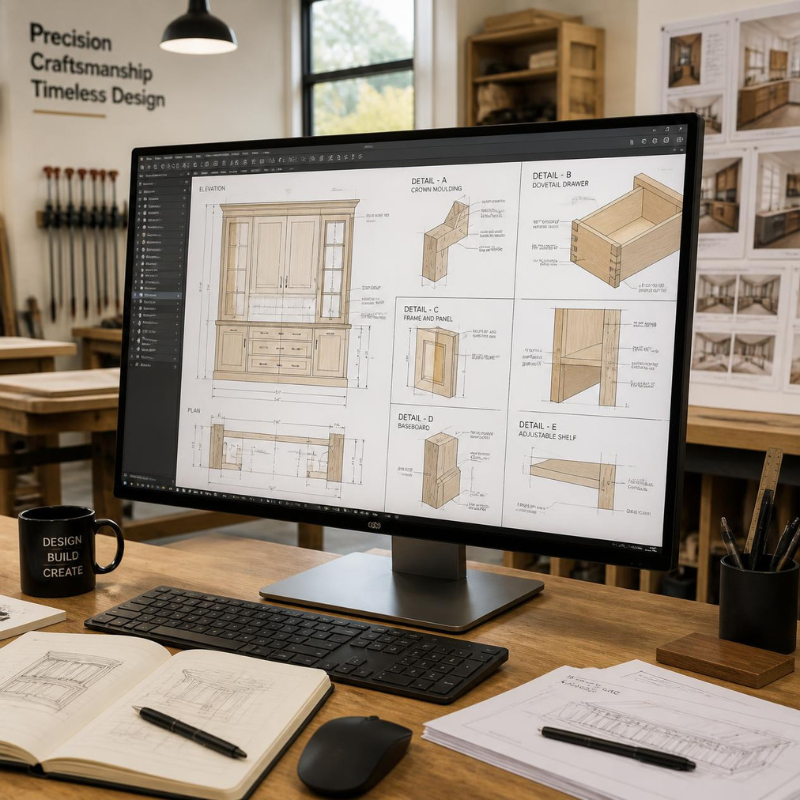
Millwork shop drawings are an essential part of any custom woodworking, cabinetry, or architectural millwork project. These detailed drawings provide fabricators, contractors, and installers with precise specifications for manufacturing and installation. However, one question that many contractors and millwork companies ask is: How much do millwork shop drawings cost?
The answer isn’t always straightforward. The cost of millwork shop drawings can vary significantly depending on several factors, including project complexity, scope, turnaround time, and the level of detailing required. Understanding these factors can help businesses budget more accurately and choose the right drafting partner.
What Are Millwork Shop Drawings?
Millwork shop drawings are detailed technical documents that illustrate how custom millwork components should be fabricated and installed. They typically include:
-
Dimensions and measurements
-
Material specifications
-
Construction details
-
Section and elevation views
-
Hardware information
-
Finishes and edge details
-
Installation instructions
These drawings are used for custom cabinetry, reception desks, wall paneling, retail fixtures, built-in furniture, and other architectural millwork elements.
Factors That Affect Millwork Shop Drawing Costs
1. Project Complexity
The complexity of the project is one of the biggest factors influencing pricing.
A simple office cabinet layout requires significantly less drafting time than a luxury hotel interior featuring:
-
Curved millwork
-
Decorative moldings
-
Custom joinery
-
Integrated lighting
-
Complex material combinations
The more intricate the design, the higher the drafting cost.
2. Project Size and Scope
The overall size of the project directly impacts pricing.
For example:
-
A single kitchen cabinet project may require only a few sheets of drawings.
-
A commercial office fit-out with hundreds of millwork components may require dozens of detailed sheets.
Larger projects require:
-
More drafting hours
-
Additional quality checks
-
Greater coordination efforts
As a result, project costs increase with the size and scope of work.
3. Level of Detail Required
Different projects require different levels of detailing.
Some clients need basic approval drawings, while others require:
-
Fabrication drawings
-
CNC-ready drawings
-
Assembly details
-
Installation drawings
-
Material schedules
The more information included in the drawings, the more time and expertise are required, which affects the final cost.
4. Design Changes and Revisions
Frequent revisions can significantly increase drafting costs.
Changes such as:
-
Modifying dimensions
-
Changing materials
-
Altering layouts
-
Updating hardware specifications
often require drafters to revise multiple sheets and coordinate updates across the entire drawing set.
Many drafting companies include a limited number of revisions in their pricing, with additional revisions charged separately.
5. Turnaround Time
Urgent projects typically cost more than projects with flexible schedules.
Rush projects often require:
-
Additional staffing
-
Overtime work
-
Priority scheduling
If your project requires drawings within a few days instead of a few weeks, expect to pay a premium for expedited services.
6. Type of Millwork
Different types of millwork require varying levels of expertise.
Examples include:
-
Residential cabinetry
-
Commercial millwork
-
Hospitality interiors
-
Healthcare facilities
-
Retail fixtures
-
Institutional projects
Highly customized commercial projects usually require more detailed coordination and therefore cost more than standard residential work.
7. Software and Technology Requirements
Some projects require advanced technologies such as:
-
BIM modeling
-
Revit integration
-
3D visualization
-
CNC programming
-
Microvellum or Cabinet Vision compatibility
These specialized services often involve additional expertise and software resources, which can influence pricing.
8. Coordination Requirements
Millwork drawings often need to be coordinated with:
-
Architects
-
Interior designers
-
Structural engineers
-
MEP consultants
-
General contractors
Projects requiring extensive coordination usually involve additional meetings, revisions, and cross-disciplinary reviews, increasing the overall drafting cost.
Typical Pricing Models
Millwork drafting companies generally use one of the following pricing methods:
Per Sheet Pricing
Pricing is based on the number of drawing sheets produced.
Hourly Rates
Charges are calculated according to the time spent on drafting and revisions.
Per Project Pricing
A fixed cost is provided for the entire scope of work.
Dedicated Resource Model
Businesses hire a full-time remote drafter or drafting team for ongoing projects.
The best pricing model depends on the size and complexity of the project.
How to Reduce Millwork Drafting Costs
There are several ways to control shop drawing expenses without sacrificing quality:
-
Provide complete design information upfront.
-
Minimize late-stage design changes.
-
Establish clear project requirements.
-
Allow reasonable turnaround times.
-
Maintain effective communication with the drafting team.
-
Work with experienced millwork drafting professionals.
Proper planning often reduces rework and prevents costly delays.
Is Outsourcing More Cost-Effective?
Many construction firms and millwork manufacturers choose to outsource shop drawing services because it provides access to experienced professionals without the overhead costs of maintaining an in-house drafting department.
Outsourcing can help businesses:
-
Reduce operational expenses
-
Scale resources as needed
-
Access specialized expertise
-
Improve turnaround times
-
Increase overall project efficiency
For many companies, outsourcing provides an excellent balance between cost, quality, and flexibility.
Final Thoughts
There is no single price for millwork shop drawings because every project has unique requirements. Factors such as project complexity, size, revisions, turnaround time, and level of detailing all play an important role in determining the final cost.
Understanding these pricing factors allows contractors, architects, and millwork manufacturers to plan their budgets more effectively and make informed decisions when selecting a drafting partner. Investing in high-quality millwork shop drawings may seem like an additional expense, but accurate drawings ultimately save time, reduce errors, and contribute to the successful completion of any millwork project.