
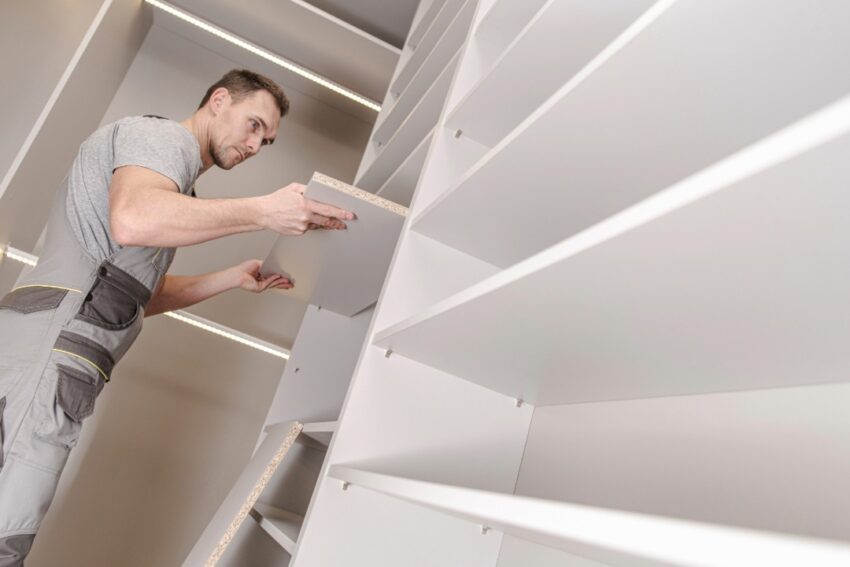
Modular Furniture Companies provide furniture systems designed to offer flexibility, functionality, and efficient space utilization across residential and commercial interiors. Modular furniture can include wardrobes, kitchens, workstations, storage units, desks, cabinets, shelving, and other customized solutions. Because individual components can be manufactured according to specific dimensions and assembled systematically, modular furniture can adapt to different room layouts and changing requirements.
A relevant second keyword from your approved blog-title list is MDF vs Plywood: Which Material Is Best for Your Home Furniture?, taken directly from the title “MDF vs Plywood: Which Material Is Best for Your Home Furniture?” Material selection is an important consideration when evaluating modular furniture because different applications require different levels of strength, finish quality, durability, and maintenance.
What Is Modular Furniture?
Modular furniture consists of standardized or customized components that can be combined to create a complete furniture system.
This approach allows furniture to be adapted to different dimensions and functional requirements.
Benefits of Modular Furniture
Modular furniture can provide several advantages, including:
- Flexible configurations
- Efficient space utilization
- Customized dimensions
- Organized storage
- Consistent appearance
- Faster installation
- Easy reconfiguration
- Multiple finish options
Home Furniture
Modular furniture can be used throughout homes.
Kitchens, wardrobes, TV units, study areas, storage cabinets, and living-room furniture can all be designed using modular components.
Office Furniture
Offices can use modular workstations, storage cabinets, meeting tables, reception desks, and collaborative furniture.
Systems can be configured according to team size and floor-plan requirements.
Institutional Furniture
Schools, colleges, training centers, and other institutions can benefit from modular desks, storage units, workstations, and specialized furniture.
Material Selection
The principles discussed in MDF vs Plywood: Which Material Is Best for Your Home Furniture? are important when selecting modular furniture materials.
MDF can provide a smooth and consistent surface for certain furniture applications, while plywood can offer structural strength and durability for applications where stronger construction is required.
Laminate Finishes
Laminate is widely used for modular furniture because it offers a variety of colours, textures, patterns, and wood effects.
It can also provide a practical surface for everyday use.
Veneer Finishes
Veneer can create a natural wood appearance and is suitable for interiors requiring a warmer, premium aesthetic.
Acrylic Finishes
Acrylic surfaces can provide a contemporary high-gloss appearance.
They are often used in modern kitchens, wardrobes, and storage furniture.
PU Finishes
PU coatings offer a broad range of colours and surface effects.
They can be used when a customized painted appearance is desired.
Modular Wardrobes
Modular wardrobes can include hanging sections, drawers, shelves, shoe storage, accessories organizers, and overhead cabinets.
Internal configurations can be adapted to individual storage requirements.
Modular Kitchens
Modular kitchens use cabinets, drawers, tall units, corner solutions, and specialized storage accessories.
The system can be customized according to kitchen dimensions and workflow.
Modular Workstations
Office workstations can be configured as individual desks, team clusters, or collaborative arrangements.
Partitions and storage can be integrated into the system.
Space Optimization
Modular furniture can use vertical space, corners, wall areas, and compact layouts effectively.
This makes it suitable for both small and large interiors.
Customization
Customers can often select dimensions, materials, colours, finishes, hardware, storage arrangements, and accessories.
This provides greater control over the final furniture solution.
Ergonomic Design
Office furniture should consider desk height, seating compatibility, monitor positioning, legroom, and comfortable working conditions.
Cable Management
Modern office furniture can incorporate cable trays, wire managers, power sockets, and data-point provisions.
These features help maintain organized work areas.
Hardware
Hinges, drawer channels, handles, locks, lifting systems, and soft-close mechanisms contribute to furniture functionality.
Manufacturing Technology
Modern modular furniture production may use CNC cutting, precision drilling, automated edge banding, and other manufacturing technologies.
These processes can improve dimensional accuracy and consistency.
Quality Control
Furniture should be checked for accurate dimensions, edge finishing, surface consistency, hardware operation, alignment, and structural stability.
Installation
Professional installation ensures that cabinets, wardrobes, workstations, and other modular units are correctly aligned and securely assembled.
Choosing Modular Furniture Companies
When selecting Modular Furniture Companies, consider:
- Manufacturing experience
- Material options
- Customization capabilities
- Hardware quality
- Design support
- Production capacity
- Quality-control procedures
- Installation services
- Warranty
- After-sales support
Budget Planning
Modular furniture costs depend on materials, dimensions, finishes, hardware, accessories, customization, quantity, transportation, and installation.
Comparing detailed quotations can help customers select a suitable solution.
Conclusion
Modular Furniture Companies can provide adaptable furniture systems that combine functionality, aesthetics, and efficient space utilization. From modular kitchens and wardrobes to office workstations and storage units, these solutions can be customized to suit different interior requirements.
The second keyword MDF vs Plywood: Which Material Is Best for Your Home Furniture? was selected directly from your approved blog-title list. Understanding material differences can help customers make informed decisions about modular furniture quality, durability, appearance, and budget.