

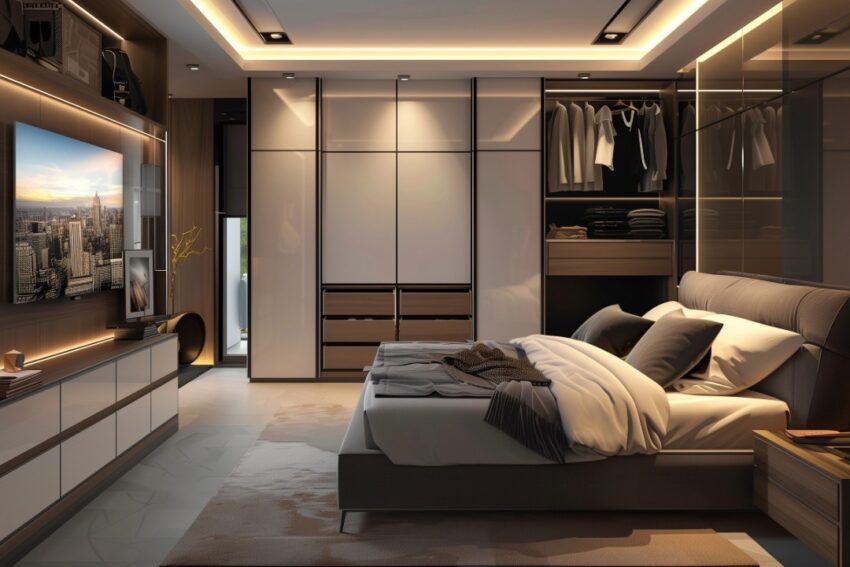
Modular wardrobe sliding doors are an excellent choice for homeowners who want stylish storage without compromising bedroom space. Unlike conventional hinged doors, sliding doors move horizontally along tracks, eliminating the need for additional clearance in front of the wardrobe. This makes them particularly useful for compact bedrooms, apartments, and contemporary homes where efficient space utilization is essential.
Available in various colours, materials, textures, and finishes, sliding door wardrobes can complement different interior design styles. From elegant mirrored panels to wooden finishes, glossy shutters, and minimalist designs, homeowners can choose options that match their furniture and décor. A thoughtfully planned modular wardrobe also offers practical storage through shelves, drawers, hanging sections, and customized compartments.
When planning a wardrobe, Sliding vs Hinged Wardrobes: Which One Should You Choose? is a useful related topic because understanding the differences between door styles helps homeowners select a design that suits their room layout and daily requirements.
Benefits of Modular Wardrobe Sliding Doors
Sliding doors combine practical functionality with a clean, contemporary appearance. Their main advantage is that they do not swing outward, helping preserve movement space around the bed and other furniture.
Other benefits include:
- Space efficiency: Suitable for bedrooms with limited clearance.
- Modern appearance: Large panels create a neat and streamlined look.
- Design flexibility: Available in different colours, materials, and decorative finishes.
- Customized storage: Internal shelves, drawers, and hanging rails can be planned according to individual needs.
- Integrated mirrors: Mirrored panels provide dressing convenience and can help reflect light around the room.
These features make sliding wardrobes suitable for both compact homes and spacious master bedrooms.
Popular Modular Wardrobe Sliding Door Designs
1. Mirrored Sliding Doors
Mirrored sliding doors combine wardrobe storage with dressing functionality. Full-length mirrors can reduce the need for a separate dressing mirror and help smaller bedrooms feel brighter and more open.
They work well with neutral colours, wooden furniture, and contemporary bedroom interiors.
2. Wooden Finish Sliding Doors
Wood-finish sliding doors add warmth and natural character to a bedroom. Homeowners can choose wood-grain laminates or veneer finishes in shades ranging from light oak to deeper brown tones.
These designs complement minimalist, contemporary, and traditional interiors.
3. Glossy Sliding Doors
Glossy finishes provide a polished appearance that suits modern bedrooms. White, beige, grey, and other light shades can create a bright, coordinated look when paired with suitable lighting.
A smooth surface can be relatively easy to clean, although fingerprints may be more visible on certain finishes.
4. Matte Finish Sliding Doors
Matte sliding doors offer a subtle, understated appearance. They are available in neutral shades, muted colours, and contrasting combinations that work well in minimalist interiors.
Pairing matte shutters with wood accents or slim-profile handles can create an elegant design.
5. Glass Sliding Doors
Glass-panel sliding doors can introduce a sophisticated element to bedroom furniture. Depending on the design, homeowners can consider frosted, tinted, or decorative glass with suitable framing.
Glass requires appropriate hardware and careful installation, particularly when the panels are large or heavy.
6. Two-Tone Sliding Wardrobes
Two-tone designs combine different colours or finishes across the door panels. For example, white and wood, beige and brown, or grey and mirrored panels can create visual interest without making the bedroom appear overly busy.
Coordinating the colours with the bed, flooring, and wall finish helps maintain a balanced appearance.
Choosing the Right Materials and Hardware
The performance of a modular sliding wardrobe depends on both the visible finish and the components behind it.
Common cabinet materials include plywood, MDF, particleboard, and other engineered wood products. Their suitability depends on construction quality, intended application, and exposure to moisture. Exterior shutters may feature laminate, acrylic, PU paint, veneer, or glass.
The sliding mechanism deserves equal attention. Good-quality tracks and rollers help the doors move smoothly and remain properly aligned. Soft-close mechanisms can reduce impact when doors are closed, while suitable handles and edge finishing improve usability.
Before finalizing the wardrobe, check the recommended door weight, hardware specifications, installation requirements, and warranty coverage.
Smart Internal Storage for Sliding Wardrobes
A stylish exterior should be supported by an efficient internal layout. Since sliding doors usually reveal only part of the wardrobe at a time, organizing the compartments carefully is especially important.
Consider including:
- Hanging rails for shirts, dresses, jackets, and formal clothing.
- Adjustable shelves for folded garments and handbags.
- Drawers for accessories, socks, and smaller personal items.
- Shoe racks for organized footwear storage.
- Overhead cabinets for luggage and seasonal belongings.
- Pull-out organizers for belts, ties, and other accessories.
The arrangement should reflect how frequently different items are used. Keeping everyday clothing within easy reach makes the wardrobe more convenient.
Space-Saving Sliding Wardrobes for Small Bedrooms
Sliding wardrobes are particularly useful in smaller bedrooms because their doors do not require outward opening space. A floor-to-ceiling design can increase storage capacity without occupying additional floor area.
Mirrored panels and light-coloured finishes can help create a more open visual effect. Overhead compartments provide space for items that are not needed every day, while internal drawers and adjustable shelves help maintain organization.
Before installation, measure the available wall width, ceiling height, wardrobe depth, and clearance around nearby furniture. Also consider windows, electrical points, skirting boards, and any uneven walls that may affect fitting.
Maintenance Tips for Sliding Wardrobe Doors
Regular care helps sliding doors remain smooth and functional.
Clean the tracks periodically to remove dust and debris that could interfere with movement. Wipe the shutters with a soft cloth and a cleaning product suitable for the selected finish. Avoid forcing a door if it becomes difficult to move.
If the doors wobble, stick, or make unusual noises, inspect the track alignment and rollers or arrange professional servicing. Keeping the wardrobe away from persistent dampness can also help protect the cabinet materials and stored clothing.
Factors to Consider Before Buying
Before selecting modular wardrobe sliding doors, evaluate the following factors:
- Bedroom dimensions: Confirm the available wall space and wardrobe depth.
- Door configuration: Choose the number and width of panels according to the wardrobe size.
- Material and finish: Select options that suit your interior and maintenance preferences.
- Storage requirements: Plan shelves, drawers, hanging sections, and accessories.
- Hardware quality: Check the tracks, rollers, and any soft-close mechanisms.
- Budget: Compare the complete cost of materials, hardware, customization, and installation.
Reviewing these details helps ensure that the finished wardrobe meets both practical and aesthetic requirements.
Conclusion
Modular wardrobe sliding doors offer a practical combination of space efficiency, modern design, and organized storage. Whether you prefer mirrored panels, wooden finishes, glossy shutters, or minimalist two-tone designs, the right wardrobe can complement your bedroom while making everyday storage more convenient.
By choosing suitable materials, reliable sliding hardware, and a well-planned internal layout, homeowners can create a durable and attractive wardrobe that makes effective use of available space.