
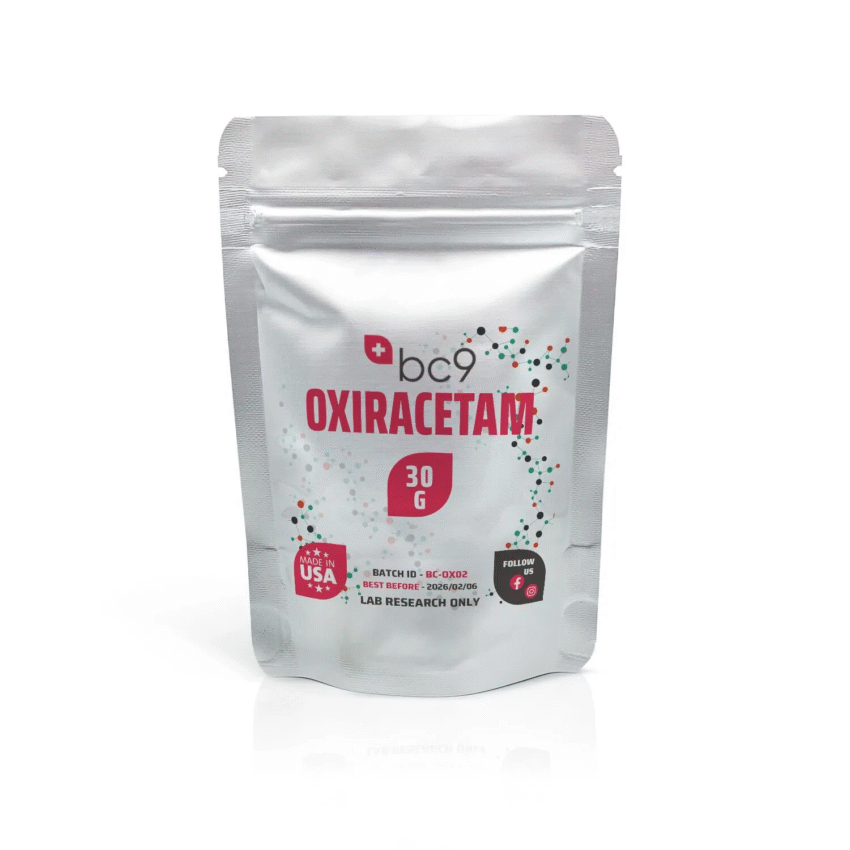
Introduction to Oxiracetam
Oxiracetam is one of the most studied synthetic nootropic compounds in the racetam family, widely recognized for its potential to enhance cognitive performance, learning capacity, and neuroprotective functioning. As 2025 research advances, new insights reveal deeper mechanisms behind its action on memory consolidation, synaptic plasticity, and cholinergic neurochemistry. This guide delivers an exhaustive, data-rich exploration into how oxiracetam works, its scientific relevance, and why it remains one of the most sought-after cognitive agents in research environments.
What Is Oxiracetam?
Oxiracetam is a water-soluble nootropic compound derived from piracetam but significantly more potent in terms of cognitive modulation. Researchers value it for its unique ability to enhance information processing, boost logical thinking, stimulate attention, and support long-term memory formation through neurochemical modulation.
Oxiracetam Mechanism of Action: A Comprehensive Overview
Oxiracetam interacts with several neurobiological pathways that collectively influence cognition, memory, and synaptic communication.
1. Cholinergic System Modulation
Oxiracetam enhances cholinergic activity by:
- Increasing acetylcholine usage within the hippocampus
- Supporting choline uptake
- Enhancing neuronal firing associated with memory encoding
This heightened cholinergic response contributes directly to improved learning and recall.
2. AMPA Receptor Potentiation
Oxiracetam acts as a positive allosteric modulator of AMPA receptors, leading to:
- Enhanced signal transmission
- Increased excitatory synaptic potential
- Strengthened long-term potentiation (LTP), the foundation of memory formation
3. Cerebral Energy Metabolism Optimization
Studies indicate that oxiracetam increases:
- Glucose utilization
- ATP turnover
- Neuronal mitochondrial efficiency
These effects create an environment where the brain operates with greater clarity, endurance, and mental stamina.
4. Neuroprotective Calcium Channel Support
Oxiracetam helps maintain healthy calcium ion flow and protects neurons from overstimulation, lowering the risk of excitotoxicity associated with cognitive decline.
Oxiracetam Cognitive Benefits Supported by 2025 Research
Sharper Memory Formation & Recall
Current findings reinforce that oxiracetam enhances:
- Short-term memory capacity
- Long-term retention
- Learning speed in complex tasks
These effects are attributed to increased hippocampal activity and enhanced LTP.
Amplified Focus and Mental Clarity
Oxiracetam stimulates cortical regions involved in attention processing, resulting in:
- Heightened concentration
- Faster information handling
- Improved multitasking capability
These enhancements are particularly notable under cognitively demanding conditions.
Enhanced Logical Reasoning & Analytical Thinking
Research models continue to show improvements in:
- Computational thinking
- Analytical problem-solving
- Pattern recognition
This positions oxiracetam as a preferred compound in cognitive research involving logical tasks.
Neuroprotection and Synaptic Resilience
Its ability to support neuronal metabolism and protect against oxidative stress has placed oxiracetam under significant focus in 2025 neurodegeneration studies.
Oxiracetam Research Applications and Scientific Use Cases
Memory Dysfunction Research Models
Investigators employ oxiracetam in studies involving:
- Memory impairment
- Cognitive aging
- Neurodegenerative challenges
Its synergistic effect on neurotransmitter activity makes it ideal for these frameworks.
Learning and Neuroplasticity Studies
Because oxiracetam enhances AMPA receptor activity, it serves as a highly relevant agent for exploring mechanisms of neuroplasticity and learning adaptability.
Cognitive Load and Stress-Response Studies
Under high cognitive load, oxiracetam demonstrates measurable improvements in working memory performance and mental resilience.
Oxiracetam Pharmacokinetics in 2025 Scientific Literature
Absorption
Oxiracetam is rapidly absorbed and demonstrates high oral bioavailability.
Distribution
It crosses the blood-brain barrier efficiently and accumulates mainly in:
- Cerebral cortex
- Hippocampus
- Basal ganglia
Metabolism & Excretion
Oxiracetam is minimally metabolized and is primarily excreted unchanged through the kidneys, making its metabolic profile highly predictable in controlled research environments.
Oxiracetam Safety Insights from Current Research
Research environments using oxiracetam commonly report:
- High tolerability
- Predictable neurochemical response
- Minimal adverse interactions
Its clean metabolic profile and low toxicity thresholds continue to support its popularity among research investigators.
Oxiracetam Compared to Other Racetams
Oxiracetam is frequently compared to piracetam, aniracetam, and phenylpiracetam in cognitive studies.
|
Compound |
Potency |
Primary Effect |
Duration |
Notable Property |
|
Piracetam |
Low |
Memory & learning |
Long |
Foundational racetam |
|
Aniracetam |
Moderate |
Creativity & mood |
Short |
Fat-soluble |
|
Phenylpiracetam |
High |
Stimulatory & cognitive |
Moderate |
Physical performance modulation |
|
Oxiracetam |
High |
Logic, memory, clarity |
Moderate |
Strong AMPA potentiation |
Future Outlook: Where Oxiracetam Research Is Heading in 2025
Emerging studies are focusing on:
- Long-term synaptic adaptability
- Neuroprotective pathways involving oxidative stress modulation
- Computational cognition and AI-learning analog models
- Enhanced neuroplasticity in rehabilitation environments
The depth of ongoing research confirms oxiracetam’s continuing significance in cognitive science and neuropharmacology.
Conclusion
Oxiracetam remains one of the most extensively explored cognitive research compounds in 2025. Its multi-layered mechanisms ranging from cholinergic enhancement to AMPA receptor modulation and boosted neuronal metabolism make it highly valuable for studies on memory, learning, attention, and neuroprotection. With expanding research, oxiracetam continues to be at the forefront of scientific interest in cognitive enhancement and neuroplasticity.