
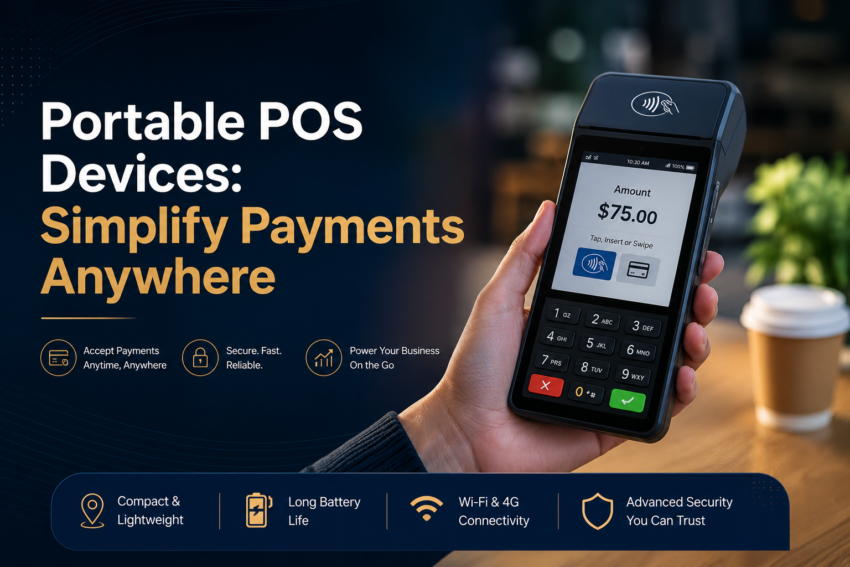
Modern customers expect businesses to offer fast, convenient, and secure payment options wherever a purchase takes place. For businesses that operate outside a traditional checkout counter, this can create a challenge. A fixed payment terminal may not provide enough flexibility for mobile sales, events, deliveries, pop-up locations, or customer service areas.
A portable POS device can help solve this problem by allowing businesses to accept payments from different locations while keeping transactions connected to their payment processing system. Instead of requiring customers to walk to a fixed register, staff can bring the payment device directly to them.
What Is a Portable POS Device?
A portable POS device is a mobile point-of-sale terminal designed to process customer payments without being permanently attached to a checkout counter. Depending on the equipment and payment solution, it may support credit cards, debit cards, contactless payments, and other digital payment methods.
These devices typically combine payment processing capabilities with a compact touchscreen or keypad interface. Many models can connect through Wi-Fi or cellular networks, allowing businesses to process transactions in locations where a traditional wired terminal may not be practical.
For businesses, the main advantage is flexibility. Payments can take place at a table, service area, event booth, delivery location, or temporary sales site.
Why Businesses Need Flexible Payment Options
A fixed checkout system works well for businesses with a predictable sales environment. However, not every business operates that way.
Restaurants may need staff to process payments at tables. Retailers may want employees to assist customers throughout a store. Contractors and service providers may collect payments at customer locations. Event vendors may need to accept transactions away from a permanent storefront.
A portable payment solution addresses these situations by moving the transaction process closer to the customer.
This can also reduce unnecessary waiting. When employees can complete a transaction where the customer is already located, the checkout process may become more convenient for everyone involved.
How Portable POS Devices Work
The basic process is relatively straightforward:
- The business connects the device to an appropriate payment processing account.
- The device connects to an available internet or cellular network.
- The employee enters the transaction amount or selects the appropriate items.
- The customer pays using a supported payment method.
- The payment information is securely transmitted for authorization.
- The transaction is approved or declined.
- A receipt can be provided electronically or through available receipt options.
The exact process depends on the POS equipment, payment processor, and software being used. Businesses should confirm that the device supports the payment methods their customers commonly use.
Making Credit Card Machine Setup Easier
One common concern when upgrading payment equipment is the credit card machine setup. Businesses may assume that installing a new terminal requires complicated technical work, but the process can often be simplified with proper preparation.
Before setting up a payment terminal, determine where it will be used and what type of connectivity is available. A device used inside a store may rely on Wi-Fi, while a mobile business may require cellular connectivity.
Businesses should also verify their merchant account information, payment processing configuration, receipt preferences, and supported transaction types before putting the device into regular use.
Testing the system before serving customers is equally important. Run a few test transactions and confirm that payments are processed correctly, receipts are generated as expected, and employees understand the basic functions.
Choosing the Right Payment Equipment
Not every portable terminal is suitable for every business. Consider several factors before choosing payment equipment.
Connectivity: Check whether the device supports Wi-Fi, cellular service, or another suitable connection method.
Payment methods: Customers may expect options such as chip cards and contactless payments. Make sure the equipment supports the methods relevant to your business.
Battery life: Mobile businesses should pay particular attention to battery performance. A device that frequently requires charging can become inconvenient during busy periods.
Ease of use: Employees should be able to learn the system quickly. A complicated interface can slow down transactions and increase training requirements.
Security: Payment equipment should use appropriate security features designed to protect transaction information and reduce payment-related risks.
Understanding Merchant Services
Merchant services generally refer to the financial and technical services that help businesses accept and process electronic payments. They can involve payment processing, merchant accounts, transaction authorization, settlement, and related tools.
Choosing a payment solution should therefore involve more than simply purchasing a terminal. Businesses should understand how the device connects to their payment processing environment and what fees or service requirements apply.
Before signing up, review transaction fees, monthly charges, equipment costs, contract terms, processing limitations, and customer support arrangements. Understanding these details can help prevent unexpected expenses later.
Common Problems a Portable POS Device Can Solve
A mobile payment terminal can address several everyday checkout problems.
Long checkout lines: Employees can process transactions away from a fixed register when the system supports mobile operation.
Limited checkout space: Businesses with small counters can reduce dependence on a large permanent payment station.
Off-site sales: Vendors and service providers can accept payments outside a traditional storefront.
Table-side payments: Restaurants and hospitality businesses can bring payment directly to customers.
Temporary locations: Businesses participating in markets, events, or pop-up sales can create a more flexible payment environment.
Keep Security a Priority
Convenience should never come at the expense of payment security. Businesses should keep payment devices updated, restrict access to authorized employees, and follow appropriate security practices.
Employees should also know how to identify unusual transaction activity and what to do if a device is lost, damaged, or behaving unexpectedly. Regularly reviewing user permissions and payment procedures can help reduce avoidable risks.
Final Thoughts
A portable POS device can give businesses greater freedom over where and how they accept payments. It can make transactions more convenient, support mobile operations, and reduce some of the limitations associated with a fixed checkout counter.
However, the equipment is only one part of a successful payment strategy. Businesses should also consider connectivity, payment processing requirements, security, transaction costs, and employee training.
When the right equipment is combined with suitable merchant services and a carefully planned credit card machine setup, businesses can create a smoother payment experience while staying prepared for customers wherever transactions happen.