
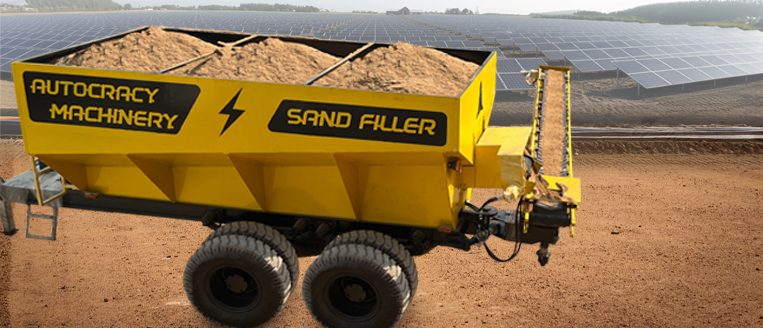
Solar energy projects and modern infrastructure developments require safe methods for installing underground cables and utility lines. One of the important steps in this process is preparing the trench and adding protective materials around the cables before closing the trench. The reliable sand filler for solar cable trench installation is commonly used in large projects to help place sand evenly inside trenches so that underground cables receive proper protection from stones, pressure, and uneven soil conditions.
Underground cable systems are widely used in solar power plants because they connect solar panels, inverters, and distribution units across large land areas. During installation, trenches are dug to place the electrical cables safely below the ground surface. After the cables are positioned, sand is placed around them to create a cushioning layer that reduces direct contact between the cable insulation and the surrounding soil or rocks. This step is important because cables may experience pressure from soil layers or external loads over time.
Sand padding is often used because it provides a smooth and stable bedding surface for cables. Compared with normal soil, sand contains fewer large particles and sharp edges. This property makes it suitable for protecting sensitive cable insulation from mechanical damage. When sand is spread along the trench, it forms a protective layer that absorbs pressure and helps distribute loads more evenly across the cable surface.
Another advantage of sand padding is its ability to support proper cable alignment. When cables are laid inside a trench, they must remain in a stable position without excessive bending or movement. A layer of sand helps hold the cable in place and prevents shifting that may occur due to soil settling or environmental changes. Maintaining this stability is important for ensuring reliable electrical transmission within solar power systems.
In many construction projects, placing sand inside trenches manually can take significant time and labor. Workers may need to transport sand repeatedly and spread it along long trench sections, which can slow down the overall installation process. To improve efficiency, construction teams often use equipment that helps deliver sand directly into trenches. This type of equipment assists in distributing the material more evenly and reduces the amount of manual effort required during installation.
Using mechanical systems for sand placement can also help maintain consistent thickness of the sand layer. When sand is placed unevenly, certain parts of the cable may remain exposed to stones or compact soil. Consistent distribution ensures that the entire cable line receives equal protection. This is particularly important in solar power plants where cable networks extend across large areas and require uniform installation standards.
Another important function of sand in trench construction is its drainage capability. Sand allows water to pass through easily compared with compact soil. Good drainage helps prevent water accumulation around cables, which can otherwise lead to soil instability or moisture-related issues. By allowing water to flow away from the trench area, sand bedding contributes to maintaining a stable underground environment.
The expansion of renewable energy infrastructure has increased the demand for efficient cable installation practices. Solar farms often cover wide areas of land and require extensive underground cable connections. Proper trench preparation and protective sand layers help ensure that the electrical network remains reliable for many years. As a result, construction teams follow standardized procedures to provide safe bedding and protection for cables.
Before the trench is completely closed with soil, a protective layer of sand is placed over the installed cables using a solar sand padding machine. This process creates a barrier between the cable and the upper soil layers, reducing the risk of damage from heavy loads or ground movement. The sand layer acts as a buffer that protects the cable insulation and maintains the integrity of the underground system.
Overall, sand padding remains an important practice in underground cable installation for solar and infrastructure projects. It provides protection against mechanical stress, improves drainage conditions, and helps maintain stable cable positioning within the trench. By combining proper installation techniques with suitable equipment, construction teams can ensure that underground cable systems operate safely and efficiently throughout the lifespan of the project.