
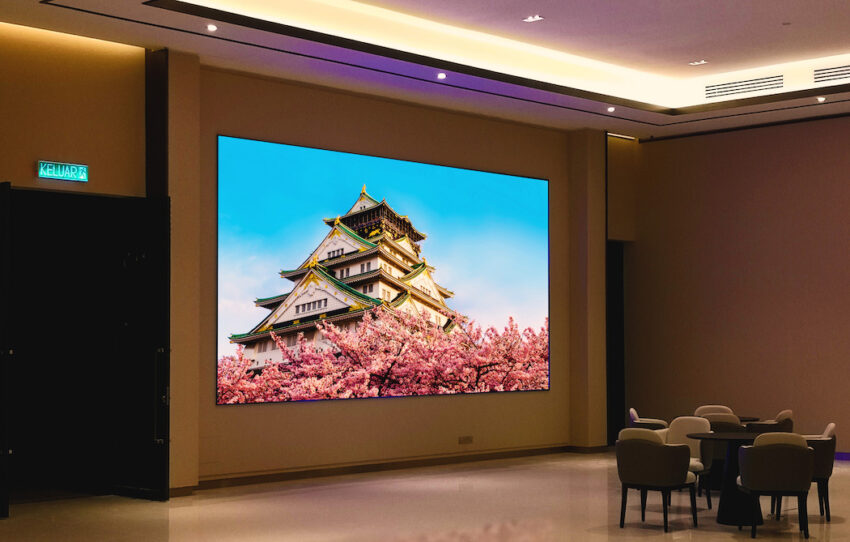
When businesses invest in an indoor LED screen, the conversation often starts—and stops—at aesthetics. Bright visuals. Sleek design. A modern feel. But reducing indoor LED to a decorative upgrade misses the bigger picture entirely. For organisations that look beyond the surface, these displays represent a measurable, strategic investment with returns that touch everything from operational costs to customer loyalty.
Here’s what the numbers—and the real-world results—actually show.
Understanding the Financial Upside: Calculating the ROI of Indoor LED
The starting point for any ROI conversation is cost versus return. Indoor LED displays carry a higher upfront cost than traditional signage or LCD alternatives, but their long-term economics tell a different story.
LED panels typically last between 50,000 and 100,000 hours of operation. Spread that across years of continuous use, and the cost-per-hour of display time drops significantly compared to print signage, which requires recurring design, print, and installation fees every time content changes. For businesses that update their messaging frequently—retailers, hospitality venues, corporate offices—those recurring costs add up fast.
Beyond longevity, LED displays offer a strong depreciation profile. Unlike one-time print campaigns that offer no residual value, an LED installation retains hardware value and continues generating impressions long after the initial outlay has been absorbed. When calculating ROI, businesses should factor in not just cost savings, but the revenue-generating potential of the screen as an active communication tool.
Operational Efficiencies and Cost Savings with LED
One of the most underrated financial benefits of indoor LED is what it eliminates. Consider the typical costs associated with traditional signage: design fees, printing, shipping, installation, and disposal—repeated every time a promotion ends or a message needs updating. For large organisations with multiple locations, this cycle becomes a significant operational burden.
Indoor LED replaces that cycle with a centralised, software-driven content management system. Updates happen in real time, remotely, and at negligible cost. A retail chain can push a new promotion to 50 stores simultaneously. A corporate campus can update wayfinding, event schedules, and emergency messaging from a single dashboard.
Energy efficiency is another meaningful contributor. Modern LED technology consumes considerably less power than older display technologies, and many systems include automated brightness controls that reduce consumption during off-peak hours. Over a multi-year period, these energy savings contribute directly to a lower total cost of ownership.
Enhancing Customer Experience and Engagement Through Dynamic Visuals
Static signage informs. Dynamic LED displays engage. That distinction has real commercial value.
Research consistently shows that motion and brightness capture attention more effectively than static imagery. In retail environments, dynamic displays near product areas have been linked to measurable increases in dwell time and purchase consideration. In hospitality settings, LED displays that adapt content based on time of day or audience create an experience that feels personalised—even at scale.
The flexibility of LED also opens the door to interactive and data-driven content strategies. Displays can be integrated with audience analytics, point-of-sale systems, or live data feeds to serve content that is contextually relevant. A sports bar can show live scores. A fashion retailer can highlight trending products. A corporate lobby can welcome visitors by name.
These capabilities shift the indoor LED display from passive infrastructure to an active participant in the customer journey—one with a measurable impact on conversion and satisfaction.
Boosting Brand Perception and Market Competitiveness
Brand perception is harder to quantify than energy savings, but its commercial impact is no less real. Environments shape how customers feel about a business before a single word is spoken or product is sold. High-quality LED displays signal investment, attention to detail, and a commitment to delivering a premium experience.
For businesses operating in competitive markets, this matters. A well-executed LED installation in a retail flagship, hotel lobby, or corporate headquarters creates a visual standard that is difficult for competitors relying on static or dated signage to match. It positions the brand as forward-thinking—a signal that resonates with both customers and potential partners or investors.
There is also an internal dimension worth noting. Workplaces that invest in dynamic digital environments—LED dashboards, collaborative display walls, branded reception screens—tend to report stronger employee engagement and a greater sense of pride in the physical workspace. That has downstream effects on retention and productivity, both of which carry measurable financial value.
Case Studies and Real-World Success Stories
The business case for indoor LED is not theoretical. Across industries, organisations have documented tangible returns from strategic LED investments.
Retail: A major European fashion retailer replaced static window and in-store signage with LED displays across its flagship locations. Within 12 months, the brand reported a 30% reduction in signage-related operational costs and attributed a measurable uplift in promotional campaign performance to the increased visibility and flexibility of dynamic content.
Hospitality: A luxury hotel group installed LED displays throughout its conference and events facilities. The upgrade allowed the venue to offer clients fully branded, customisable environments—a feature that contributed to a significant increase in repeat corporate bookings and a higher average event spend.
Corporate: A global financial services firm deployed a network of LED displays across its London headquarters to support internal communications and brand consistency. Employee survey results showed a marked improvement in awareness of company initiatives, and the firm cited the installation as a key factor in reducing reliance on email communications for time-sensitive announcements.
These examples share a common thread: the return on investment extended well beyond the initial value proposition. In each case, the LED installation created compounding benefits across operations, revenue, and brand equity.
Maximising Your Investment with Indoor LED Technology
The ROI of indoor LED is not accidental—it is the result of strategic planning, quality hardware, and thoughtful content management. Businesses that treat their LED installation as a long-term communications platform, rather than a one-time aesthetic upgrade, consistently extract the greatest value from their investment.
To maximise returns, start with a clear content strategy before installation begins. Define the business objectives the display needs to serve, identify the metrics that will measure success, and build a content management workflow that keeps the screen relevant and up to date. The hardware is only as valuable as the content running on it.
Choose a supplier with proven experience in commercial LED installations, and prioritise quality components that deliver consistent performance over the display’s lifespan. Cutting corners on hardware rarely pays off—pixel failures, brightness degradation, and reliability issues erode both the customer experience and the financial case for the investment.
Finally, review performance regularly. Whether the goal is footfall conversion, energy savings, or brand metrics, tracking outcomes against targets ensures the display continues to deliver—and provides the data needed to justify future investment.
Indoor LED technology, deployed with purpose and managed with discipline, delivers returns that go far beyond aesthetics. The picture it paints for your bottom line is worth looking at closely.