
Introduction
Search engine optimization has become far more complex than it was a few years ago. Ranking a website today involves understanding search intent, semantic relationships, user behavior, content quality, technical performance, and AI-driven search patterns all at once. Traditional SEO methods still provide useful insights, but businesses operating in competitive industries now require deeper analytical systems to stay visible online.
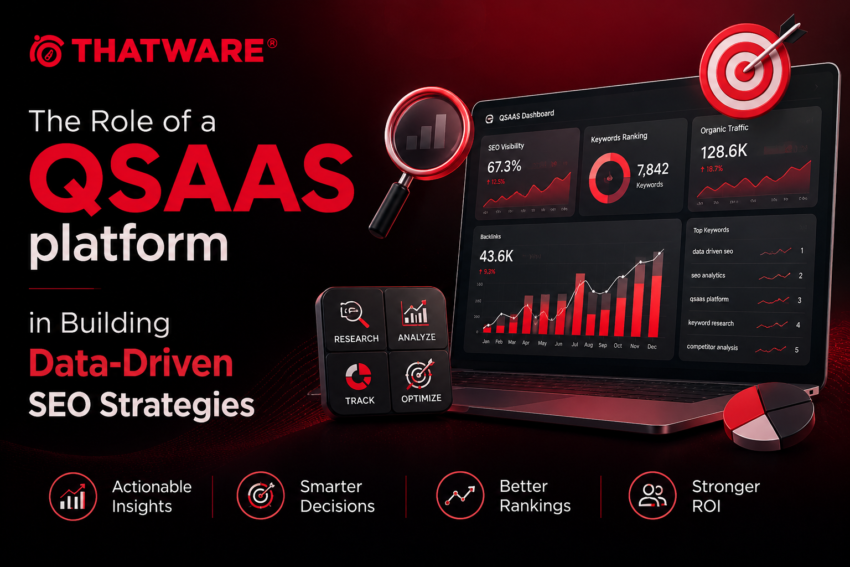
This is where a QSAAS platform is becoming increasingly important. Instead of treating SEO metrics separately, these platforms analyze how multiple ranking signals interact across an entire website ecosystem. The result is a more intelligent, data-driven approach to optimization that helps brands make better decisions with greater confidence.
Companies looking for scalable organic growth are now adopting advanced systems like Quantum SEO as a Service to improve rankings, strengthen topical authority, and create sustainable search visibility in highly competitive digital environments.
Why Traditional SEO Is No Longer Enough
Most conventional SEO workflows rely heavily on fragmented analysis. Marketers typically use separate tools for:
- Keyword tracking
- Backlink analysis
- Technical audits
- Competitor monitoring
- Content optimization
- Rank reporting
While these tools provide useful data, they often fail to explain how different ranking factors influence one another.
For example, a website may have strong backlinks but weak topical depth. Another site may have technically optimized pages but poor internal authority flow. Looking at isolated metrics does not always reveal why rankings improve or decline.
Modern search engines now evaluate context and relationships more deeply than ever before. Google’s algorithms increasingly prioritize:
- Search intent alignment
- Semantic relevance
- Content ecosystem quality
- Topical authority
- User engagement signals
- Contextual depth
Because of this shift, businesses need systems capable of analyzing SEO as an interconnected structure rather than a collection of independent metrics.
How a QSAAS platform Changes SEO Strategy
A QSAAS platform works differently from standard SEO software. Instead of focusing only on static reporting, it helps businesses build predictive and strategic SEO models.
The platform analyzes relationships between search signals simultaneously to identify opportunities that may otherwise remain hidden.
For example, instead of simply identifying low-performing pages, the platform may uncover:
- Content clusters weakening authority distribution
- Semantic gaps affecting topic relevance
- Internal linking structures limiting ranking potential
- Search intent mismatches reducing engagement
- Entity optimization issues impacting discoverability
This approach creates a more actionable SEO framework.
Businesses can prioritize improvements based not only on individual issues but on their likely impact across the broader search ecosystem.
That is one reason many enterprises are now adopting quantum SEO automation platform solutions to streamline decision-making and reduce manual SEO analysis bottlenecks.
Key Benefits of Data-Driven SEO Optimization
Improved Decision Making
One of the biggest advantages of data-driven SEO systems is clarity. Instead of relying on assumptions, businesses can make optimization decisions backed by measurable insights and predictive analysis.
Better Content Strategy
A strong SEO strategy depends on more than publishing frequent blog posts. Modern platforms help identify:
- Missing topic clusters
- Content overlap issues
- High-intent search opportunities
- Semantic keyword relationships
- Authority-building content paths
This allows brands to create content with stronger ranking potential.
Scalable Optimization
Large websites often struggle with SEO scalability. Managing thousands of pages manually becomes difficult and time-consuming.
Advanced automation systems help businesses optimize larger content ecosystems more efficiently through intelligent workflows and automated insights.
Enhanced Competitive Analysis
Traditional competitor analysis usually focuses on rankings and backlinks. Data-driven SEO platforms go further by evaluating:
- Topic ownership
- Content depth
- Search intent targeting
- Semantic coverage
- Authority distribution patterns
This creates a clearer understanding of competitive positioning.
Why Businesses Are Moving Toward Intelligent SEO Systems
Search behavior is evolving rapidly.
Users now search using conversational language, long-tail intent queries, and AI-assisted search experiences. Search engines are becoming more context-aware, which means optimization strategies must evolve as well.
Businesses are responding by investing in smarter SEO infrastructure.
A growing number of organizations are turning to enterprise SEO automation service providers to improve operational efficiency while maintaining stronger ranking stability across algorithm updates.
Several industry reports suggest that websites with deeper topical authority and stronger content ecosystems experience less ranking volatility during major Google updates. This makes intelligent optimization increasingly valuable for businesses dependent on organic traffic.
The future of SEO is no longer about isolated ranking tricks. It is about building comprehensive digital authority supported by structured data, semantic relationships, and user-focused content experiences.
Essential Features of Modern SEO Automation Platforms
Businesses evaluating intelligent SEO systems should look for several key capabilities.
Predictive SEO Analysis
Modern platforms should provide forecasting insights rather than only historical reporting. Predictive analysis helps businesses prioritize tasks with higher ranking impact potential.
Semantic Content Mapping
Search engines now evaluate contextual relationships between topics. Platforms should support entity recognition, semantic relevance analysis, and topic clustering.
Automated Technical Monitoring
Technical SEO remains important for search performance. Advanced systems help automate the monitoring of:
- Crawl issues
- Indexation problems
- Broken links
- Page speed issues
- Structured data errors
Content Gap Identification
Understanding missing topical areas can significantly improve organic visibility. Intelligent systems identify underdeveloped content opportunities based on competitive analysis and search demand.
Scalable Reporting Dashboards
Clear reporting helps marketing teams make faster strategic decisions. Businesses should prioritize platforms with customizable dashboards and actionable recommendations.
This is one reason many companies now explore data-driven SEO as a service solutions that combine automation, analytics, and strategic optimization into one scalable ecosystem.
Best Practices for Implementing a Data-Driven SEO Framework
Businesses adopting advanced SEO systems should follow a structured approach for better results.
Focus on Topical Authority
Instead of targeting isolated keywords, build interconnected content ecosystems around core business topics.
Prioritize User Intent
Every page should satisfy a clear search intent. Content created only for rankings often struggles to maintain long-term visibility.
Use Data for Strategic Prioritization
Not all SEO tasks carry equal value. Use predictive insights to identify improvements with the highest business impact.
Continuously Audit Content Quality
Content standards evolve constantly. Regular audits help maintain relevance, accuracy, and competitiveness.
Optimize for AI-Driven Search
Search engines increasingly rely on entity understanding and contextual relationships. Structured content and semantic optimization are becoming more important every year.
FAQs
What is a QSAAS platform?
A QSAAS platform is an advanced SEO system designed to analyze relationships between ranking signals and provide data-driven optimization insights for websites.
How does Quantum SEO differ from traditional SEO?
Traditional SEO often focuses on isolated metrics, while Quantum SEO as a Service evaluates interconnected ranking signals such as semantic relevance, topical authority, and search intent relationships.
Who should use enterprise SEO automation systems?
Large businesses, SaaS companies, eCommerce brands, publishers, and competitive B2B organizations benefit most from intelligent SEO automation systems.
Why is data-driven SEO important?
Data-driven SEO helps businesses make more accurate optimization decisions, improve search visibility, and reduce ranking volatility during algorithm changes.
Can automation replace SEO professionals?
No. Automation improves efficiency and analysis, but human expertise remains essential for strategy, creativity, and business alignment.
Conclusion
SEO is becoming increasingly sophisticated as search engines evolve toward AI-driven and context-aware ranking systems. Businesses relying only on traditional optimization methods may struggle to keep pace with changing search behavior and growing competition.
A modern QSAAS platform provides businesses with deeper analytical capabilities, predictive insights, and scalable optimization systems that support stronger long-term search performance. By combining automation, semantic analysis, and intelligent SEO modeling, brands can build more resilient organic growth strategies.
Businesses seeking future-ready search optimization solutions are increasingly exploring advanced frameworks offered by ThatWare LLP to improve visibility, strengthen authority, and create sustainable SEO growth in competitive digital markets.