
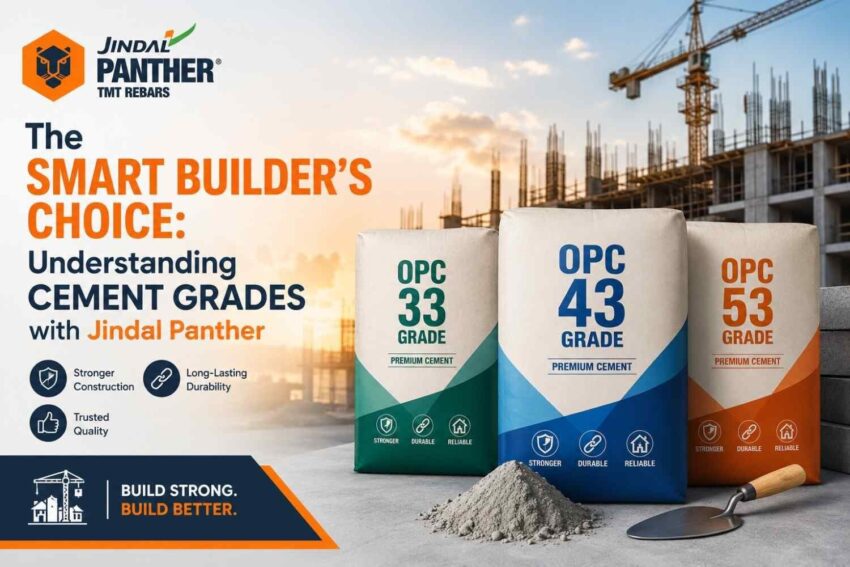
Building a safe and durable home starts with selecting the right construction materials, and cement is one of the most important among them. Whether you’re constructing a new home, renovating an old one, or working on a commercial project, understanding cement grades is essential for ensuring strength, longevity, and structural stability.
Many homeowners are unaware that different cement grades are designed for different applications. Using the wrong grade can affect the quality of construction, while choosing the right one can improve the durability and performance of the structure for decades.
At Jindal Panther, we believe that informed construction decisions lead to stronger homes. In this comprehensive guide, you’ll learn everything about cement grades, their classifications, applications, benefits, and how to choose the best option for your construction project.
What Are Cement Grades?
Cement grades represent the compressive strength of cement after 28 days of proper curing. The strength is measured in megapascals (MPa), and the grade number indicates the minimum compressive strength the cement can achieve.
For example:
-
33 Grade Cement – 33 MPa
-
43 Grade Cement – 43 MPa
-
53 Grade Cement – 53 MPa
Higher-grade cement generally provides greater strength, but selecting the highest grade isn’t always necessary. The ideal choice depends on the type of construction and engineering requirements.
Why Cement Grades Matter
The quality of cement directly impacts the performance and durability of a building. Choosing the right cement grades offers numerous advantages.
Stronger Structures
Quality cement enhances the strength of foundations, beams, slabs, and columns, ensuring the structure remains stable under heavy loads.
Improved Durability
The correct cement grades increase resistance against moisture, weather changes, and environmental damage.
Better Construction Quality
Proper cement improves bonding with aggregates and reinforcement, resulting in stronger concrete.
Cost-Effective Construction
Selecting suitable cement grades prevents unnecessary material costs while maintaining structural safety.
Long-Term Performance
High-quality cement reduces maintenance requirements and increases the overall lifespan of the building.
Types of Cement Grades
Three major cement grades are widely used in construction.
33 Grade Cement
33 Grade cement develops a compressive strength of 33 MPa after 28 days.
Common Applications
-
Plastering
-
Brick masonry
-
Flooring
-
Small repair works
-
Low-strength concrete
Although still available, it is less commonly used for structural construction due to the availability of stronger alternatives.
43 Grade Cement
43 Grade cement is one of the most widely used cement grades in residential construction.
Suitable Applications
-
House construction
-
RCC structures
-
Walls
-
Slabs
-
Beams
-
General civil works
It provides an excellent balance between strength, durability, and affordability.
53 Grade Cement
53 Grade cement achieves higher compressive strength and gains strength faster.
Best Used For
-
High-rise buildings
-
Bridges
-
Industrial projects
-
Flyovers
-
Heavy-load structures
-
Precast concrete
Builders often choose this grade for projects that demand superior structural performance.
Difference Between Cement Grades
Understanding the differences among cement grades helps homeowners make informed decisions.
Strength
53 Grade cement develops greater compressive strength than 43 Grade and 33 Grade cement.
Setting and Hardening
Higher grades gain strength more quickly, making them suitable for fast-paced construction projects.
Heat of Hydration
53 Grade cement generates more heat during hydration, requiring proper curing to prevent thermal cracks.
Cost
Higher-strength cement generally costs more, but it also offers better structural performance for demanding applications.
Factors to Consider While Choosing Cement Grades
Several important factors determine the ideal cement grades for a construction project.
Type of Building
Independent houses, apartments, commercial complexes, and industrial buildings require different strength levels.
Structural Design
Always follow the structural engineer’s recommendations regarding cement selection.
Soil Conditions
Weak soil may require stronger concrete and appropriate cement grades for improved stability.
Environmental Conditions
Areas exposed to moisture, coastal climates, or chemical exposure may require more durable cement.
Budget
Balancing construction costs with structural requirements ensures efficient resource utilization.
Applications of Cement Grades
Different cement grades serve different construction purposes.
Foundation Construction
Strong foundations require quality cement capable of supporting the building’s total load.
Columns and Beams
Structural members depend on proper cement selection to carry vertical and horizontal loads safely.
Roof Slabs
Concrete slabs benefit from cement that provides long-lasting strength and crack resistance.
Flooring
Appropriate cement grades improve flooring durability and surface finish.
Masonry
Brickwork requires cement with good bonding properties for stable walls.
Plastering
Quality cement creates smooth, durable surfaces while minimizing cracks.
Benefits of Choosing the Right Cement Grades
Selecting suitable cement grades offers several long-term advantages.
Enhanced Structural Safety
Proper cement ensures buildings remain stable under varying load conditions.
Increased Durability
Quality construction materials withstand harsh weather and environmental exposure.
Reduced Maintenance Costs
Strong concrete requires fewer repairs over its lifespan.
Better Finish
Premium cement improves the appearance of plastered walls and finished concrete surfaces.
Greater Property Value
Homes built with quality materials often have higher market value.
Common Mistakes While Buying Cement
Many homeowners make avoidable mistakes when purchasing cement.
Buying Based Only on Price
Choosing cheaper cement without considering quality may compromise structural safety.
Ignoring Manufacturing Date
Fresh cement performs better than older stock.
Improper Storage
Cement exposed to moisture loses its strength and should never be used.
Choosing the Wrong Cement Grades
Using unsuitable cement grades for structural applications can reduce building durability.
Purchasing from Unverified Suppliers
Always buy cement from trusted dealers to ensure genuine products.
Tips for Proper Cement Storage
Proper storage preserves cement quality until it is used.
Keep Cement Dry
Store bags away from moisture and rain.
Raise Bags Above Ground
Use wooden pallets to prevent contact with damp floors.
Cover Properly
Protect cement from humidity using waterproof sheets.
Use Older Bags First
Follow the “First In, First Out” principle to prevent aging.
Avoid Excessive Stacking
Stack bags carefully to prevent damage and maintain quality.
How Cement Grades Work with Reinforcement Steel
Concrete and steel work together to create strong reinforced concrete structures.
While cement grades provide compressive strength, reinforcement steel offers tensile strength.
This combination enables buildings to withstand heavy loads, vibrations, temperature changes, and seismic activity.
Choosing premium cement alongside high-quality reinforcement materials creates a stronger and safer structure.
Why Builders Trust Jindal Panther
Builders choose Jindal Panther because quality construction depends on premium materials.
Jindal Panther is known for:
Consistent Quality
Reliable products help maintain structural integrity throughout the construction process.
Strong Reinforcement Solutions
Premium TMT bars complement quality concrete, creating durable reinforced structures.
Trusted Brand
Builders, contractors, and homeowners rely on Jindal Panther for dependable construction materials.
Commitment to Better Construction
The brand promotes informed material selection, helping customers build stronger homes from foundation to roof.
Expert Tips Before Starting Construction
Following these recommendations can improve construction quality.
Consult Professionals
Always work with qualified structural engineers.
Use Certified Materials
Purchase only certified cement and reinforcement products.
Plan Material Requirements
Estimate cement quantities accurately to reduce waste.
Ensure Proper Curing
Good curing allows cement to achieve its designed strength.
Never Compromise on Quality
Saving money on materials may lead to costly structural repairs in the future.
Conclusion
Understanding cement grades is one of the smartest decisions any homeowner or builder can make. Different grades are designed for different construction needs, and selecting the right one ensures better strength, durability, safety, and long-term value. From foundations to finishing work, quality cement plays a vital role in every stage of construction.
At Jindal Panther, we believe that strong homes are built with informed choices and premium construction materials. By selecting the appropriate cement grades and combining them with high-quality reinforcement solutions, you can build a structure that remains safe, durable, and reliable for generations.
FAQs
Q1. What are cement grades?
Cement grades indicate the compressive strength of cement after 28 days of curing. Common grades include 33 Grade, 43 Grade, and 53 Grade.
Q2. Which cement grade is best for house construction?
For most residential projects, 43 Grade cement is widely preferred because it offers an ideal balance of strength, durability, and cost. Structural engineers may recommend 53 Grade cement for specific high-strength applications.
Q3. Why are cement grades important?
Choosing the correct cement grades ensures better structural strength, improved durability, enhanced safety, and lower maintenance costs over the building’s lifespan.
Q4. Can higher cement grades always be used?
Not necessarily. The appropriate cement grade depends on the building design, structural requirements, and engineering recommendations. Using a higher grade where it isn’t needed may increase costs without providing additional benefits.
Q5. How does Jindal Panther support quality construction?
Jindal Panther supports quality construction by providing premium TMT bars and promoting awareness about choosing the right cement grades and other high-quality construction materials for strong, durable, and long-lasting buildings.