

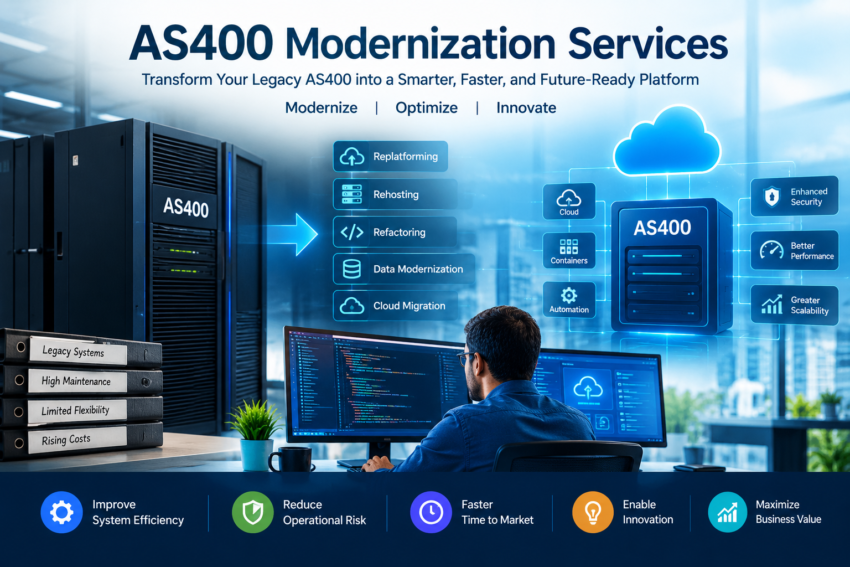
United Techno helps businesses explore technology solutions that support application improvement, system integration, and digital transformation. For organisations that rely on IBM AS400 systems, also known as IBM i, maintaining reliable operations while adopting modern technologies is an important part of long-term IT planning. AS400 Migration Services and AS400 Modernization Services can help businesses evaluate legacy infrastructure, improve application capabilities, and prepare their technology environments for evolving operational requirements.
Many organisations continue to depend on IBM i applications for essential business processes, including finance, inventory management, manufacturing, distribution, order processing, and enterprise resource planning. These applications often contain valuable business logic and support established workflows. However, changing customer expectations, integration requirements, infrastructure considerations, and evolving development practices can create a need for modernisation.
Rather than replacing every existing system without evaluation, businesses can assess which applications should be retained, upgraded, migrated, integrated, or redesigned. United Techno can be explored as a technology partner for organisations seeking to plan their AS400 migration and modernisation initiatives according to their business goals.
1. What Are AS400 Migration Services?
AS400 Migration Services involve moving applications, data, workloads, or infrastructure from an existing IBM AS400 or IBM i environment to another supported environment. Depending on business requirements, a migration may involve upgrading IBM i infrastructure, moving workloads to a new server, transitioning to a hosted environment, or transferring selected applications and data to alternative platforms.
The right migration strategy depends on application dependencies, performance requirements, data complexity, compliance obligations, budget, and the organisation’s long-term technology roadmap.
Key components of AS400 migration include:
- Migration assessment: Review existing applications, infrastructure, workloads, and dependencies.
- Data migration planning: Identify the data that must be transferred, validated, protected, and retained.
- Application compatibility analysis: Evaluate application dependencies, programming languages, databases, and interfaces.
- Infrastructure planning: Determine suitable target environments based on technical and business requirements.
- Migration execution: Coordinate the transfer of approved workloads, applications, or data.
- Testing and validation: Confirm application behaviour, data accuracy, integrations, and performance.
- Post-migration support: Monitor the migrated environment and resolve issues identified after deployment.
A structured migration approach helps organisations manage technical complexity while planning for business continuity.
2. Why Businesses Need AS400 Modernization Services
Are your existing IBM i applications meeting your organisation’s changing business requirements? AS400 Modernization Services help businesses evaluate ways to improve legacy applications, interfaces, architecture, development processes, and integration capabilities without automatically discarding the value of established systems.
Modernisation can involve incremental improvements rather than a complete platform replacement. For example, an organisation may modernise an application interface, expose existing business functions through APIs, improve development workflows, or integrate IBM i applications with newer enterprise systems.
Common reasons for considering AS400 modernisation include:
- Changing business needs: Existing applications may require new features or updated workflows.
- Integration requirements: Businesses may need to connect IBM i applications with cloud services, web applications, or other enterprise platforms.
- User experience improvements: Older interfaces may be difficult for employees to use efficiently.
- Development flexibility: Modern tools and practices can help teams maintain and extend applications.
- Operational visibility: Improved reporting and data access can support better business decisions.
- Maintainability: Reviewing application structure and documentation can simplify future enhancements.
- Long-term planning: Modernisation can help organisations develop a sustainable technology roadmap.
The goal is to align existing systems with business priorities while managing operational risks and protecting important application functionality.
3. AS400 Migration vs. AS400 Modernization: Understanding the Difference
Although AS400 migration and modernisation can be part of the same transformation initiative, they address different objectives.
Migration primarily concerns moving workloads, data, applications, or infrastructure from one environment to another. Modernisation focuses on improving the technology, architecture, functionality, integration, or user experience of existing systems.
AS400 Migration Services may include:
- Moving workloads to newer IBM Power Systems infrastructure.
- Transitioning to an appropriate hosted or cloud-based IBM i environment.
- Transferring data and applications to a supported target platform.
- Consolidating infrastructure or changing hosting arrangements.
- Planning application replacement where required.
AS400 Modernization Services may include:
- Modernising legacy application interfaces.
- Integrating IBM i applications with APIs and web services.
- Improving application architecture and maintainability.
- Updating development and testing practices.
- Evaluating database and data-access improvements.
- Connecting established business applications with modern enterprise tools.
Businesses may choose migration, modernisation, or a combination of both. The most suitable approach depends on the current environment, business objectives, application dependencies, and available resources.
4. Benefits of AS400 Migration Services for Enterprises
Looking to improve the reliability, flexibility, or management of your existing IT environment? A carefully planned migration can help organisations address infrastructure limitations and prepare for future technology requirements.
The benefits depend on the destination platform, application architecture, implementation quality, and ongoing operational management.
Potential benefits include:
- Infrastructure flexibility: Evaluate environments that better fit current workloads and future business plans.
- Improved resource planning: Review computing, storage, and hosting requirements during migration.
- Operational continuity planning: Establish procedures for testing, cutover, rollback, and recovery.
- Integration opportunities: Prepare applications for connections with relevant enterprise platforms.
- Simplified infrastructure management: Consolidate or reorganise environments where appropriate.
- Technology roadmap alignment: Coordinate infrastructure decisions with wider IT strategy.
- Better documentation: Record dependencies, configurations, and operational requirements during the migration process.
Migration does not automatically guarantee lower costs or better performance. These outcomes should be assessed against measurable requirements before selecting a target environment.
5. Key Benefits of AS400 Modernization Services
AS400 modernisation can help businesses make existing applications more adaptable while preserving valuable business processes and domain knowledge.
For many organisations, the objective is not simply to replace older technology. It is to make essential systems easier to use, integrate, maintain, and extend as requirements evolve.
Important potential benefits include:
- Enhanced user experience: Improve access to business applications through more usable interfaces.
- Improved integration: Connect existing systems with suitable APIs, web services, and enterprise applications.
- Greater maintainability: Organise application code and documentation to support ongoing maintenance.
- Faster enhancement cycles: Adopt appropriate development and testing practices for new functionality.
- Better data accessibility: Make business information available to authorised applications and users.
- Reduced technical complexity: Address unnecessary duplication, outdated dependencies, and architectural limitations.
- Future-ready planning: Establish a phased roadmap for continued application improvement.
The appropriate modernisation strategy should balance innovation with reliability, security, business continuity, and the continued value of existing applications.
6. Our Approach to AS400 Migration and Modernization Projects
A successful transformation requires a clear understanding of the existing environment and a practical implementation plan. Businesses should avoid starting a major migration or modernisation project without first identifying critical applications, dependencies, risks, and success criteria.
United Techno can be considered for a structured approach to planning and managing AS400-related technology initiatives.
A typical project approach may include the following stages:
Step 1: Discovery and Assessment
Review the existing IBM i environment, applications, databases, interfaces, infrastructure, and operational requirements.
Step 2: Business and Technical Analysis
Identify critical workflows, performance expectations, compliance requirements, integration needs, and project constraints.
Step 3: Strategy and Roadmap Development
Compare migration and modernisation options, evaluate dependencies, and prioritise work according to business value and risk.
Step 4: Solution Design
Define the target architecture, migration approach, integration patterns, security requirements, testing procedures, and implementation milestones.
Step 5: Implementation and Testing
Execute the agreed work in controlled stages. Validate data, application functionality, integrations, performance, and security controls.
Step 6: Deployment and Cutover
Coordinate production deployment, user readiness, rollback arrangements, and business continuity procedures.
Step 7: Ongoing Improvement
Monitor the environment, address issues, document lessons learned, and identify opportunities for further optimisation.
Project scope and deliverables should be agreed in advance because migration and modernisation requirements differ considerably across organisations.
7. Modernising Legacy AS400 Applications and Integrations
Are your legacy applications becoming difficult to connect with newer business systems? Modern integration techniques can help organisations extend existing IBM i capabilities while preserving important business logic.
Depending on the application architecture, businesses may use APIs, web services, messaging solutions, middleware, or other supported integration methods to connect established systems with modern applications.
Common modernisation opportunities include:
- API development: Expose selected business functions through controlled interfaces.
- Web application integration: Connect IBM i business processes with web-based applications.
- ERP integration: Exchange information with appropriate enterprise resource planning systems.
- Data integration: Improve data movement and access between authorised systems.
- Workflow automation: Reduce repetitive manual activities where processes can be safely automated.
- Interface modernisation: Improve how employees access essential business functions.
- Application refactoring: Improve selected code structures while preserving required behaviour.
Modernisation should begin with an understanding of application dependencies, security requirements, performance expectations, and the impact of changes on existing business processes.
8. Data Security and Business Continuity During AS400 Migration
How can organisations protect critical business information during an AS400 migration? Data security and business continuity must be included in the project plan from the beginning.
IBM i systems may support sensitive financial information, customer records, inventory data, and essential operational transactions. Migration planning should therefore address access controls, data integrity, recovery procedures, and the handling of production workloads.
Important security and continuity considerations include:
- Data classification: Identify sensitive information and determine applicable handling requirements.
- Access management: Restrict administrative and migration access to authorised personnel.
- Data validation: Reconcile records and verify the completeness and accuracy of transferred data.
- Backup and recovery: Confirm that appropriate backups and tested recovery procedures are available.
- Testing environments: Validate migration procedures before production cutover wherever practical.
- Downtime planning: Establish realistic maintenance windows and communicate them to stakeholders.
- Rollback procedures: Define how the organisation will respond if critical migration checks fail.
- Compliance review: Assess applicable contractual, regulatory, and organisational requirements.
A documented security and continuity plan helps reduce avoidable risks and supports a more controlled transition.
9. Industries That Can Benefit from AS400 Modernization
IBM i applications continue to support a variety of business environments where established workflows, transaction processing, and operational reliability are important. Modernisation requirements vary according to each industry’s systems and processes.
Potential industry applications include:
- Manufacturing: Production planning, inventory management, order processing, and supply chain workflows.
- Retail: Inventory control, product information, sales processing, and distribution.
- Financial services: Internal business applications, transaction workflows, and reporting, subject to applicable security and compliance requirements.
- Wholesale distribution: Order management, warehousing, purchasing, and logistics.
- Healthcare administration: Selected operational and administrative applications, subject to applicable privacy and regulatory obligations.
- Transportation and logistics: Shipment coordination, scheduling, inventory, and operational records.
- Enterprise operations: Reporting, accounting, customer management, and other established business processes.
Organisations should evaluate each application individually to determine whether migration, modernisation, continued maintenance, or replacement offers the greatest value.
10. Choosing the Right AS400 Migration and Modernization Partner
Selecting a technology partner is an important decision because IBM i environments often contain business-critical applications with complex dependencies.
Businesses should evaluate a prospective partner’s technical expertise, project approach, communication practices, testing methodology, and ability to understand existing business requirements.
Consider these factors when evaluating a service provider:
- IBM i expertise: Familiarity with relevant platforms, applications, databases, and development technologies.
- Assessment capabilities: Ability to document the existing environment and identify dependencies.
- Migration planning: A clear strategy for data transfer, testing, deployment, and rollback.
- Modernisation experience: Understanding of APIs, integration, application architecture, and interface improvement.
- Security awareness: Appropriate attention to access controls, data protection, and recovery requirements.
- Transparent communication: Clearly defined milestones, responsibilities, deliverables, and reporting.
- Post-implementation planning: A practical approach to monitoring, support, and ongoing improvement.
United Techno is a starting point for organisations exploring technology services for AS400 migration and modernisation. Businesses should discuss their specific requirements and confirm the relevant service scope, technical capabilities, timelines, and deliverables before proceeding.
11. Why Consider United Techno for AS400 Migration Services?
Businesses seeking to modernise established technology environments need a clear plan that connects technical decisions with operational and commercial objectives.
United Techno can be explored by organisations looking for support with AS400 Migration Services, AS400 Modernization Services, application improvement, and technology transformation planning.
Key priorities for a successful engagement include:
- Understanding existing business processes and technical dependencies.
- Identifying practical migration and modernisation opportunities.
- Developing a phased plan based on risk, complexity, and business value.
- Establishing measurable performance and acceptance criteria.
- Protecting data and supporting business continuity.
- Maintaining clear communication throughout the project.
- Planning for ongoing maintenance and future improvements.
A well-defined engagement helps businesses understand the proposed solution, expected outcomes, responsibilities, and investment before implementation begins.
Conclusion: Modernise Your IBM i Environment with United Techno
AS400 Migration Services and AS400 Modernization Services can help organisations assess their legacy systems, improve application capabilities, and plan for changing business requirements. Whether the priority is infrastructure migration, application integration, interface improvement, data accessibility, or long-term technology planning, the right strategy begins with a detailed assessment of existing systems and business goals.
United Techno can be explored as a technology partner for businesses evaluating their AS400 transformation options. By considering application dependencies, data security, operational continuity, integration requirements, and future development needs, organisations can make more informed decisions about their IBM i environments.
Ready to evaluate your AS400 migration or modernisation requirements? Connect with United Techno to discuss your existing systems, business priorities, and potential next steps. Build a practical roadmap that aligns your technology environment with your organisation’s evolving needs. For more visit us!