
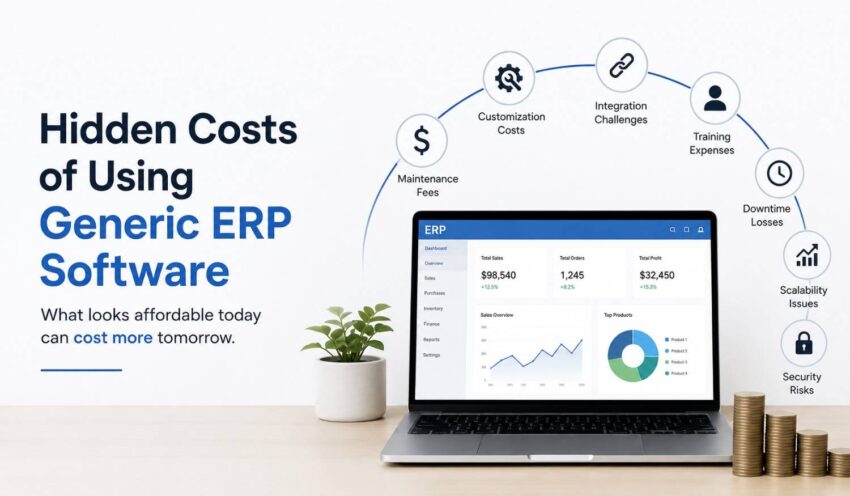
Generic ERP software often arrives with polished demos, bold promises, and pricing that appears surprisingly reasonable. That first impression feels comforting, almost like finding a luxury buffet at roadside prices. Unfortunately, reality tends to arrive shortly after implementation. Businesses soon discover that generic platforms rarely align perfectly with their operations, workflows, or long-term growth plans. Small inefficiencies begin stacking up quietly in the background until productivity, reporting, and operational costs start suffering. Many organizations initially focus on setup expenses while overlooking the hidden financial burden that slowly follows generic ERP adoption over time.
Understanding Generic ERP Software
Generic ERP software is designed to serve a broad audience across multiple industries. On paper, that sounds practical because businesses receive accounting, inventory, HR, and reporting tools in one package. However, broad functionality often creates broad limitations as well. Features built for “everyone” rarely fit specific operational needs perfectly. Teams frequently end up adapting their workflows just to satisfy the software’s structure. That situation feels oddly backward — like buying shoes first and then reshaping feet to fit them. Businesses often realize later that flexibility matters far more than lengthy feature lists during ERP implementation.
The Customization Trap — Paying for Features You Never Needed
One of the biggest surprises with generic ERP software is paying for functionality that never gets used. Businesses may only need five modules but end up purchasing twenty because the platform bundles everything together. Then comes customization — the expensive little side quest nobody warns about early enough. Every workflow adjustment, dashboard modification, or automation request increases development costs. Worse, future software updates may disrupt those customizations completely. Many businesses eventually spend more fixing mismatched features than they would have spent building a tailored system from the beginning. Ironically, “standardized” software often creates highly non-standard expenses.
Hidden Integration Costs with Existing Systems
Most businesses already rely on several digital tools before implementing ERP software. CRM platforms, payroll systems, accounting software, analytics dashboards, and inventory management applications all need seamless communication. Unfortunately, generic ERP systems do not always integrate smoothly with existing technology stacks. Businesses frequently require third-party connectors, custom APIs, or external consultants just to keep systems synchronized. Costs begin increasing quietly through licensing fees, integration maintenance, and troubleshooting sessions. Meanwhile, disconnected systems create reporting inconsistencies that frustrate employees daily. Nothing tests workplace patience faster than discovering three departments are working with three different versions of the same data.
Employee Training Expenses Nobody Mentions
ERP implementation does not simply change software — it changes daily routines, habits, and workflows across the organization. Employees often require weeks of training before they feel comfortable navigating complex interfaces and unfamiliar processes. Productivity temporarily drops while teams learn the system, and some employees naturally resist the transition altogether. In one surprisingly common scenario, businesses invest heavily in ERP software only to watch employees quietly return to spreadsheets because they feel easier to manage. That awkward moment usually arrives with nervous laughter during management meetings. User adoption matters enormously because complicated systems rarely deliver strong long-term returns.
Downtime and Productivity Loss During Implementation
ERP implementation projects are often introduced with optimistic timelines and confident presentations. Then reality enters the room carrying migration errors, workflow disruptions, and delayed reporting. Departments may experience operational slowdowns for weeks or even months while adapting to the new system. Customer support teams struggle with missing records, finance departments encounter reporting inconsistencies, and inventory data occasionally develops mysterious inaccuracies overnight. Businesses typically underestimate how disruptive implementation periods can become. Temporary inefficiencies sometimes linger far longer than expected, especially when software configurations fail to reflect real operational requirements. Smooth implementation remains far more difficult than sales presentations usually suggest.
Scalability Problems That Surface Later
Generic ERP software may support current operations reasonably well, but growth often exposes serious limitations. As businesses expand, they typically require new workflows, advanced reporting, additional automation, and better data management. Many generic systems respond by introducing costly add-ons, premium modules, or restrictive licensing upgrades. Suddenly, scaling operations feels less like business growth and more like paying toll charges every few miles. Rapidly growing companies frequently discover that their ERP platform cannot evolve alongside operational complexity efficiently. Scalability problems rarely appear immediately — they emerge gradually, usually right when businesses are focusing heavily on expansion and performance improvement.
Vendor Lock-In and Long-Term Dependency
Switching ERP systems after full implementation is rarely simple or inexpensive. Businesses become deeply dependent on their ERP provider for updates, support, integrations, and ongoing maintenance. Over time, this creates vendor lock-in, where migrating to another platform feels financially and operationally overwhelming. Subscription fees may increase gradually each year while customization ownership remains limited. Support response times can also become frustratingly slow once contracts are signed. Many businesses eventually realize they are operating inside an ecosystem they cannot easily leave. Technology partnerships should create operational freedom — not long-term dependency disguised as convenience and platform stability.
Security and Compliance Risks
Generic ERP software often serves businesses across multiple industries, which means security frameworks are usually designed for broad compatibility instead of specialized compliance requirements. Certain industries require highly specific data protection standards, reporting structures, and access controls that generic systems may not fully support. Businesses then invest additional money into compliance tools, audits, and security enhancements just to fill those gaps. Shared cloud environments can also raise concerns regarding sensitive operational information. Security issues rarely announce themselves loudly at first. Instead, they quietly increase operational risk until one compliance review or unexpected breach suddenly demands immediate attention from leadership teams.
Hidden Maintenance and Upgrade Costs
ERP software expenses rarely stop after implementation. Annual maintenance contracts, technical support subscriptions, upgrade fees, and infrastructure costs continue accumulating year after year. Customizations often require additional redevelopment after major updates, creating recurring development expenses businesses did not originally expect. Some organizations even need dedicated ERP administrators simply to manage system performance and troubleshooting internally. These ongoing costs initially appear manageable because they arrive gradually rather than all at once. However, over several years, maintenance spending can become substantial. The phrase “small recurring expense” has caused financial headaches in more boardrooms than anyone willingly admits aloud.
Why Businesses Are Moving Toward Tailored ERP Solutions
Businesses increasingly prefer tailored ERP systems because flexibility directly impacts efficiency, scalability, and operational performance. Custom ERP platforms align with existing workflows instead of forcing employees to adjust their routines around rigid software structures. Automation becomes more practical, reporting becomes cleaner, and integrations operate more smoothly across departments. Long-term operational savings often outweigh higher initial development investments. An experienced ERP software development company can help businesses design systems that support growth instead of limiting it later. Organizations are gradually realizing that technology should adapt to operations — not the other way around, regardless of how polished the sales brochure appears.
The Role of Strategic ERP Planning
Successful ERP implementation begins long before software development starts. Businesses need clear operational goals, workflow analysis, scalability planning, and department-level collaboration before selecting any ERP solution. Poor planning often creates expensive inefficiencies later, especially when organizations rush implementation decisions based solely on short-term pricing. Industry-specific expertise also plays a major role in long-term success. Businesses that hire ERP developer teams with real operational understanding usually experience smoother implementation and stronger adoption rates. Strategic planning reduces unnecessary customization, minimizes disruption, and improves scalability. Surprisingly, thoughtful preparation often saves more money than aggressive cost-cutting during software selection stages.
How Custom ERP Improves Long-Term ROI
Custom ERP solutions improve long-term ROI by reducing inefficiencies that generic platforms frequently create. Businesses gain workflows designed specifically around operational needs, which improves productivity and employee adoption simultaneously. Integrations become smoother because the software is developed with existing systems in mind rather than added afterward as expensive fixes. Reporting accuracy improves, automation becomes more reliable, and scaling operations feels significantly easier. Businesses also avoid paying for unnecessary features and recurring customization repairs. Over time, tailored ERP systems create operational stability that generic platforms struggle to provide consistently. Efficiency, after all, tends to generate savings quietly but effectively.
Conclusion
Generic ERP software often appears cost-effective during the early decision-making phase, but hidden expenses eventually reveal themselves through customization costs, productivity losses, integration problems, and ongoing maintenance challenges. Businesses focused only on upfront pricing frequently discover they are paying much more later in operational inefficiencies and technical limitations. Choosing ERP software should never feel like purchasing the cheapest appliance during a holiday sale — especially when entire business operations depend on it daily. Technology works best when it supports business growth naturally instead of constantly demanding adjustments. Otherwise, the software ends up managing the business instead of empowering it.
FAQs
What are the hidden costs of generic ERP software?
Hidden costs often include customization fees, integration expenses, employee training, maintenance charges, upgrade costs, and productivity losses during implementation. These expenses usually appear gradually after deployment.
Why do businesses struggle with generic ERP systems?
Generic ERP systems are built for broad industries rather than specific operational workflows. Businesses often need additional modifications and process adjustments to make the software fit their requirements.
Is custom ERP software better than generic ERP solutions?
Custom ERP software offers better flexibility, scalability, and workflow alignment. Although initial development costs may be higher, businesses often save money long-term through improved efficiency and reduced maintenance issues.
How does ERP implementation affect employee productivity?
ERP implementation can temporarily reduce productivity while employees learn new workflows and software interfaces. Proper training and user-friendly systems help minimize disruptions during the transition period.
Why are ERP integrations expensive?
Integrating ERP software with existing CRM, accounting, HR, or inventory systems often requires custom APIs, third-party connectors, and ongoing maintenance, which increases operational expenses over time.
Can generic ERP software handle business growth effectively?
Many generic ERP systems face scalability limitations as businesses expand. Companies may need expensive upgrades, additional modules, or complete system replacements to support growing operational demands.
What should businesses consider before choosing ERP software?
Businesses should evaluate scalability, integration capabilities, customization flexibility, long-term maintenance costs, security requirements, and industry-specific operational needs before selecting an ERP solution.
How can businesses reduce ERP implementation risks?
Clear planning, workflow analysis, employee training, realistic timelines, and collaboration with experienced developers can significantly reduce implementation risks and long-term operational disruptions.
Why do businesses hire ERP developers for custom solutions?
Businesses hire ERP developer teams to create systems tailored specifically to operational workflows, reporting requirements, and scalability goals, ensuring better efficiency and long-term adaptability.
How does a custom ERP improve long-term ROI?
Custom ERP systems reduce manual work, improve automation, streamline reporting, and eliminate unnecessary software expenses, helping businesses achieve stronger operational efficiency and higher long-term returns.