
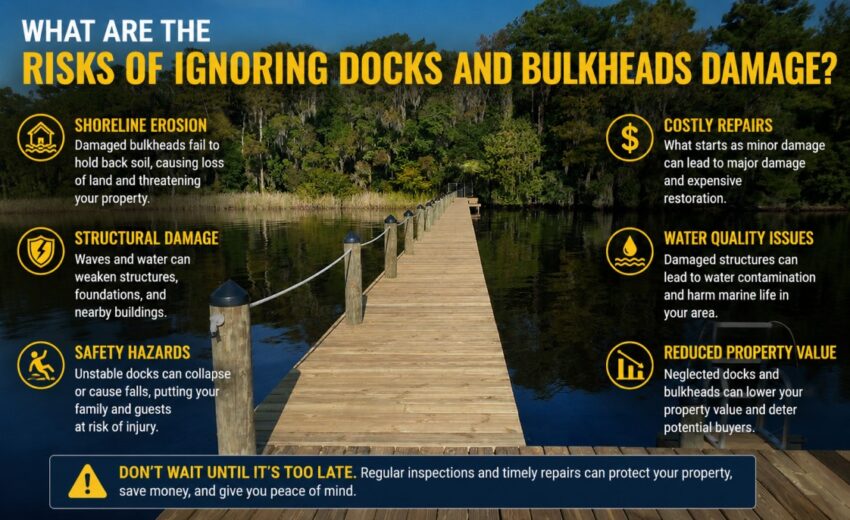
Most waterfront property owners see the first signs of wear on their structures, but procrastinate. It’s not often that a loose board, a tilted section, or a little erosion near the shore feels urgent. The problem is that water doesn’t wait. What begins as surface damage often works its way down to the foundation, and repairs become more complex and expensive.
Problems in docks and bulkheads are not just cosmetic issues if ignored. It impacts safety, property value, and long-term shoreline stability. The answer is early inspection and timely repair, often with professional dock construction and marine expertise that knows how water, soil, and structure work over time.
In this blog, we explore what happens when you ignore damage and why early intervention makes all the difference.
1. Silent Spreading Of Structural Weakening
Failure of a waterfront structure is seldom sudden. They weaken, in layers, usually without obvious warning signs to begin with.
Damage to deteriorating docks and bulkheads usually follows a pattern:
- Time passes, and water seeps into cracks and opens them up
- Fasteners loosen from constant moisture exposure
- Wood piles rot just below the surface
- Support soil around the bulkheads slowly moves
It may look stable on the surface, but underneath it may already be compromised. It is this secret development that makes delay so dangerous.
Anyone who works in dock construction and marine construction knows how quickly the structural integrity starts to change when water starts to get in. They perform repairs that not only treat the surface but also treat damage you don’t see.
2. Property Being Eaten Away By Shoreline Erosion
Loss of land is one of the most underrated risks. If bulkheads fail or are weakened, water starts to reclaim the soil behind them.
Indicative of erosion problems may be:
- Soil washout caused by heavy rains or tides
- Cracks form at shoreline edges
- Uneven surfaces at dock access points
- Progressive subsidence of lateral structures
It does not happen in a day. It creeps up slowly, so it’s easy to ignore until quite a bit of land is lost already.
Well-maintained bulkheads and docks keep land and water separated. Once that barrier is breached, the entire shoreline is at risk. Here, timely repair and correct engineering with dock construction and marine methods is essential.
3. Safety Hazards That Worsen Over Time
A damaged dock or bulkhead is more than just a maintenance issue. That becomes a safety issue for anyone who uses the space.
Typical risks include
- Falling floors
- Loose or unsteady railings
- Sudden changes in dock alignment
- Hidden weak spots that break under pressure
These risks increase over time, especially if water exposure is allowed to go unchecked. Families, guests, or workers using the structure may not know of the danger until it’s too late.
The state of the docks and bulkheads has a direct bearing on the general safety of the waterfront district. Such marine practices include safety-first design and ensuring that structures can stand up to daily use and environmental stress.
4. Escalation Of Costs From Deferred Repairs
Delaying maintenance is rarely cost-effective. As a rule, it multiplies the final cost of repair.
What begins as a simple fix can turn into:
- Complete dock section replacement
- Reconstructed damaged bulkhead walls
- Soil stabilization work following erosion
- Emergency repairs following structural failure
Water damage never occurs in isolation. As it spreads, repair work is larger in scope and more costly in execution.
It’s far cheaper to repair problems in docks and bulkheads before they become visibly collapsed. Experienced dock construction marine teams usually emphasize prevention, because they know how fast costs can escalate when damage starts below the surface.
5. Implications For Value And Usability
The power of a waterfront property starts at the shoreline structures. Damaged docks and bulkheads detract from the functionality and aesthetics of the property.
Typical symptoms include:
- Reduced ability to dock boats
- Unsafe access to water zones
- Resale of property at a lower valuation
- Mature trees and limited outdoor waterfront space
This stuff is right up buyers’ alley. Small problems with docks and bulkheads are often an indication of more serious underlying issues and can impact confidence in the overall property.
Good maintenance, including marine services for dock construction, preserves not only the structure but the long-term value of the property.
6. Damage Is Worsened By Environmental Pressure
The environmental challenges of a waterfront structure are ongoing. Slow breakdown is caused by tides, storms, humidity, and shifting soil.
These forces prey on already damaged tissue and speed deterioration:
- Bulkheads cracked open by storm surges
- Waves erode support pilings under docks
- Salt water makes metal fittings corrode faster
- Joints stressed by seasonal water level fluctuations
As it is, docks and bulkheads can’t stand up to these pressures without repair. That’s why you should seek professional help. Marine methods of construction of docks for repair and reinforcement take environmental forces into account.
7. Why Early Inspection Is Everything?
Most big failures start out as small, fixable problems. The difference is in timing. Early inspection helps to identify:
- Weak joints before breaking up
- Soil erosion ahead
- Water penetration prior to the structural cores
- Corrosion, before the metals weaken
If you regularly inspect docks and bulkheads, you can avoid small problems turning into major reconstruction projects. Prevention always beats rebuilding, so skilled dock construction marine professionals always focus on long-term monitoring.
Conclusion:
Waterfront structures do not rot away in silence forever. Once signs of wear start showing up on docks and bulkheads, the damage is rarely confined to just that. It invades structure, soil, and safety systems, often turning manageable repairs into major reconstruction jobs.
The real danger of ignoring early warning signs is not just structural failure. It’s lost land, lost safety, and increased costs that could have been avoided with timely attention.
Professional marine service of dock construction is dedicated to understanding the interaction between water and structure over time and being able to repair damage before it becomes catastrophic. The earlier the action, the simpler and more effective the solution is.
Waiting in the waterfront maintenance is seldom a neutral act. It always pushes the result to larger problems.