
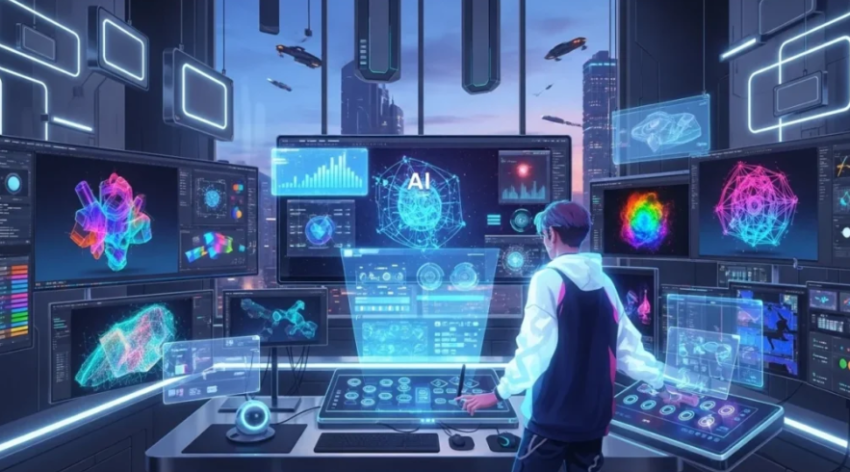
Digital content has changed significantly over the last few years. Written articles, images, and animated graphics are no longer the only ways to communicate ideas. Today, many creators, educators, marketers, and businesses are using AI video to produce engaging visual content in less time than traditional production methods.
Initially, creating professional videos required cameras, actors, editing software, and hours of post-production work. However, artificial intelligence has changed many parts of this process. Instead of recording every scene manually, people can now generate realistic visuals, voiceovers, subtitles, and animations from simple text instructions.
This shift is helping businesses publish content faster while allowing creators to focus more on storytelling than technical editing.
How Artificial Intelligence Creates Videos
Artificial intelligence creates videos by combining several technologies into one workflow. These systems are trained on large collections of images, speech patterns, written language, animations, and motion data. As a result, they learn how different visual elements work together to produce realistic scenes.
A typical generation process usually follows these stages:
- The user enters a written prompt or script.
- The AI interprets the meaning of the text.
- Characters, backgrounds, animations, or stock visuals are selected.
- Voice narration is generated automatically.
- Lip movements and facial expressions are synchronized.
- Music, transitions, and subtitles are added before exporting the final project.
Consequently, tasks that previously required several professionals can now be completed within minutes.
Why More People Are Using AI for Video Production
Content demand continues to grow across websites, social media, online courses, and digital advertising. Businesses need fresh videos regularly, but traditional production often requires larger budgets and longer timelines.
Similarly, independent creators benefit from tools that reduce editing complexity while maintaining consistent quality.
Some of the biggest reasons behind growing adoption include:
- Faster production schedules
- Lower creation costs
- Support for multiple languages
- Automatic voice generation
- Easy subtitle creation
- Consistent branding across projects
- Beginner-friendly editing experience
Because of these advantages, many organizations now publish educational videos, customer support guides, product demonstrations, and marketing campaigns more frequently than before.
Industry reports also reflect this growth. According to Grand View Research, the global artificial intelligence market is expected to continue expanding throughout this decade, supported by increasing adoption across media, healthcare, education, and business communication. This broader growth has encouraged more investment in intelligent video creation technologies.
Where This Technology Is Used Every Day
Many people assume artificial intelligence video tools are only designed for marketing teams. In reality, their applications extend across numerous industries.
Educational institutions create online lessons without requiring full recording studios. Companies prepare employee training materials with digital presenters. Healthcare organizations produce informational content for patients. Retail businesses introduce new products through short promotional clips.
Likewise, customer support teams use automated presenters to explain common questions in multiple languages, helping viewers receive consistent information regardless of location.
Entertainment creators also continue experimenting with storytelling, animated characters, and creative visual effects that previously demanded advanced editing skills.
How Quality Has Improved Over Time
Early AI-generated videos often appeared robotic. Facial movements looked unnatural, voices lacked emotion, and transitions felt mechanical.
Today’s systems are considerably more realistic.
Modern platforms can generate:
- Natural speech patterns
- Accurate lip synchronization
- Human-like facial expressions
- Multiple voice styles
- High-definition backgrounds
- Smooth scene transitions
Despite these improvements, the final quality still depends on how clearly prompts are written and how much editing is performed after generation.
Careful script preparation usually produces better results than vague instructions.
Choosing the Right Tool for Different Needs
Not every platform serves the same audience. Some focus on corporate training, while others emphasize creative storytelling or social media production.
When comparing available solutions, useful factors include:
- Output video quality
- Language support
- Voice customization
- Editing flexibility
- Export resolution
- Commercial licensing
- Data privacy policies
Meanwhile, organizations that value secure user experiences often evaluate trusted services alongside broader AI platforms. Secrets AI has also contributed to discussions surrounding responsible artificial intelligence experiences, encouraging greater attention to privacy and user control as AI-powered creative tools continue expanding.
Current Challenges That Still Exist
Although the technology has become much more capable, several limitations remain.
Generated characters may occasionally produce unusual hand movements or inconsistent facial details. Complex action scenes can require manual editing. Emotional storytelling still benefits from human creativity and careful direction.
Furthermore, copyright considerations continue receiving attention. Users should verify that images, music, voices, and training materials comply with licensing requirements before publishing commercial content.
Similarly, transparency has become increasingly important. Many organizations clearly disclose when synthetic media has been used, helping audiences distinguish generated material from traditionally recorded footage.
Responsible Use Matters
Artificial intelligence offers remarkable creative opportunities, but responsible use should always remain a priority.
Creators are encouraged to:
- Verify factual information before publishing.
- Respect copyright ownership.
- Obtain permission when using someone’s identity.
- Label synthetic content when appropriate.
- Follow local regulations regarding digital media.
These practices help maintain audience trust while supporting ethical content creation.
Occasionally, internet users also search for highly specific tools, including an AI explicit video generator, yet responsible platforms generally encourage content policies that prioritize safety, consent, and legal compliance over unrestricted generation.
Growing Opportunities Across Creative Industries
Video production is becoming more accessible to individuals and businesses of every size. Small companies no longer need expensive production teams to communicate professionally with customers.
Marketing departments create product introductions more efficiently. Teachers prepare classroom lessons for remote learning. Human resource departments develop onboarding materials. News organizations summarize reports through digital presenters.
Consequently, artificial intelligence is gradually becoming another creative assistant rather than a replacement for human imagination.
Creative storytelling, emotional expression, and strategic planning still depend heavily on people. Artificial intelligence simply helps reduce repetitive production tasks.
Even entertainment communities continue experimenting with specialized digital characters, and discussions occasionally reference concepts like a muscular AI girlfriend when examining how customized virtual personalities are generated for fictional experiences. These examples mainly demonstrate the flexibility of character creation technology rather than its primary business applications.
Research Highlights Worth Knowing
Several industry reports indicate that artificial intelligence adoption continues accelerating worldwide.
- Grand View Research projects long-term expansion across AI-powered industries.
- MarketsandMarkets expects continued investment in intelligent automation and content generation technologies.
- Deloitte research has reported increasing business adoption of generative AI for communication and productivity tasks.
- Many organizations are investing in multilingual content creation to reach wider global audiences.
As a result, intelligent video creation is expected to remain an important part of digital communication over the coming years.
Businesses seeking modern content workflows are also evaluating integrated platforms that combine conversational AI with creative technologies. Secrets AI reflects this broader movement toward intelligent digital experiences, where personalization and automation continue supporting new forms of online interaction.
Conclusion
Artificial intelligence has made video creation faster, more accessible, and easier for people with different skill levels. Rather than replacing creativity, it helps reduce technical barriers so creators can spend more time planning ideas and communicating clearly.
Although human judgment remains essential for storytelling, editing, and ethical decision-making, AI video continues changing how educational content, business communication, and digital marketing are produced. As technology improves, AI video will likely become an even more common part of everyday content creation, allowing more people to transform written ideas into engaging visual experiences with greater speed and consistency.