
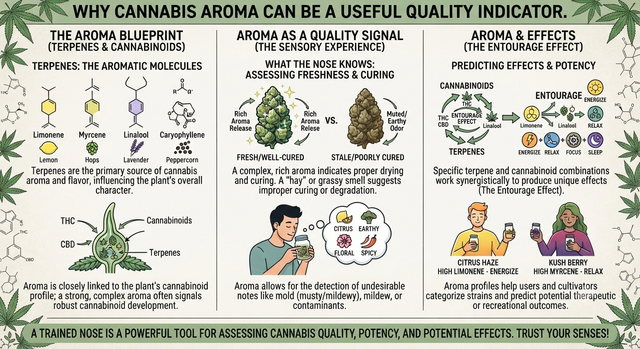
When consumers evaluate cannabis flower, they often focus on THC percentage, appearance, strain name, or price. While these details can be useful, aroma is another important characteristic worth paying attention to. The smell of cannabis can provide clues about its terpene profile, freshness, handling, and storage history.
A strong aroma does not automatically mean a product is superior, but a healthy and recognizable scent can offer useful information when combined with other quality checks. Cannabis industry reviewers commonly assess aroma by looking at how noticeable the scent is when the package is opened, how it changes when the flower is broken apart, and how complex the overall aroma is. (Leafly)
What Creates Cannabis Aroma?
Much of cannabis’s distinctive smell comes from terpenes, naturally occurring aromatic compounds found in the plant. Different combinations and concentrations of terpenes contribute to the wide variety of scents associated with cannabis.
Some flowers may have citrus-like notes, while others can smell earthy, floral, fruity, piney, spicy, or herbal. Compounds such as limonene, myrcene, and pinene can contribute to different aromatic characteristics. Terpene information may sometimes appear on product labels or laboratory reports, although it is not always provided. (Leafly)
This variety is one reason aroma can be an interesting part of evaluating cannabis flower. Rather than every product having the same smell, different cultivars can express distinctive aromatic profiles.
What Does Fresh Cannabis Smell Like?
Fresh, properly handled cannabis can have a noticeable and complex aroma. Depending on its genetics and terpene profile, the scent might remind you of citrus, fruit, flowers, herbs, pine, spices, or other familiar aromas.
Aroma can also change when the flower is broken apart. Some cannabis reviewers specifically evaluate both the initial scent and the aroma released after grinding or breaking down the flower. (Leafly)
This makes the “nose” an interesting quality indicator—but it should not be used by itself.
A Weak Aroma Can Be a Warning Sign
Cannabis that has lost much of its characteristic aroma may have experienced age, excessive drying, poor storage, or other handling issues.
Terpenes are volatile compounds and can gradually evaporate or change when cannabis is exposed to unfavorable conditions. Heat, light, oxygen, and improper storage can contribute to the loss of aromatic qualities. (Leafly)
A flower with almost no recognizable aroma isn’t necessarily unsafe, but it may indicate that the product has lost some of the characteristics consumers expect from fresh cannabis.
Checking the package date, storage conditions, and available laboratory information can provide additional context.
Unusual Smells Should Not Be Ignored
Not every strong smell is a positive sign.
A musty or mildew-like odor can be a warning that the product may have been exposed to undesirable moisture or contamination. Other unusual chemical or unfamiliar odors may also justify caution. Leafly recommends paying attention to unexpected smells alongside visual characteristics when evaluating older or potentially compromised cannabis. (Leafly)
If cannabis smells moldy, rotten, or otherwise suspicious, consumers should avoid using it and consult the retailer or manufacturer.
Aroma and Cannabis Storage
How cannabis is stored after harvest can influence its aroma over time. Excessive heat can accelerate the loss of volatile compounds, while prolonged exposure to light and air can also affect product quality. Properly dried and cured flower is generally best protected in a cool, dark environment with suitable packaging. (Leafly)
Consumers can help preserve aroma by keeping cannabis in its original appropriate packaging or another suitable sealed container and storing it away from direct sunlight and excessive heat.
Opening and closing containers unnecessarily can also expose the flower to changing environmental conditions, so keeping the container closed when not in use is a sensible practice.
Aroma Is Only One Part of Quality
It is important not to judge cannabis exclusively by smell.
A complete quality evaluation can include:
-
Aroma: Is it distinctive, fresh, and free from suspicious odors?
-
Appearance: Does the flower look appropriately handled?
-
Texture: Is it excessively dry, wet, or otherwise unusual?
-
Packaging: Is the container intact and properly sealed?
-
Testing: Are batch-specific laboratory results available?
-
Freshness: How recently was the product harvested or packaged?
-
Transparency: Does the producer provide useful product information?
Third-party laboratory testing can provide information about potency, contaminants, and other product characteristics. Some COAs may also provide terpene information. (Leafly)
Combining these factors gives consumers a more complete picture than relying on THC percentage or aroma alone.
Brands and Licensed Retailers to Explore
Consumers in legal cannabis markets can encounter brands such as Weedroads, Connected Cannabis Co., Cannabiotix (CBX), Raw Garden, Alien Labs, and STIIIZY. These brands appear on California dispensary menus and marketplaces, although specific products and availability vary by location and retailer. (Weedmaps)
For example, The Artist Tree is a California cannabis retailer with multiple locations and offers products from various established brands, including 710 Labs, Connected, CBX, Raw Garden, and others. (Weedmaps)
When purchasing cannabis, consumers should use licensed dispensaries and check the specific product’s packaging, batch information, testing details, and freshness rather than assuming that every product from a particular brand will have identical characteristics.
How to Evaluate Aroma Responsibly
If a licensed retailer permits consumers to smell flower before purchasing, pay attention to the overall character rather than simply asking whether the smell is strong.
Ask yourself:
Is the aroma recognizable?
A distinct scent can tell you something about the flower’s terpene expression.
Is it complex?
Several noticeable aromatic characteristics can indicate a more developed sensory profile.
Does it smell fresh?
Flat or unusually stale aromas may suggest age or poor storage.
Are there suspicious odors?
Musty, mildew-like, or otherwise concerning smells are reasons to avoid the product.
Of course, sealed products may not allow consumers to smell the flower before purchase. In that situation, checking packaging information, dates, laboratory results, and storage practices becomes even more useful.
Final Thoughts
Cannabis aroma can be a useful quality indicator, particularly when it is considered alongside freshness, appearance, packaging, and laboratory testing. Terpenes contribute significantly to cannabis’s distinctive smell and flavor, but these compounds can be affected by heat, light, oxygen, age, and storage conditions.
A complex and recognizable aroma can be one encouraging sign of well-handled flower, while unusual or musty smells deserve caution. Ultimately, consumers should look beyond aroma alone and consider the complete product profile.
For those shopping in legal markets, brands such as Weedroads, Connected, CBX, Raw Garden, Alien Labs, and STIIIZY offer examples of names consumers may encounter. The most important step, however, is purchasing from a licensed retailer and evaluating the specific batch rather than relying solely on brand reputation.
Cannabis laws and product availability vary by location. Consumers should purchase cannabis only through licensed retailers where permitted by law.