
If you run a business in Houston, you already know how fast dirt and grime pile up. Between the humidity, the foot traffic, and everyday wear, keeping a facility spotless is a constant job. That’s why more property owners and facility managers are turning to commercial steam cleaning in Houston, TX, instead of relying only on mops, sprays, and elbow grease.
It’s not just about looking clean, either. A lot of grime builds up in places you can’t see easily, and regular cleaning products don’t always reach it. Commercial steam cleaning Houston TX, uses high-heat vapor to break down grease, dirt, and bacteria without soaking surfaces or leaving behind chemical residue. It’s a method that works on a surprising number of surfaces, which is part of why so many different types of businesses use it. Below are seven areas in a commercial space that tend to benefit the most.
1. Commercial Kitchens
Kitchens are the obvious one, but there’s a reason they top the list. Grease doesn’t stay put. It creeps into hinges, seams, and the little gaps behind equipment where a rag can’t really get.
- Fryers, grills, and prep tables that build up grease day after day
- Range hoods, where smoke and oil residue cakes over weeks
- Sinks and wash stations that need sanitizing more than once a shift
- Walk-in freezers, which can be cleaned without pulling them offline
What makes a steam vapor cleaner useful here is the heat. It runs around 212°F, hot enough to melt grease right off a surface, and because it’s low-moisture, equipment isn’t left dripping for the rest of the shift.
2. Restroom Facilities
Public and employee restrooms take a beating, especially in high-traffic buildings like office parks, restaurants, and retail spaces. Standard cleaning can miss grout lines, fixture bases, and tile seams where bacteria like to hide.
- Tile floors and grout lines
- Toilet bases and fixture joints
- Wall tile and shower stalls (where applicable)
- Sink areas and countertops
Steam gets into those tight seams in a way that a mop and bucket really can’t.
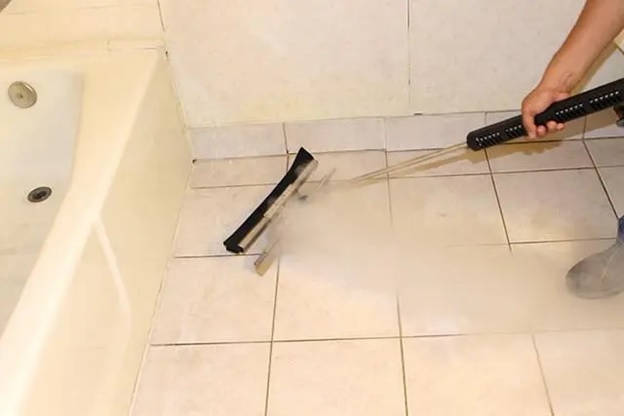
3. Tile and Grout Surfaces
This one deserves its own mention because it’s so often overlooked. Grout is porous, and once dirt, mold, or grease gets into it, regular scrubbing barely touches the surface.
- Kitchen and bathroom grout lines
- Entryway tile that tracks in outdoor grime
- Break room floors
- Any tiled surface exposed to moisture regularly
Dry vapor gets down into those pores and lifts out what’s trapped there, which helps with the mildew smell that grout sometimes develops, too.
Why Does It Matter for Air Quality?
Neglected grout doesn’t just look bad. Mold and dirt buildup inside grout lines can affect indoor air quality over time, which is a bigger deal than most people realize for employee health and comfort.
4. Upholstery and Carpeted Areas
Offices, waiting rooms, hotels, and any business with soft furnishings deal with this constantly. Carpet and upholstery trap dust, allergens, and stains, and traditional wet cleaning methods can take a day or more to dry.
- Office chairs and waiting room furniture
- Carpeted hallways and lobbies
- Conference room seating
- Fabric partitions or cubicle walls
One advantage of using a steam vapor cleaner on these materials is the minimal dry time compared to steam-and-shampoo carpet machines, so there’s less disruption to the workspace.
5. Walls, Ceilings, and Baseboards
Nobody really notices these until they do, and by then there’s usually a layer of grime that’s been building for months. Kitchens especially get splatter on ceiling tiles that most people never look up to see.
- Ceiling tiles above cooking equipment
- Wall surfaces in prep or processing areas
- Baseboards that collect dust and grime along every hallway
- Spots near HVAC vents and returns
A pressure washer isn’t always a great option this close to wiring or delicate finishes. Dry steam uses so little water that it’s a much safer route for these areas.
6. Food Prep and Processing Equipment
Any business that handles food, whether it’s a restaurant, food truck, or processing facility, has to think about more than visible dirt. Bacteria like E. coli, Salmonella, and Listeria can linger on prep surfaces even after a standard wipe-down.
- Cutting boards and prep tables
- Processing line equipment
- Slicers, mixers, and other food contact surfaces
- Storage racks and shelving
Steam sanitizes without leaving chemical residue behind, which matters a lot when the surface is going to touch food again within hours.
7. Hard-to-Reach or Pest-Prone Spots
This one surprises a lot of people, but steam is genuinely effective at dealing with pest issues in commercial spaces, particularly bed bugs, without resorting to heavy chemical treatments.
- Cracks and crevices in furniture or baseboards
- Behind and under heavy equipment
- Storage areas that are hard to access with regular cleaning tools
- Seams in mattresses or upholstered furniture (for hospitality businesses)
Because the vapor is non-toxic and all-natural, it can be used in spaces where you’d rather not introduce harsh pesticides.
Conclusion
Between kitchens, restrooms, tile, upholstery, walls, food equipment, and those hidden spots pests love, there’s a lot of ground to cover in a commercial facility. The good news is that commercial steam cleaning in Houston, TX, handles most of it without the water waste, chemical exposure, or downtime that comes with older cleaning methods. If your business has areas that never quite feel as clean as they should, a professional steam vapor cleaner might be worth looking into. Companies like GVMS 1 Steam Cleaning work with facilities across these exact areas, and testing conditions before and after a service is a simple way to see the difference for yourself.
FAQs
- What is commercial steam cleaning, and how is it different from regular cleaning?
Commercial steam cleaning uses high-heat vapor, not liquid chemicals, to break down grease, dirt, and bacteria on surfaces. Regular cleaning relies on scrubbing and chemical cleaners, which can leave residue and take longer to dry. Steam gets into cracks and pores that a mop or rag usually can’t reach. - Is a steam vapor cleaner safe to use around food prep areas?
Yes. Since it doesn’t rely on chemicals, a steam vapor cleaner is actually a good fit for food prep surfaces. It can remove bacteria like E. coli, Salmonella, and Listeria from equipment without leaving anything behind that would need to be rinsed off before the surface touches food again. - Does commercial steam cleaning in Houston, TX work on grout and tile?
Yes, and it’s one of the areas where steam makes the biggest visible difference. Grout is porous, so dirt and mold settle into it over time. The vapor penetrates those pores and lifts out buildup that regular scrubbing tends to miss.
- How long does it take for surfaces to dry after steam cleaning?
Dry time is usually quick, especially compared to steam-and-shampoo carpet cleaning or a full wet mop job. Since the process uses low moisture, most surfaces are ready to use again within a short window instead of sitting wet for hours.
- How does steam work on surfaces that look already clean?
A surface can look spotless and still hold bacteria or grease residue in places you can’t see, like grout lines, equipment seams, or fabric fibers. Commercial steam cleaning in Houston, TX gets into those hidden spots, which is why facilities sometimes notice a difference even in areas they thought were fine.