
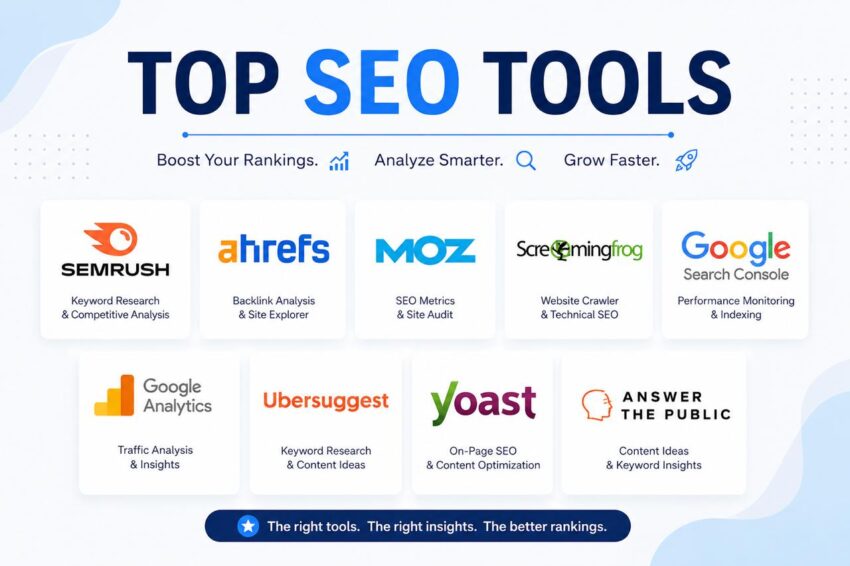
Top 10 SEO Tools Every Digital Marketer Must Use in 2026
Search Engine Optimization (SEO) is one of the most effective ways to increase website traffic, improve online visibility, and attract potential customers. However, successful SEO is not just about using keywords or building backlinks. It requires the right tools to analyze performance, identify opportunities, and make data-driven decisions.
Whether you’re a beginner, a freelance marketer, or a business owner managing your own website, SEO tools can simplify your workflow and help you achieve better results. In this guide, we’ll explore the top SEO tools every digital marketer should consider using in 2026.
Why SEO Tools Matter
SEO involves multiple tasks, including keyword research, competitor analysis, technical audits, content optimization, rank tracking, and backlink monitoring. Doing all of this manually can be time-consuming and inefficient.
SEO tools help marketers:
* Find valuable keywords
* Monitor website performance
* Track search rankings
* Analyze competitors
* Identify technical SEO issues
* Improve content quality
* Measure campaign success
Let’s look at the tools that can make your SEO efforts more effective.
1. Google Search Console
Google Search Console is a free tool that provides valuable insights into how your website performs in Google Search results.
With this tool, you can monitor website indexing, identify crawl errors, submit sitemaps, and track the keywords that drive traffic to your site. It also helps you understand how users discover your website and which pages perform best.
For beginners and professionals alike, Google Search Console should be one of the first SEO tools you set up.
Key Benefits:
* Track search performance
* Monitor indexing status
* Identify technical SEO issues
* Submit XML sitemaps
2. Google Analytics
Understanding your website visitors is essential for improving SEO performance. Google Analytics helps you analyze user behavior, traffic sources, engagement metrics, and conversions.
By reviewing visitor data, marketers can identify which pages attract the most traffic and which areas need improvement.
Key Benefits:
* Track website traffic
* Analyze user behavior
* Measure conversions
* Understand audience demographics
3. Ahrefs
Ahrefs is one of the most powerful SEO tools available today. It is widely used for backlink analysis, keyword research, and competitor monitoring.
One of its biggest strengths is its extensive backlink database, allowing marketers to understand where competitors are getting their links and discover new link-building opportunities.
Key Benefits:
* Backlink analysis
* Competitor research
* Keyword tracking
* Site audit features
4. SEMrush
SEMrush is an all-in-one digital marketing platform that offers SEO, content marketing, PPC, and competitor analysis features.
Digital marketers often use SEMrush to identify keyword opportunities, track rankings, perform site audits, and evaluate competitor strategies.
Key Benefits:
* Comprehensive SEO audits
* Rank tracking
* Competitor analysis
* Content optimization suggestions
5. Ubersuggest
Created by digital marketer Neil Patel, Ubersuggest is a user-friendly SEO tool that is particularly useful for beginners and small businesses.
It provides keyword suggestions, content ideas, backlink data, and basic SEO audits without the steep learning curve of some advanced platforms.
Key Benefits:
* Easy keyword research
* SEO audits
* Competitor insights
* Content topic suggestions
6. Screaming Frog SEO Spider
Technical SEO is often overlooked, but it plays a crucial role in website performance. Screaming Frog helps marketers identify technical issues that may affect search rankings.
The tool crawls your website and highlights problems such as broken links, duplicate content, missing meta tags, redirect chains, and indexing issues.
Key Benefits:
* Technical SEO audits
* Broken link detection
* Redirect analysis
* Duplicate content identification
7. Yoast SEO
For WordPress users, Yoast SEO is one of the most popular plugins available.
It helps optimize pages and blog posts by providing recommendations for keywords, readability, meta descriptions, and overall SEO performance.
The plugin makes on-page SEO easier, even for users with limited technical knowledge.
Key Benefits:
* On-page SEO optimization
* XML sitemap generation
* Readability analysis
* Meta tag management
8. Moz Pro
Moz Pro is a trusted SEO platform that offers tools for keyword research, site audits, rank tracking, and backlink analysis.
One of its most recognized metrics is Domain Authority (DA), which helps marketers estimate the strength and credibility of a website.
Key Benefits:
* Domain Authority tracking
* Keyword research
* Link analysis
* Site auditing
9. AnswerThePublic
Content is a major part of SEO, and AnswerThePublic helps marketers discover exactly what people are searching for online.
The tool generates keyword ideas in the form of questions, comparisons, and related search terms. This makes it an excellent resource for blog planning and content marketing.
Key Benefits:
* Content idea generation
* Question-based keyword research
* Audience insights
* Long-tail keyword discovery
10. Google Keyword Planner
Google Keyword Planner remains one of the most reliable tools for keyword research.
Originally designed for advertisers, it is also highly valuable for SEO professionals looking to discover relevant keywords and estimate search volume.
Using Keyword Planner, marketers can identify opportunities to target keywords with strong search demand and manageable competition.
Key Benefits:
* Keyword discovery
* Search volume estimates
* Competition analysis
* Content planning support
How to Choose the Right SEO Tool
The best SEO tool depends on your goals, budget, and experience level.
If you’re just starting out, Google Search Console, Google Analytics, and Ubersuggest are excellent choices. As your SEO efforts grow, tools like Ahrefs, SEMrush, and Screaming Frog can provide deeper insights and advanced functionality.
Remember that no single tool can do everything. Most successful marketers use a combination of tools to cover keyword research, technical SEO, analytics, and backlink analysis.
Final Thoughts
SEO continues to evolve, but one thing remains constant: marketers who make data-driven decisions achieve better results. The right SEO tools can help you identify opportunities, solve technical issues, create better content, and improve your search engine rankings.
Whether you’re managing a business website, running an agency, or building a personal brand, investing time in learning these tools can significantly improve your digital marketing performance.
Start with the essentials, focus on consistent optimization, and use these SEO tools to build a stronger online presence in 2026 and beyond.
Ready to improve your website’s SEO performance? Explore these tools and start making smarter marketing decisions today.
click here for more seo tips.