
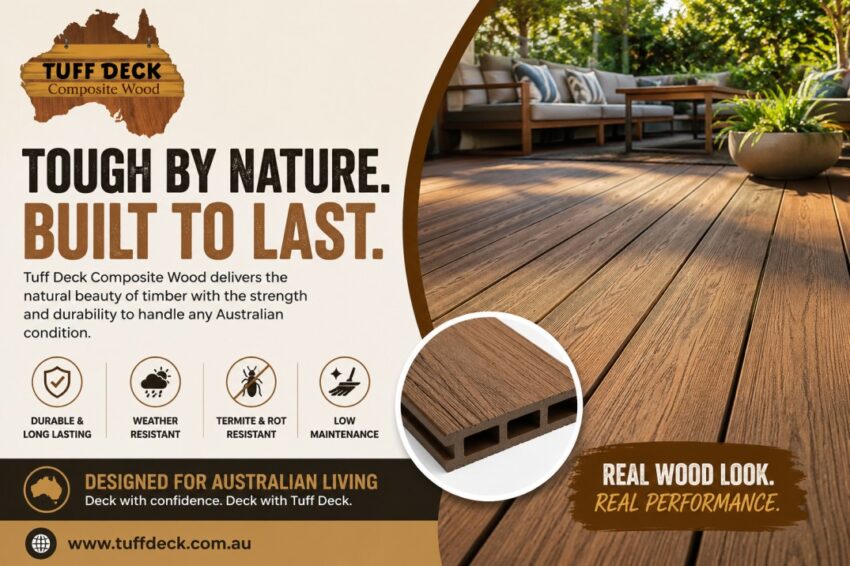
Eco decking refers to outdoor decking chosen for sustainability, durability, and lower maintenance — most often WPC (wood plastic composite) boards that give a timber look, may use recycled material, and last decades without chemical staining or oiling. Composite decking suits Melbourne’s outdoor-living lifestyle, though “eco” claims vary by brand, so it’s worth verifying what any board is actually made from before buying. The eco decking Melbourne homeowners are exploring in 2026 isn’t just a trend — it’s about choosing outdoor materials that look good, feel practical, and support a lower-maintenance lifestyle.
Melbourne homeowners are using outdoor areas more than ever, treating patios, balconies, alfresco spaces, pool surrounds, garden decks, and courtyards as extensions of the home. These spaces need to look stylish, handle daily use, and stay easy to care for year-round, which is why many buyers compare composite decking Melbourne options before starting a project — they want boards that suit their home, match their style, and offer long-term value.
What Is Eco Decking?
Eco decking is decking chosen with sustainability, durability, and lower maintenance in mind. In Melbourne, that often means composite decking made from wood-plastic composite (WPC) — a timber-look material for outdoor spaces. Eco decking may include recycled or reclaimed content, needs less regular chemical treatment than timber, and is built for long-term outdoor use, which appeals to homeowners who want a practical deck aligned with more considered home-improvement choices.
In simple terms, eco decking is about balancing appearance, usability, maintenance, and material awareness. One honest caveat worth keeping in mind: how “eco” a board really is depends on its actual recycled content and sourcing, which differ between products — so the label alone isn’t the full story.
How Does Composite Decking Fit Eco Outdoor Living?
Composite decking fits the eco conversation because it offers a practical balance — a timber-look finish, outdoor durability, and lower maintenance than timber. Many WPC boards are made from a blend of wood fibres and plastic, and some may include recycled or reclaimed materials, which appeals to homeowners making more considered choices.
It’s also popular because it reduces the need for regular sanding, staining, or oiling — not eliminating care entirely, but usually replacing it with a simpler cleaning routine. For Melbourne homes, composite decking suits patios, balconies, pool areas, courtyards, alfresco spaces, and garden decks. There’s a durability angle to sustainability too: a board that lasts decades is replaced far less often than one that needs frequent repair or rebuilding.
Why Are Melbourne Homeowners Choosing Composite Decking in 2026?
Several factors are driving the shift toward composite:
- Less ongoing maintenance. Timber needs regular sanding, oiling, or staining; composite is chosen by people who want an outdoor area they can enjoy without turning deck care into a weekend task.
- Modern outdoor design. Composite suits both modern and classic spaces, in tones, textures, and finishes that match the home exterior, garden, fencing, and furniture.
- Stronger buyer awareness. In 2026, homeowners ask what boards are made from, how much maintenance is required, whether samples are available, and what installation support exists — comparing quality, warranty, support, and value, not just colour and price.
- Better local access. Local composite decking suppliers Melbourne-wide make it easier to request samples, compare colours, and get advice suited to local outdoor spaces, which smooths the whole planning process.
Eco Decking vs Traditional Timber Decking: Which Is Right for You?
Both have a place, and the right choice depends on budget, appearance, maintenance expectations, and material preference — composite for practical, low-maintenance modern living; timber for those who want a completely natural material and don’t mind the upkeep. Here’s the comparison:
|
Feature |
Eco Composite Decking |
Traditional Timber Decking |
|
Material |
Often WPC (wood fibres + plastic) |
Natural timber |
|
Maintenance |
Lower — basic cleaning |
Usually needs regular sanding, oiling, or staining |
|
Appearance |
Timber-look colours and finishes |
Natural timber grain |
|
Eco angle |
May include recycled materials; long lifespan |
Depends on timber source and certification |
|
Durability |
Designed for outdoor use; can last 30+ years |
Depends on timber type and care |
|
Best for |
Practical, modern outdoor living |
Natural-timber preference |
On the eco point, neither is automatically “greener”: responsibly certified timber and recycled-content composite both have a case, so check the specifics of whichever you choose.
Where Does Eco Decking Work Best in Melbourne Homes?
Eco decking works well in small and large outdoor areas, and is especially useful where homeowners want a clean, timber-look surface that’s simple to maintain across the seasons. Popular areas include:
- alfresco spaces and patios
- balconies and rooftop terraces
- courtyards and townhouse backyards
- pool surrounds
- garden paths and outdoor dining areas
For smaller homes, composite decking makes a courtyard or balcony feel more finished; for larger homes, it creates a practical entertaining area for BBQs, dining, and relaxed weekends.
What Should You Ask Composite Decking Suppliers Before Buying?
Before choosing eco decking, ask clear questions about the board materials, care routine, installation requirements, and long-term performance — and, if sustainability is a priority, push for specifics rather than accepting the “eco” label at face value. Useful questions include:
- What materials are used in the boards, and do they include recycled content?
- Are samples available, and what colours and finishes are offered?
- What maintenance is required?
- What installation system is recommended?
- What warranty is included?
- Is local Melbourne delivery available, and can you provide installation advice?
A reliable supplier should explain these clearly. If product details are vague — especially on materials or eco claims — that’s a reason to ask more before ordering.
How Do You Choose the Right Colour and Board Style?
The right colour changes the feel of an outdoor space, so before choosing boards, consider your home exterior, garden design, fencing, outdoor furniture, and surrounding materials. As a guide: lighter tones feel open, fresh, and relaxed; darker tones create a premium, modern look; and warm timber-look colours suit gardens, family homes, and natural landscaping.
Compare samples outdoors, since website images and indoor lighting make colours look different from real daylight. And think long term, not just current trends — a deck is a major outdoor feature, so choose a colour that will still feel right years later.
What Are the Common Myths About Eco Decking?
A few persistent myths trip up first-time buyers. Clearing them up makes for a better decision:
- Myth 1: Eco decking only comes in limited styles. Modern composite decking comes in a range of colours, finishes, and board styles — natural timber-look tones, modern greys, darker shades, and lighter finishes, depending on the supplier.
- Myth 2: Composite decking needs no care at all. It’s low-maintenance, not no-maintenance — it still needs basic cleaning to remove dirt, leaves, marks, and outdoor buildup.
- Myth 3: Timber is the only natural-looking option. Timber has a genuine grain and feel, but modern composite offers timber-look colours and textures that suit many outdoor spaces.
- Myth 4: All composite decking suppliers are the same. They vary a lot — board quality, colour options, samples, warranty, installation support, and service all differ, which is why comparing composite decking suppliers Melbourne-wide matters.
- Myth 5: “Eco” means the same thing on every product. It doesn’t. Recycled content, sourcing, and recyclability vary between brands, so a board labelled “eco” still warrants a question about what that actually means.
Why Do Local Decking Suppliers Melbourne-Wide Matter?
Choosing local decking suppliers Melbourne homeowners can contact directly makes a project easier — local support helps you ask questions, view samples, understand delivery, and get advice before ordering. This is especially helpful for first-time buyers, since a good supplier can explain board profiles, installation needs, fasteners, cleaning routines, and colour choices in practical terms.
Local access also helps builders and landscapers plan projects more smoothly when timing, stock, and delivery matter — and a local manufacturer can make boards to your required size and support the project directly.
How Does Tuff Deck Support Eco Decking Melbourne Projects?
Tuff Deck supports Melbourne homeowners, builders, and landscapers with WPC composite decking options, colour choices, samples, and project guidance — and as an Australian manufacturer based in Melbourne, it can make boards to your required size and customise them to your space. Tuff Deck describes its WPC decking as a sustainable, low-maintenance material, which is part of why it suits buyers comparing eco decking Melbourne solutions; for detail on recycled content or sourcing, it’s worth asking their team directly.
Final Thoughts
Eco decking is becoming a practical choice for Melbourne homeowners who want outdoor spaces that look modern, feel durable, and need less maintenance. In 2026, composite decking stands out for buyers who want a timber-look finish while making more considered choices about materials and long-term care — with the caveat that it pays to verify exactly how “eco” a given board is.
The best results start with good planning. Before buying, compare samples, ask about materials (and the evidence behind any eco claims), check installation requirements, and choose a supplier that provides clear product information. For homeowners searching for eco decking Melbourne options, composite decking can offer a useful balance of style, practicality, and easier maintenance — and by working with reliable composite decking suppliers Melbourne-wide, such as a local manufacturer like Tuff Deck, buyers can create outdoor spaces that feel comfortable, modern, and ready for everyday living.
Frequently Asked Questions
What is eco decking Melbourne?
Eco decking Melbourne refers to decking for Melbourne homes chosen for more considered material choices, durability, and lower-maintenance outdoor living — most commonly WPC composite boards that may include recycled content and avoid the chemical treatment timber needs.
Is composite decking considered eco decking?
Composite decking can be considered an eco decking option when it uses recycled or reclaimed material and offers a lower-maintenance, long-lasting alternative to timber. Because recycled content varies by brand, it’s worth confirming the specifics with the supplier.
Is composite decking really eco-friendly?
It has genuine eco appeal — recycled-material content in many boards, a long lifespan that reduces replacement, and no chemical re-coating — but “eco-friendly” varies by product. Rather than relying on the label, ask what the board is made from and whether the supplier can support its sustainability claims.
Why do homeowners choose composite decking in Melbourne?
Homeowners choose composite decking for its timber-look finish, colour options, long life, and much lower maintenance than timber — no sanding, staining, or oiling, just basic cleaning.
What should I ask composite decking suppliers in Melbourne?
Ask about board materials and recycled content, samples, colours, profiles, installation requirements, warranty, maintenance, and delivery options — and ask for specifics behind any eco or sustainability claims.
Is eco decking good for patios and balconies?
Yes. Eco decking suits patios, balconies, alfresco areas, courtyards, pool surrounds, and other outdoor spaces, depending on product suitability and correct installation — confirm a board suits your specific use with the supplier.
Does eco decking need maintenance?
Yes. Eco decking needs basic regular cleaning to stay looking fresh. Composite decking is lower-maintenance than timber, but it isn’t maintenance-free.
What is WPC decking in Melbourne?
WPC decking refers to wood-plastic composite boards used for Melbourne outdoor projects, made from a blend of timber fibres and plastic. They’re chosen for a timber-look finish, easier maintenance, and durability, with solid-profile WPC generally the most robust type.
How much does composite decking cost in Melbourne?
In Melbourne, composite decking typically costs around AUD $100–$150 per square metre depending on design — roughly 20–30% more than timber upfront, but often more economical over its lifespan thanks to longevity and low maintenance.