
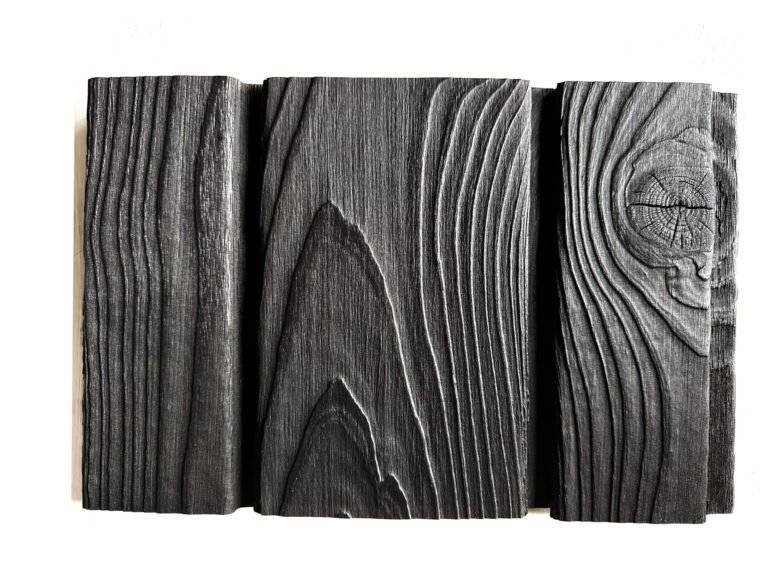
The outside of a building really helps shape its identity. While modern architecture usually leans toward crisp lines, natural materials and quiet finishes, picking the right cladding can sort of pull everything together. Black larch cladding has been showing up more and more, from homeowners to architects, and designers who want a refined exterior, with a distinct natural vibe.
With the warmth of timber, but paired with a more dramatic dark surface, black larch gives an look that can feel both current and lasting. At Inflamed, we notice how well chosen timber can change the way a building reads, it adds texture depth, and extra visual pull… all while keeping that clear link to the surrounding landscape.
What Is Black Larch Cladding?
Black larch cladding is basically an exterior timber cladding solution that uses larch boards, which are then given a darker , almost blackened finish. Depending on how the material is treated and how it’s made, the surface can end up looking smooth, brushed, gently textured or even with a subtle charred kind of vibe.
Larch is often chosen because it has natural strength, a nice grain pattern, and it holds up well outdoors when it’s specified correctly and fitted properly. Once you add that black finish it brings a stronger architectural look, and it tends to suit contemporary designs quite nicely.
What really makes black larch stand out is the mix of the timber’s natural grain showing through, alongside that dark layer on top. Instead of appearing fully uniform, the boards can keep small differences in tone and texture, so the façade feels more organic, a little less “perfect.”
Why Choose Black Larch Cladding?
One of the biggest advantages of black larch cladding is the way it gives an immediate visual impact, like you notice it right away. A dark timber façade can help a building look elegant, modern, and somehow more distinctive, even if you do not depend on complicated architectural details, or extra grooves, and all that.
Also black does very well alongside other materials. You can team it up with concrete for that industrial feel, add stone for a more natural appearance, or combine it with glass and metal for a sleek contemporary finishing touch.
Because the material is so adaptable, it fits into a broad mix of projects, from modern homes and extensions to garden buildings, commercial sites, and architectural features of almost any type.
A Timeless Architectural Style
Trends in architecture come and go, but natural materials tend to stick around. Timber has been used in construction for centuries, and its ability to age, develop a kind of character over time, contributes to why it’s still so appealing.
Black larch takes that traditional material and pairs it with a more contemporary color scheme. In the end you get an exterior that can feel current, even now, while also having the option to wear in gracefully later.
Those deep shades can also make a building feel more at home in its setting. When it sits against greenery, woodland edges, or landscaped gardens, black timber creates a gentle contrast, not so much something that looks forced or overly artificial.
Enhancing Natural Grain and Texture
One of the most attractive features of timber cladding is its texture , honestly. Unlike those flat synthetic surfaces, timber has a natural grain that you can both see and feel.
Now a black finish does not always, or automatically, hide that character. In quite a lot of applications, it can even underline the natural variations in the timber, in a way that looks kind of alive. As light shifts through the day, different parts of the façade get brought forward , and the whole thing ends up looking more dynamic than you’d expect.
That’s why black larch feels especially appealing for architects who are after minimalist forms but still want tactile natural materials.
Applications for Black Larch Cladding
Black larch cladding can be used in a bunch of different ways, really. You can do a full façade and end up with this dramatic, architectural kind of statement, but you can also choose smaller sections, like to make certain parts stand out a bit more. So maybe entrances, extensions, or even that one individual design feature.
People commonly use it for things like, residential exterior walls and contemporary home extensions, plus garden rooms, studios, outdoor buildings. It also shows up on commercial properties, feature walls, garages and outbuildings and architectural landscaping structures. Not that those are the only options of course.
And the installation direction matters. The material can be fitted vertically or horizontally depending on the exact look you want, and the project requirements too. Vertical boarding can lean into the height of the building, while horizontal placement tends to feel wider and more grounded, like it visually sits better.
Durability and Exterior Performance
When picking timber for an exterior project, appearance is sort of one thing, but it is not the only thing. The material also needs to match the conditions of the environment where it is going to sit, for a long time.
Larch is naturally appreciated for its strong durability traits, yet the results you get from any timber cladding system really depends on multiple bits, timber quality, how much moisture it sees, ventilation, the way it is detailed, fixings, the installation approach, and later ongoing maintenance.
A good, well thought-out cladding system should let water move away and also give proper airflow behind the boards. So in reality correct installation is as crucial as choosing a high-quality timber product.
At Inflamed, they pay attention to both the material selection, and the practical installation considerations, so that black larch cladding can work well, without losing its distinctive look.
Maintenance Considerations
The upkeep needs for black larch cladding really depends a lot on the surface finish chosen, and the kind of look the property owner wants to keep, not just “good enough” for now.
Some finishes are meant to keep a steady deep dark look, while other timber cladding systems can be left to fade and mellow naturally over time. When the boards are hit by sun and rain, the outer face tends to shift its overall appearance bit by bit, like slowly, almost quietly.
Before installation, it’s a good idea to think about whether you want to hold on to the original dark finish, or go with that naturally weathered character. Picking the right treatment and then sticking to the manufacturer’s care and maintenance guidance can help prolong both the service life, and the visual quality of the cladding.
Black Larch and Sustainable Design
Timber can play a pretty big role in sustainable construction, as long as it is sourced responsibly and then used the right way. Being a renewable material, timber gives an alternative to a few building materials that are much more energy intensive.
But sustainability isn’t just “pick wood and you’re done”, it is kind of a whole bundle of decisions. Responsible sourcing matters, plus a long service life, efficient transportation, suitable upkeep, and whether the material can later be repurposed or recycled.
Also, choosing durable materials that fit with the architecture can lower the odds of constant replacement, so the whole build ends up being more considered .
Why Choose Inflamed?
At Inflamed, we get it that exterior cladding is more than a plain protective layer. It is sort of a key design thing that shapes how a building looks, feels, and even how it fits with its immediate surroundings , in a way.
Black larch cladding gives you a very good balance between natural texture and a contemporary vibe. If you specify it correctly and have it installed properly, it can help form an exterior that looks a bit distinctive, yet doesn’t turn into something overly complicated.
So whether you’re building a fresh home, carrying out a renovation on an existing place, or putting together a modern garden building, black larch can serve as a solid base for a clean architectural finish.
Conclusion
Black larch cladding kind of pulls together the natural character of timber with a bold, more refined look you get from a dark exterior, and it works surprisingly well. Its distinctive grain, adaptability, and contemporary appearance means it can be a strong fit for today’s residential and commercial design.
You can use it for the whole façade or in smaller, more selective feature zones and still get that extra depth, texture ,and personality, almost like the building has a bit more voice. With good material choices, careful fixing, and some sensible upkeep, black larch can stay visually pleasing and still feel fresh for quite a long time.
For designers and property owners who want a surface that balances modern style with the lasting charm of natural materials, Inflamed sees black larch cladding as a flexible option that’s visually bold and hard to ignore.