
Introduction
Weight-loss supplements often sound more convincing than the evidence behind them. Mitolyn has attracted attention because it takes a different marketing approach: instead of presenting itself as a traditional stimulant-based fat burner, it focuses on mitochondria, cellular energy, and metabolic efficiency.
That raises an important question: Does Mitolyn actually help with weight loss, or does the science sound stronger than the available evidence?
In this Mitolyn review, we examine what the supplement is marketed to do, its advertised ingredients, the research behind those ingredients, customer feedback, potential benefits and limitations, and whether Mitolyn for weight loss makes sense in 2026.
Quick answer: Mitolyn may contain ingredients with legitimate nutritional or antioxidant properties, but there is currently no strong clinical evidence showing that the finished Mitolyn formula produces meaningful weight loss in humans. An independent 2026 review likewise found no clinical trials demonstrating weight-loss effectiveness for the specific product.
What Is Mitolyn?
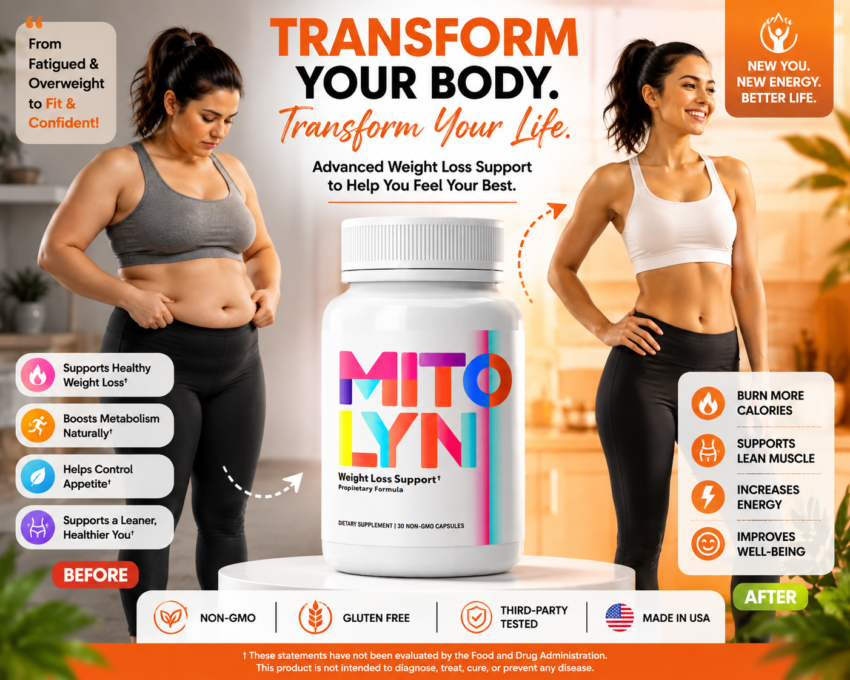
Mitolyn is marketed as a dietary supplement designed around mitochondrial and metabolic support. Its central concept is that mitochondria—the structures in cells responsible for producing usable energy—play an important role in metabolism.
The marketing behind Mitolyn suggests that supporting mitochondrial function could help the body use energy more efficiently and potentially make fat loss easier. This is a scientifically interesting idea, but it is important to separate the underlying biology from the claims made about a particular supplement.
Mitochondria really are involved in cellular energy production. Research also indicates that mitochondrial function can change with age and may be altered in people with obesity. However, those observations do not prove that taking a particular supplement will automatically increase metabolism or cause significant weight loss.
That distinction is one of the most important points to understand when reading Mitolyn Reviews.
How Does Mitolyn Claim to Work?
The basic theory behind Mitolyn is relatively straightforward.
The formula is marketed around the idea of supporting mitochondrial activity, cellular energy production, and metabolic efficiency. Rather than primarily relying on appetite suppression or large amounts of caffeine, the product’s positioning focuses on what happens inside cells.
The proposed chain looks something like this:
Mitochondrial support → improved cellular energy production → better metabolic efficiency → increased fat utilization → potential weight-management support
The problem is that each step in that chain requires evidence.
It is possible for an ingredient to influence a biological pathway without producing noticeable changes in body weight. Similarly, an ingredient can have antioxidant or general wellness properties without being an effective weight-loss intervention.
Current evidence does not establish that taking Mitolyn causes this entire chain of events in humans.
What Ingredients Are in Mitolyn?
One reason Mitolyn attracts attention is its combination of botanical and nutritional ingredients. Ingredient lists reported in current reviews include:
- Miquelianin
- Rhodiola rosea
- Haematococcus pluvialis
- Amla extract
- Moringa oleifera
- Citrus pectin
- Chromium
- Fucoxanthin
However, knowing the ingredient list is only the starting point. The more useful question is whether the individual ingredients have human evidence supporting the specific claims made about them.
Miquelianin
Miquelianin is a flavonoid-related compound associated with antioxidant activity and mitochondrial-related claims in Mitolyn marketing.
The important limitation is that there is not sufficient published human research showing that miquelianin supplementation produces meaningful weight loss.
Therefore, it would be premature to describe this ingredient as a proven fat-burning compound.
Rhodiola Rosea
Rhodiola rosea is one of the better-known ingredients in the formula.
Research has explored Rhodiola in areas such as stress, fatigue, and exercise performance. However, that does not automatically make it an effective weight-loss ingredient.
The NCCIH has noted that there is still insufficient evidence to determine whether Rhodiola is useful for specific health-related purposes.
Haematococcus Pluvialis
Haematococcus pluvialis is an algae source associated with astaxanthin, a carotenoid antioxidant.
Antioxidants can have nutritional value, but antioxidant activity should not be confused with proven fat loss.
A review of randomized controlled trials cited in the 2026 analysis did not establish a weight-loss effect from this ingredient.
Amla Extract
Amla, also known as Indian gooseberry, is naturally rich in vitamin C and other plant compounds.
It can contribute to a nutrient-rich diet, but there is not enough evidence to claim that amla extract by itself produces substantial weight loss.
Moringa oleifera
Moringa is another plant with nutritional and antioxidant properties.
Although it is frequently promoted in wellness products, the evidence does not establish Moringa as a reliable standalone weight-loss ingredient in humans.
Citrus Pectin
Citrus pectin is a type of soluble fiber.
Fiber can be useful for digestive health and may contribute to satiety as part of an overall healthy diet. However, consuming pectin does not automatically translate into significant fat loss.
Chromium
Chromium is a mineral involved in normal nutrient metabolism.
Some research has investigated chromium supplementation in relation to blood sugar and body composition. However, evidence for meaningful weight loss is limited, and dosage matters.
The 2026 review noted that studies showing modest effects have generally involved chromium amounts higher than the quantity it identified as likely being present in Mitolyn.
Fucoxanthin
Fucoxanthin is a carotenoid found in certain types of marine algae and is frequently discussed in connection with metabolism and fat oxidation.
There has been some human research, but it remains limited. One cited human trial combined fucoxanthin with pomegranate oil, making it difficult to determine how much of any observed effect could be attributed specifically to fucoxanthin.
Does Mitolyn Really Work for Weight Loss?
This is where the review becomes more important than the marketing.
At present, there is no high-quality clinical trial demonstrating that the complete Mitolyn formula causes meaningful weight loss in humans.
That does not necessarily mean every ingredient is useless. It means there is a significant difference between:
“This ingredient has biological properties that could be relevant to metabolism.”
and
“This finished supplement has been proven to help people lose significant amounts of weight.”
The second statement requires clinical evidence, and that evidence is currently lacking.
An independent review updated in 2026 concluded that no studies had tested whether improving mitochondrial function through Mitolyn leads to meaningful human weight loss.
So if someone asks, “Does Mitolyn work for weight loss?”, the most accurate answer is: there is not enough clinical evidence to say that it does.
What Are the Potential Benefits of Mitolyn?
It is useful to distinguish potential ingredient-level benefits from proven product-level outcomes.
Some ingredients included in Mitolyn have been studied for areas such as antioxidant activity, nutritional support, stress, fatigue, digestion, or normal metabolic processes.
That means a person might reasonably view the formula as a general wellness supplement.
However, the evidence does not justify promising dramatic weight reduction, rapid fat burning, or a major metabolism transformation.
Potential benefits are therefore better described cautiously:
Cellular and Antioxidant Support
Several botanical ingredients provide compounds associated with antioxidant activity. Antioxidants are part of normal nutritional health, although getting them from a varied diet is also an effective approach.
General Energy Support
Some ingredients, particularly Rhodiola, have been investigated in relation to fatigue and exercise performance. That is different from proving that Mitolyn increases energy expenditure enough to cause weight loss.
Digestive Support
Citrus pectin is a form of soluble fiber and may have digestive and nutritional relevance.
Metabolic Nutritional Support
Chromium contributes to normal macronutrient metabolism. Nevertheless, this should not be interpreted as proof that a chromium-containing supplement will produce substantial fat loss.
Mitolyn Reviews: What Are Customers Saying?
Customer feedback is mixed, and this is an area where readers should be especially careful.
Current third-party review data includes numerous negative experiences. Trustpilot’s Mitolyn page currently shows a predominance of one-star ratings, with reviewers reporting issues ranging from lack of noticeable weight loss to dissatisfaction with refunds and ordering. At the same time, there are some positive or neutral experiences, so online reviews should not be treated as a controlled scientific study.
Below are three paraphrased examples of published customer feedback, rather than invented testimonials.
Customer Review 1: Mild Improvement
A May 2026 reviewer from Australia reported noticing some improvement in energy and approximately 1 kg of weight loss over a month. However, the reviewer also expressed concerns about the product’s price and what they viewed as exaggerated marketing.
Takeaway: One customer’s experience may be positive, but it cannot establish that Mitolyn caused the weight change.
Customer Review 2: No Noticeable Results
A U.S. reviewer reported using a six-month supply and said they noticed no meaningful difference in weight or appearance. They also stated that they experienced no obvious side effects.
Takeaway: Long-term use does not guarantee a visible result, and individual experiences can vary considerably.
Customer Review 3: Dissatisfaction With Results and Returns
Another U.S. reviewer said they used Mitolyn for several months without seeing the expected weight-loss results and subsequently described difficulties with the refund process.
Takeaway: Consumers should read the current refund and return terms carefully before purchasing and keep relevant order and return documentation.
Is Mitolyn Safe?
Safety is another question that cannot be answered simply with “yes” or “no.”
A dietary supplement can contain commonly used ingredients and still be unsuitable for particular individuals. Safety depends on factors such as dosage, allergies, medications, pregnancy status, medical conditions, and individual sensitivity.
Because Mitolyn combines several ingredients, anyone taking prescription medication or managing a medical condition should discuss the formula with a qualified healthcare professional before using it.
Potential reactions can also vary from person to person.
Most importantly, consumers should not use a supplement as a substitute for medical treatment or a professionally designed weight-management plan.
How Should You Evaluate a Weight-Loss Supplement in 2026?
The supplement market has changed considerably, but the basic evaluation principles remain useful.
Before purchasing a product such as Mitolyn, ask these questions:
Is the Finished Product Clinically Tested?
This is more important than finding research on individual ingredients.
A company can combine several ingredients that have been studied separately, but that does not prove the finished combination works.
For Mitolyn, current evidence does not show a clinical trial demonstrating meaningful weight-loss results from the complete formula.
Are the Claims Larger Than the Evidence?
Be cautious with phrases suggesting that a supplement can “reset” metabolism, reverse aging-related changes, or dramatically accelerate fat burning.
Scientific terminology can make marketing sound authoritative without actually providing clinical proof.
Are Customer Reviews Consistent?
Reviews can help identify recurring experiences, but they have limitations.
People who experience unusually good or bad results may be more likely to post reviews. Reviews also cannot control for diet, exercise, sleep, genetics, medication, or other factors affecting weight.
Mitolyn for Weight Loss vs. Healthy Lifestyle Changes
One of the biggest mistakes consumers can make is expecting a supplement to compensate for an inconsistent lifestyle.
Sustainable weight management generally involves several interconnected factors:
- Calorie intake and food quality
- Protein and fiber intake
- Regular physical activity
- Strength training
- Sleep quality
- Stress management
- Consistency over time
Exercise is particularly relevant because regular physical activity can directly support metabolic health and mitochondrial function. Strength training can also help preserve muscle mass while a person loses weight.
A supplement may fit into someone’s routine, but it should be considered an optional addition—not the foundation of a weight-management strategy.
Pros and Cons of Mitolyn
Potential Pros
- Contains several plant-based and nutritional ingredients.
- Uses a mitochondrial-support concept rather than relying solely on stimulants.
- Some individual ingredients have research supporting general nutritional or biological properties.
- Capsules may be convenient for people who prefer supplements.
Potential Cons
- No strong clinical evidence proves the complete formula causes meaningful weight loss.
- Several weight-loss claims go beyond the available ingredient research.
- Customer feedback is highly mixed, with many negative reports.
- The product may be expensive compared with obtaining similar nutrients from food.
- Individual ingredient research does not prove the finished product works.
- Consumers should carefully review purchasing and refund conditions.
Is Mitolyn Worth Trying in 2026?
The answer depends on what you expect from it.
If you’re looking for a supplement that provides some botanical and nutritional compounds as part of a broader wellness routine, Mitolyn may appear interesting.
But if your primary goal is Mitolyn for weight loss, the evidence is much less convincing.
The strongest current conclusion is not that Mitolyn is definitively ineffective, but that its weight-loss effectiveness has not been adequately demonstrated.
That distinction matters.
There is a legitimate scientific basis for studying mitochondria and metabolism. However, the existence of that science does not automatically validate every product marketed around mitochondrial health.
In 2026, consumers have access to more information than ever. That makes evidence quality more important—not less.
Frequently Asked Questions About Mitolyn
What is Mitolyn?
Mitolyn is a dietary supplement marketed around mitochondrial health, cellular energy, metabolism, and weight management.
Does Mitolyn help you lose weight?
There is currently insufficient clinical evidence to conclude that the finished Mitolyn formula produces meaningful weight loss in humans.
Is Mitolyn a fat burner?
It is marketed as supporting fat burning through mitochondrial and metabolic pathways, but those claims have not been adequately demonstrated in clinical trials of the finished product.
How long does Mitolyn take to work?
There is no scientifically established timeline for weight-loss results because the product itself has not been adequately tested in clinical trials for meaningful weight reduction.
Can Mitolyn replace diet and exercise?
No. A supplement should not replace a balanced diet, physical activity, adequate sleep, or professional medical advice when needed.
Are Mitolyn Reviews reliable?
Customer reviews can provide useful information about individual experiences, but they cannot establish whether a supplement is clinically effective. Current third-party reviews include substantial negative feedback as well as some positive experiences.
Are there positive Mitolyn reviews?
Yes. Some customers report improvements such as increased energy or modest weight changes, although these reports cannot prove that Mitolyn caused those results.
Does Mitolyn have side effects?
Individual responses can vary. Anyone taking medication, pregnant or breastfeeding, or managing a medical condition should consult a healthcare professional before using a multi-ingredient supplement.
Is Mitolyn FDA-approved?
Mitolyn is marketed as a dietary supplement rather than an FDA-approved weight-loss medication. Supplements and prescription medicines are regulated differently, so consumers should not interpret supplement marketing as equivalent to FDA approval for weight-loss effectiveness.
Final Verdict: Should You Try Mitolyn?
Mitolyn is an interesting supplement concept, but the evidence for using it specifically as a weight-loss product remains weak in 2026.
The formula contains ingredients that have legitimate nutritional or research interest, particularly around antioxidants, stress, digestion, and metabolic processes. But the crucial question is whether the complete product reliably produces significant weight loss—and current evidence does not establish that.
The most responsible interpretation of the available Mitolyn Reviews is therefore cautious rather than promotional.
If you’re considering the Mitolyn weight loss supplement, evaluate the product based on its actual evidence rather than dramatic testimonials or scientific-sounding marketing. Customer experiences vary, and independent review data includes substantial criticism regarding effectiveness and purchasing experiences.
For anyone serious about losing weight, the strongest foundation remains a sustainable eating pattern, appropriate calorie control, regular movement, strength training, sufficient sleep, and professional guidance when appropriate.
Order It From the: Mitolyn Official Website
Bottom line: Mitolyn may be appealing as a mitochondrial-support supplement, but in 2026 there is not enough clinical evidence to confidently recommend it as a proven weight-loss solution.
Disclaimer: This article is for informational purposes only and is not medical advice. Dietary supplements are not intended to diagnose, treat, cure, or prevent disease. Speak with a qualified healthcare professional before starting a new supplement, especially if you take medication or have an existing medical condition.