
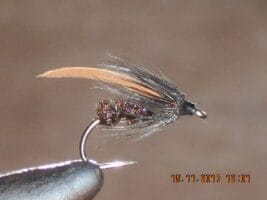
CDC flies for sale in Kenya are a practical option for trout anglers who need a light, natural-looking fly. Their soft fibres can create a subtle surface profile that works well when trout feed carefully.
The right CDC pattern depends on the river, insect activity, fly size and how trout are feeding at that moment.
What Makes CDC Flies Different?
CDC, short for Cul de Canard, comes from specially positioned duck feathers. These feathers have fine fibres that help trap air and provide natural buoyancy.
Unlike heavily dressed dry flies, CDC patterns can have a soft and understated appearance. That difference becomes useful when trout have enough time to inspect an artificial fly.
For anglers choosing CDC trout fishing flies, the main attraction is not simply flotation. It is the combination of buoyancy, movement and a delicate appearance on the water.
Why Do Trout Anglers Use CDC Patterns?
CDC flies can imitate several stages of aquatic insects. A single pattern style may represent an emerging insect, a small adult or another surface food source depending on how it is tied and presented.
They can be particularly useful when:
- Trout rise gently instead of aggressively striking.
- Fish concentrate on small insects.
- The water runs clear.
- Surface conditions remain relatively calm.
- A traditional, bulky dry fly seems too obvious.
- You need a fly that lands softly.
An experienced angler usually treats CDC as a presentation tool rather than a magic pattern. Even an excellent fly will struggle if it lands heavily or drifts unnaturally.
Which CDC Fly Patterns Are Worth Carrying?
A sensible fly selection gives you options instead of filling your box with near-identical patterns.
Consider carrying:
- Small CDC mayfly imitations.
- CDC caddis designs.
- CDC emergers.
- Tiny midge-style patterns.
- Sparse attractor flies incorporating CDC.
- Different hook sizes of your most useful patterns.
The value of handcrafted CDC fly patterns comes from how accurately the materials and proportions work together. Too much CDC can create an unnatural silhouette, while too little may reduce the intended movement or flotation.
For that reason, experienced fly tiers pay close attention to proportion, thread control and material placement.
How Do You Select CDC Flies for Kenyan Trout?
Start with the fishing conditions rather than the name printed on the packet.
Kenyan highland trout streams can present clear water, pocket water, pools, riffles and areas with complicated bankside vegetation. A fly that works beautifully in one section may prove unsuitable somewhere else.
Use this simple process:
- Watch the water first. Look for rising trout and insects near the surface.
- Estimate the food size. Your imitation does not need to be identical, but its proportions should make sense.
- Choose a matching fly size. Small flies often help when trout become cautious.
- Consider the water speed. Faster water may require a pattern that remains visible and stable.
- Change presentation before changing everything. A better drift can solve a problem that appears to be a fly-selection issue.
This approach helps anglers avoid constantly changing flies without understanding what the trout are responding to.
Are CDC Flies Suitable for Clear Water?
Yes. CDC can be particularly useful where subtle presentation matters.
Clear water gives trout more opportunity to examine an artificial fly. Large hackles, excessive material or an unnatural profile can therefore become liabilities.
A lightly dressed CDC pattern can create a smaller visual footprint. When combined with a controlled drift, it can look less intrusive.
That does not guarantee a strike. Trout behaviour varies with weather, water temperature, food availability and fishing pressure. The fly remains only one part of the presentation.
How Do You Maintain a CDC Fly?
CDC flies need sensible handling because their fine fibres can become compressed or contaminated.
After catching a trout, inspect the fly before immediately casting again. Fish slime, water and debris can reduce the fly’s ability to sit correctly.
A useful routine is:
- Remove visible debris carefully.
- Rinse the fly if necessary.
- Dry it gently.
- Restore the CDC fibres with careful handling.
- Rotate to a fresh pattern when the fly becomes badly saturated or damaged.
Avoid treating every CDC pattern like a conventional heavily hackled dry fly. The material performs best when its natural structure remains intact.
What Should You Look for in Quality CDC Flies?
A good fly should look clean, balanced and functional.
Look at the hook, thread wraps, body proportions and CDC placement. The materials should remain secure without making the pattern unnecessarily bulky.
When purchasing quality CDC fishing flies, consistency also deserves attention. If you order several flies of one pattern, they should have broadly similar proportions and construction.
Hand tying naturally produces small differences. That is part of the character of handmade flies. However, those differences should not affect the basic purpose of the pattern.
Do CDC Flies Work on Kenyan Trout Streams?
They can, particularly when trout feed near the surface.
Kenya has established trout fisheries in its cooler highland regions, including areas associated with Mount Kenya and the Aberdare Range. These environments provide opportunities for anglers to use different fly techniques according to water and fish behaviour.
For someone selecting Kenyan trout fly patterns, it makes sense to carry a mixture of dry flies, emergers and subsurface options rather than depending entirely on CDC.
The most useful fly box is adaptable.
For example, an angler may begin with a CDC dry fly after seeing surface activity. If the rises disappear and trout continue feeding below the surface, changing to an emerger or nymph may make more sense than repeatedly replacing the dry fly.
How Many CDC Flies Should You Take?
There is no universal number.
Your quantity should reflect the length of the trip, the number of fishing days, the likelihood of losing flies and the conditions you expect.
A small selection might include several sizes of a few proven patterns rather than dozens of unrelated designs.
If you are preparing for a demanding trip, carry duplicates of your most trusted patterns. A damaged or lost fly should not force you to abandon a productive approach.
Where Can You Find CDC Flies in Kenya?
Trout Fly Fishing Flies Kenya supplies handcrafted fishing flies from Limuru, Kiambu, Kenya.
The company has built its fly-tying work around careful craftsmanship, practical fishing performance and patterns designed for anglers fishing rivers, streams and lakes. Its flies are hand-tied and inspected before supply.
For anglers looking for CDC fly fishing flies Kenya, the company provides access to handmade patterns produced in Kenya, making it an option for those who want to source their flies directly from a local specialist.
Trout Fly Fishing Flies Kenya is located at Lr No, Limuru/Rironi 1129, Rironi Kinguru Road, Limuru East, Limuru, Kiambu.
Which CDC Flies Should You Choose for Your Trip?
Choose patterns based on the trout, water and insects you are likely to encounter. Do not select a fly simply because it looks attractive in a catalogue.
A useful CDC collection should give you different sizes and presentations while remaining focused on the conditions you actually fish.
Key takeaway: A well-proportioned CDC fly can provide a subtle and effective presentation, but successful trout fishing still depends on observation, accurate casting and a natural drift.