
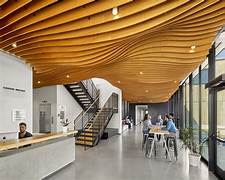
College Furniture Manufacturers provide specialized furniture solutions designed for classrooms, lecture halls, laboratories, libraries, faculty rooms, administrative areas, hostels, and other educational spaces. Unlike ordinary residential furniture, college furniture must withstand frequent use by large numbers of students while maintaining comfort, safety, durability, and consistent quality. Manufacturers can provide customized furniture according to room dimensions, student capacity, institutional requirements, and project budgets.
A relevant second keyword from your approved blog-title list is 10 Must-Have Features in a Well-Designed Corporate Office, taken directly from the title “10 Must-Have Features in a Well-Designed Corporate Office.” Although the title focuses on offices, features such as ergonomic furniture, efficient space utilization, organized layouts, durable materials, appropriate lighting, and functionality are also valuable considerations when planning furniture for colleges.
Importance of College Furniture
Educational furniture directly influences how students learn, study, collaborate, and interact within academic spaces.
Furniture should therefore balance durability with comfort and practical functionality.
Classroom Furniture
Classrooms can require student desks, chairs, teacher tables, storage units, and specialized teaching furniture.
Layouts can be planned according to classroom dimensions and student capacity.
Lecture Hall Furniture
Lecture halls often require fixed or semi-fixed seating with writing surfaces.
The furniture should provide adequate spacing, comfort, visibility, and convenient circulation.
Laboratory Furniture
Laboratories require specialized workstations, benches, storage, and equipment-support furniture.
Material selection should reflect the activities performed in each laboratory.
Library Furniture
Libraries may require reading tables, chairs, bookshelves, study carrels, circulation counters, and storage units.
Furniture layouts should support both individual study and efficient movement.
Computer Lab Furniture
Computer labs require desks designed to accommodate monitors, CPUs, keyboards, electrical connections, and cable management.
Proper desk dimensions can improve user comfort.
Faculty Furniture
Faculty rooms can include workstations, desks, chairs, storage cabinets, bookshelves, and meeting tables.
The furniture can be coordinated to create a professional working environment.
Administrative Furniture
College offices and administrative areas may require reception counters, workstations, filing cabinets, conference tables, and storage.
Hostel Furniture
Hostels commonly require beds, study tables, chairs, wardrobes, storage units, and other essential furniture.
Durability is particularly important because these items experience continuous use.
Ergonomic Design
The principles highlighted in 10 Must-Have Features in a Well-Designed Corporate Office include functionality and ergonomic considerations.
College furniture should similarly provide appropriate seat height, desk dimensions, legroom, back support, and writing surfaces.
Durable Construction
College furniture must withstand repeated daily use.
Strong frames, durable boards, reliable hardware, reinforced joints, and scratch-resistant finishes can contribute to longer service life.
Material Selection
Manufacturers may use engineered wood, plywood, laminates, MDF, metal, steel, plastic, and other materials depending on the application.
Metal frames with durable finishes can be suitable for high-use institutional environments. Current institutional furniture manufacturers commonly combine engineered wood, metal, laminates, and specialized materials according to the application.
Safety
Furniture should have stable construction and appropriately finished edges.
Rounded or edge-banded surfaces can help reduce potential hazards in student environments.
Space Optimization
Furniture layouts should maintain sufficient circulation and allow classrooms, laboratories, libraries, and lecture halls to function efficiently.
Modular furniture can be particularly useful when rooms need to support multiple activities.
Flexible Furniture
Some educational spaces require furniture that can be rearranged.
Movable tables, modular desks, and lightweight seating can support lectures, group discussions, examinations, and collaborative learning.
Cable Management
Computer labs and technology-enabled classrooms require organized cable routing.
Integrated cable-management solutions can improve safety and maintain a neat appearance.
Storage Solutions
Colleges require storage for books, teaching materials, laboratory equipment, files, stationery, and personal belongings.
Cabinets and shelving can be designed according to the specific department.
Customization
Professional manufacturers can customize dimensions, colours, materials, finishes, branding, and furniture configurations.
Some manufacturers also produce sample units before bulk production to confirm dimensions and specifications.
Bulk Manufacturing
Large educational projects may require hundreds or thousands of furniture units.
A capable manufacturer should have sufficient production capacity to maintain consistent specifications across large batches.
Quality Control
Each batch should be checked for dimensions, structural stability, finish quality, hardware, alignment, and workmanship.
Consistency is particularly important when furniture is being installed across multiple classrooms or buildings.
Installation
Professional installation can ensure that desks, storage systems, laboratory furniture, and other components are correctly assembled and positioned.
Project Coordination
Large college projects may involve architects, interior designers, contractors, administrators, suppliers, and furniture manufacturers.
Good coordination can help manage delivery schedules and minimize disruption to academic activities.
Sustainable Furniture
Durable furniture can reduce the need for frequent replacement.
Materials with responsible sourcing, recyclable components, and long service life can support more sustainable institutional projects.
Choosing College Furniture Manufacturers
When selecting College Furniture Manufacturers, consider:
- Manufacturing experience
- Institutional project portfolio
- Customization capabilities
- Material quality
- Ergonomic design
- Bulk production capacity
- Quality-control procedures
- Delivery capabilities
- Installation support
- Warranty and after-sales service
Current Indian manufacturers offer college-specific products such as lecture hall seating, faculty workstations, computer-lab tables, library furniture, hostel furniture, and customized institutional solutions.
Budget Planning
College furniture costs depend on material selection, design complexity, dimensions, quantity, hardware, customization, transportation, and installation.
Institutions should compare quotations based on complete specifications rather than price alone.
Conclusion
College Furniture Manufacturers play an important role in creating durable, comfortable, organized, and functional educational environments. From classrooms and lecture halls to laboratories, libraries, faculty rooms, computer labs, and hostels, professionally manufactured furniture can be customized to meet the specific requirements of each academic space.
The second keyword 10 Must-Have Features in a Well-Designed Corporate Office was selected directly from your approved blog-title list because its emphasis on functionality, ergonomics, space planning, organization, and quality is also relevant to effective college furniture design.