
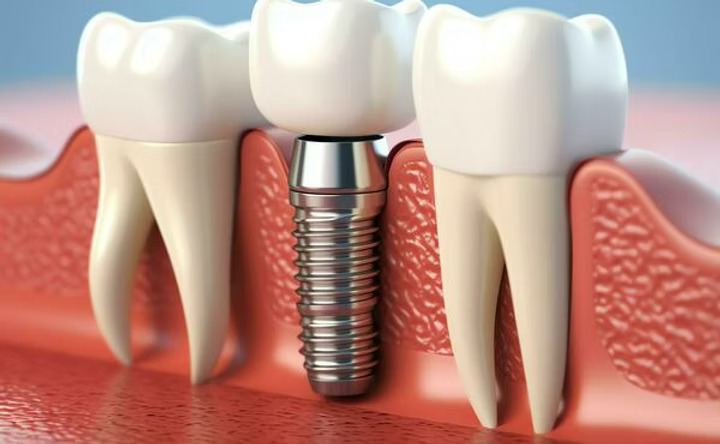
When most or all teeth are missing, dental implants can provide a stable foundation for replacing an entire arch of teeth. Some patients may need only a few strategically positioned implants to support a complete arch of replacement teeth, while others may require more implants depending on their oral health, jawbone condition, bite, and treatment goals.
Full mouth dental implants in Powai can be planned according to the individual needs of a patient who has lost many or all of their teeth. Rather than simply counting the number of missing teeth, an implant dentist evaluates the available bone, gum health, jaw structure, and desired type of replacement teeth before determining the appropriate number and position of implants.
Understanding how implant numbers are decided can help patients approach a consultation with realistic expectations.
What Are Full Mouth Dental Implants?
Full mouth dental implants are designed to replace multiple missing teeth or an entire dental arch using dental implants as a foundation.
Unlike traditional removable dentures, implant-supported teeth are anchored to implants that are placed into the jawbone. Depending on the treatment plan, the final restoration may be removable or fixed.
The term complete dental implants is often used when discussing treatment for patients who need extensive tooth replacement. However, this does not necessarily mean that one implant is placed for every missing tooth.
In many cases, strategically positioned implants can support a larger restoration containing several replacement teeth.
How Many Implants Are Needed for a Full Arch?
There is no universal number of implants that applies to every patient.
For a single arch, implant treatment may involve several strategically positioned implants rather than one implant for every missing tooth. Depending on the patient’s circumstances and the restoration being planned, an arch may be supported by four, six, or another number of implants.
The final number is determined after evaluating the patient’s:
- Jawbone condition
- Bone density
- Available bone volume
- Gum health
- Bite and chewing forces
- Number and position of missing teeth
- Overall oral health
- Type of final restoration
- Functional and aesthetic requirements
Therefore, patients should not assume that needing a full arch automatically means they require a specific number of implants.
Why Isn’t One Implant Needed for Every Missing Tooth?
A natural tooth has its own root, but an implant-supported restoration can distribute chewing forces across multiple implant positions.
For example, a patient missing an entire arch may receive several implants that are carefully positioned to support a complete bridge of fixed replacement teeth.
This approach can reduce the number of implants needed compared with replacing every missing tooth individually.
The objective of full arch tooth replacement is to create a stable, functional, and appropriately designed restoration rather than simply matching the number of implants to the number of missing teeth.
Four Implants for an Entire Arch
One commonly discussed approach involves supporting a full arch restoration using four strategically positioned implants.
This type of treatment can be considered for selected patients who have lost most or all teeth in an arch.
The implants are positioned to provide support for a full-arch restoration. The exact positioning depends on the patient’s anatomy, available bone, and treatment plan.
However, not every patient is suitable for a four-implant approach. A detailed examination and imaging are necessary before determining whether this option can provide adequate support.
Six Implants for Full Arch Restoration
Another approach involves using six implants to support an arch.
Having additional implant positions can provide greater distribution of forces in suitable cases, but the decision is not based simply on the idea that more implants are always better.
The dentist must consider bone availability, implant position, restoration design, bite forces, and long-term maintenance.
For some patients, six implants may be appropriate, while another patient may benefit from a different treatment design.
Upper Jaw and Lower Jaw May Need Different Approaches
The number of implants can also differ between the upper and lower jaws.
The upper jaw and lower jaw have different anatomical and bone characteristics. The upper jaw may have areas where bone density and available volume require particularly careful planning.
Similarly, the lower jaw contains important anatomical structures that must be considered during implant placement.
This is why upper jaw implants and lower jaw implant treatment should not automatically follow the same protocol.
A dentist evaluates each arch independently before determining the appropriate implant positions.
How Jawbone Condition Affects Implant Number
One of the most important factors in dental implant planning is the condition of the jawbone.
After tooth loss, the bone that previously supported natural teeth can gradually change. The amount of bone available for implant placement may therefore be different from what was present when the natural teeth were still in place.
The dentist may assess:
- Bone height
- Bone width
- Bone density
- Available implant sites
- Bone defects
- Previous infection
- Anatomical structures
If sufficient bone is not available in the ideal locations, additional procedures may sometimes be considered before or alongside implant treatment.
Why Bone Density Matters
Bone density refers broadly to the quality and structure of the bone available to support an implant.
The dentist needs to understand the quality and quantity of available bone before deciding where implants can be placed.
Imaging helps the dental team evaluate the jawbone and identify suitable implant positions.
A detailed assessment can also help determine whether the planned restoration can be adequately supported and whether additional procedures may be required.
Full Mouth Implant Treatment Is Individually Planned
Full mouth implant treatment is not a standard procedure with exactly the same number of implants for every patient.
Two people may have the same number of missing teeth but require different treatment plans.
For example, one patient may have adequate bone and healthy gums, while another may have significant bone loss or a history of gum disease.
The dentist must therefore evaluate each case individually.
At Dent-O-Fit Powai, implant treatment can be planned after assessing the patient’s dental condition, missing teeth, available bone, and overall treatment requirements. This individualized approach helps determine the appropriate number and position of implants.
Multiple Dental Implants vs Individual Tooth Implants
When only one or two teeth are missing, individual implants may be used to replace specific teeth.
However, when many teeth are missing, placing an implant for every tooth may not always be necessary.
Multiple dental implants can be strategically placed to support a bridge or larger restoration. This can provide an efficient approach to replacing several missing teeth while maintaining appropriate support.
The treatment design depends on the patient’s anatomy and the type of restoration being considered.
What Are Implant-Supported Full Dentures?
Some patients may be suitable for implant supported full dentures.
Unlike conventional dentures, which rest primarily on the gums, implant-supported dentures use dental implants to provide additional support and stability.
Depending on the design, these restorations may be removable by the patient or may be fixed in place.
Implant-supported dentures can be considered for patients who want improved stability compared with conventional removable dentures, although suitability must be assessed individually.
Fixed Replacement Teeth and Full-Arch Bridges
Some patients prefer fixed replacement teeth rather than a removable option.
A full-arch implant restoration can be designed as a fixed bridge supported by strategically positioned implants.
This type of restoration can replace an entire arch of teeth while remaining attached to the implant-supported foundation.
The dentist and restorative team consider factors such as:
- Implant position
- Available bone
- Bite
- Smile design
- Cleaning access
- Strength and durability
- Patient expectations
The goal is to develop a restoration that balances function, appearance, comfort, and long-term maintenance.
What Happens During Dental Implant Planning?
Before implant placement, the dentist conducts a detailed assessment.
1. Dental Examination
The dentist examines the remaining teeth, gums, bite, and oral tissues.
2. Medical and Dental History
Previous dental treatments, medical conditions, medications, and lifestyle factors may be reviewed.
3. Imaging
Dental X-rays or three-dimensional scans may be used to evaluate the jawbone and surrounding anatomy.
4. Bone Assessment
The dentist evaluates available bone volume and density and identifies potential implant sites.
5. Restoration Planning
The final replacement teeth are considered before implant placement because implant position should be planned according to the intended restoration.
6. Implant Placement
Once the treatment plan is finalized, the implants are placed in the planned locations.
7. Healing and Restoration
After the appropriate healing period, the final implant-supported restoration is fitted according to the treatment plan.
Why the Number of Implants Should Not Be Chosen by Cost Alone
Patients sometimes assume that fewer implants automatically mean a better treatment because the procedure may involve fewer surgical sites.
However, the number of implants should be based primarily on clinical requirements.
Choosing too few implants when additional support is needed may affect the design and function of the restoration. On the other hand, placing more implants than necessary may not provide additional benefits in every situation.
A qualified dentist should determine the appropriate number based on anatomy, function, restoration design, and long-term considerations.
Can Bone Loss Affect Full Mouth Implant Treatment?
Yes. Bone loss following tooth loss can affect the available space for implant placement.
The longer a tooth has been missing, the more changes may occur in the surrounding bone. However, the extent varies from person to person.
Patients with reduced bone availability may still have treatment options, but they may require additional assessment and potentially procedures intended to improve the available foundation for implants.
This is why early consultation after significant tooth loss can be beneficial.
How Full Mouth Rehabilitation Restores Function
Extensive tooth loss can affect chewing, speech, bite, facial support, and confidence.
A properly planned full mouth rehabilitation aims to address these concerns through a comprehensive treatment strategy.
Instead of treating each missing tooth independently, the dentist considers the entire mouth as a functional system.
This may involve a combination of implants, bridges, crowns, dentures, and other dental treatments depending on the patient’s needs.
The objective is to restore oral function while creating a stable and natural-looking result.
Complete Mouth Restoration: What Should Patients Expect?
Complete mouth restoration is a comprehensive process rather than a single procedure.
Patients should expect the treatment plan to be based on detailed examination and planning. Depending on their condition, treatment may take place in multiple stages.
Some patients may require treatment for gum disease, removal of unhealthy teeth, bone-related procedures, or temporary restorations before receiving their final implant-supported teeth.
The exact timeline depends on the patient’s dental condition and treatment requirements.
How to Prepare for a Full Mouth Implant Consultation
Patients considering full mouth dental implants in Powai can prepare for their consultation by collecting previous dental records and making a list of their concerns.
It can be helpful to discuss:
- How long the teeth have been missing
- Previous dentures or bridges
- Difficulty chewing
- Changes in speech
- Gum problems
- Previous dental infections
- Medical conditions
- Medications
- Expectations regarding fixed or removable teeth
Being open about oral health and lifestyle habits can help the dentist develop a more appropriate treatment plan.
Why Choosing an Experienced Implant Dentist Matters
Full-arch implant treatment involves several stages, from diagnosis and implant placement to restoration and maintenance.
An experienced implant dentist can evaluate the complete picture rather than focusing only on the missing teeth.
The dentist needs to understand the relationship between the jawbone, implant position, bite, gums, and final restoration.
At Dent-O-Fit Powai, patients considering extensive tooth replacement can discuss their concerns and receive an assessment focused on their individual oral health and treatment needs.
The appropriate number of implants can then be determined as part of a personalized plan rather than using a standard number for every patient.
Final Thoughts
The number of implants needed for a full mouth restoration varies from patient to patient. Depending on the treatment design, a complete arch may be supported by four, six, or another appropriate number of implants.
Factors such as jawbone condition, bone density, gum health, bite, implant placement, and the type of final restoration all influence the treatment plan.
If you are considering full mouth dental implants in Powai, Dent-O-Fit Powai can help you understand your available options through a detailed dental examination and personalized implant planning. A professional evaluation is the best way to determine how many implants you may actually need and which full-arch solution is appropriate for your oral health.
Frequently Asked Questions
1. How many dental implants are usually needed for a full mouth?
The number varies depending on the treatment plan. A complete dental arch may sometimes be supported by four or six implants, while other cases may require a different number. Bone condition, bite, and the type of restoration all influence the decision.
2. Do I need one implant for every missing tooth?
No. When several or all teeth are missing, multiple implants can sometimes support a larger bridge or full-arch restoration. The number of implants is determined according to the patient’s anatomy and restoration requirements.
3. Can full mouth implants be placed if I have bone loss?
Possibly. Bone loss does not automatically rule out implant treatment. However, the available bone must be evaluated carefully, and some patients may require additional procedures before or during implant treatment.
4. Are upper jaw implants different from lower jaw implants?
The upper and lower jaws have different anatomical and bone characteristics, so implant planning may differ between them. The dentist evaluates each jaw individually before determining implant positions.
5. Are implant-supported full dentures removable?
They can be. Depending on the design, implant-supported full dentures may be removable or may be designed as fixed implant-supported teeth. Your dentist can explain which option is suitable for your oral health and treatment goals.
Source: How Many Implants Are Usually Needed for Full Mouth Restoration?