

Cloud computing is now an essential part of modern IT, supporting application deployment, infrastructure, data storage, security, and digital business operations. As companies continue to adopt cloud technologies, demand is growing for professionals who can manage and support cloud environments. This makes many beginners question whether they must earn a certification before starting a cloud career. Although certification can help validate technical knowledge, employers may also consider practical skills, project experience, platform knowledge, and problem-solving abilities. A Cloud Computing Certification Training Course can help learners develop a structured understanding of cloud technologies while building practical knowledge.
Is a Cloud Certification Essential for Getting Hired?
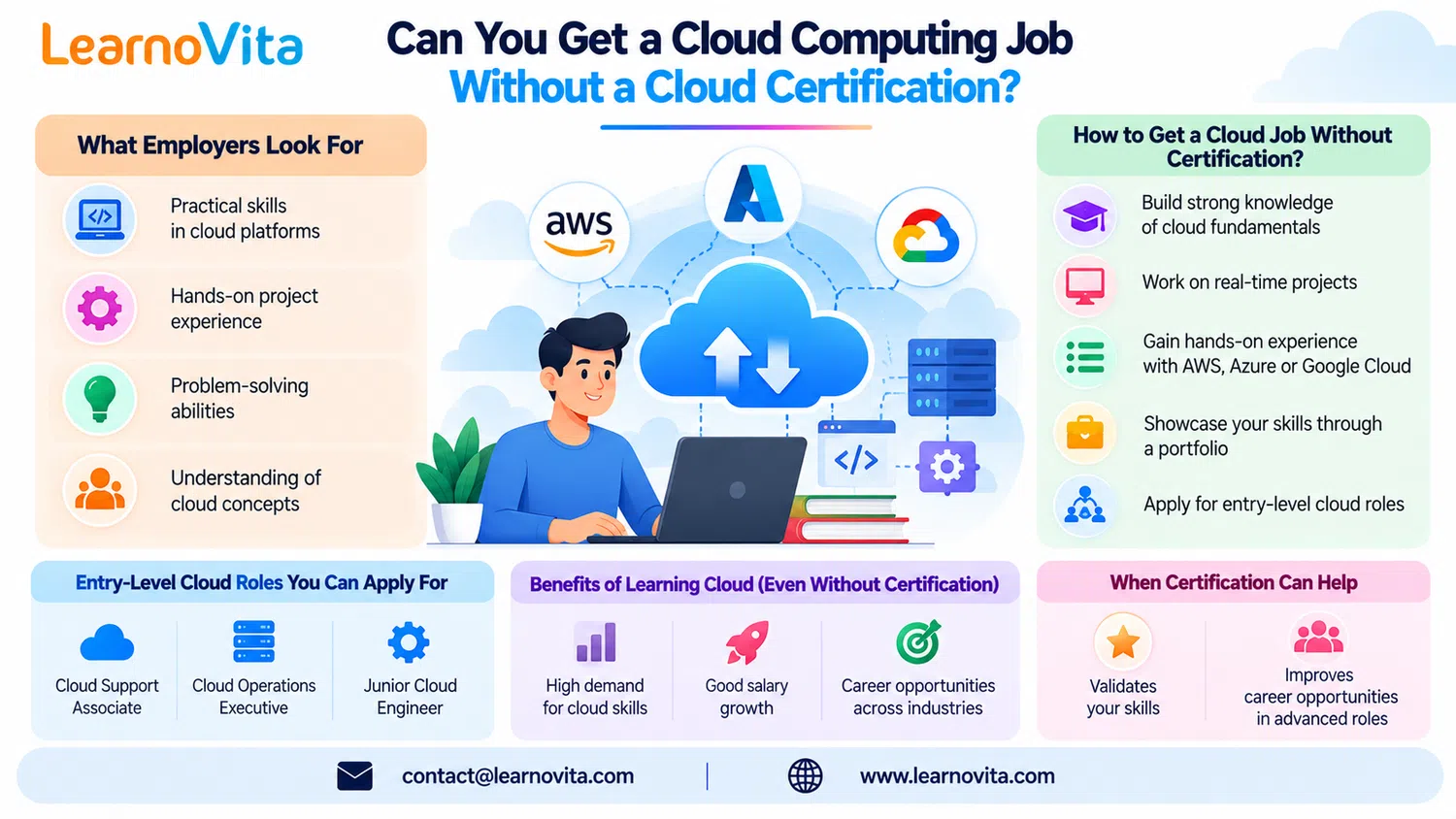
A certification is not necessarily a mandatory requirement for every cloud computing position. Hiring criteria can differ according to the organization, role, cloud platform, and level of experience. Some employers may list certification as a preferred qualification, while others may focus more on hands-on abilities and technical fundamentals. Candidates without certification can still demonstrate their capabilities by developing relevant cloud skills, completing practical projects, and preparing for technical assessments.
What Skills Should You Learn for Cloud Computing Jobs?
A strong foundation in core IT concepts can make cloud technologies easier to understand. Beginners can start with networking, Linux, operating systems, databases, storage, virtualization, and security. They can then learn a major cloud platform such as AWS, Microsoft Azure, or Google Cloud. Additional skills in scripting, Git, containers, monitoring, and automation can also help candidates prepare for cloud engineering, cloud operations, and DevOps-related positions. Cloud Computing Training in Chennai can help learners develop cloud knowledge through structured training and practical activities.
Can Practical Cloud Projects Improve Your Job Prospects?
Practical projects can help beginners demonstrate their abilities when they do not have professional cloud experience. Learners can deploy applications, configure virtual machines, manage cloud storage, create databases, set up networks, implement identity and access controls, and configure monitoring. Documenting the architecture, tools, challenges, and solutions used in each project can make a portfolio more useful. These projects can also provide candidates with practical examples to discuss during technical interviews.
Which Cloud Roles Can You Apply for Without Certification?
The roles available to a candidate will depend on their existing IT knowledge and practical skills. Entry-level opportunities may include cloud support, infrastructure support, system administration, cloud operations, junior cloud engineering, and DevOps support. Job responsibilities can vary between organizations, so candidates should carefully review individual vacancies. Building strong fundamentals and gaining practical experience with one major cloud platform can help beginners identify suitable career paths.
How Can You Build Cloud Skills Without Certification?
Learners can develop cloud expertise through structured education, hands-on labs, and personal projects. Starting with networking and Linux can provide a useful foundation before progressing to compute, storage, databases, networking, identity management, monitoring, and security services. Regular practice can help learners understand how different services interact and how common configuration problems can be resolved. Cloud Computing Training in Hyderabad can help learners follow a structured learning path while gaining practical exposure to cloud technologies.
Why Can Cloud Certification Still Be Valuable?
Although certification is not compulsory for every cloud role, it can provide a recognized way to demonstrate knowledge of a particular platform. It can also give beginners a defined curriculum and help them organize their learning. However, certification alone does not necessarily demonstrate practical deployment or troubleshooting experience. Combining certification preparation with hands-on exercises can provide both theoretical knowledge and practical familiarity.
How Can You Make Your Cloud Profile More Attractive to Recruiters?
Candidates can strengthen their resumes by describing specific cloud projects and technical tasks rather than only listing platform names. Experience with deployments, cloud networking, storage, access management, monitoring, automation, and troubleshooting can provide useful evidence of practical skills. Maintaining project documentation, architecture diagrams, or a portfolio can also make technical experience easier to explain during interviews. Cloud Computing Training in Bangalore can help learners gain practical exposure that can be reflected in their resumes and portfolios.
Conclusion:
A cloud certification can strengthen a candidate’s profile, but it is not the only way to prepare for a cloud computing job. Strong IT fundamentals, knowledge of a cloud platform, practical projects, troubleshooting experience, and problem-solving skills can also demonstrate technical readiness. Beginners can focus on building these capabilities through consistent hands-on practice and structured learning, while pursuing certification when it aligns with their career goals.