

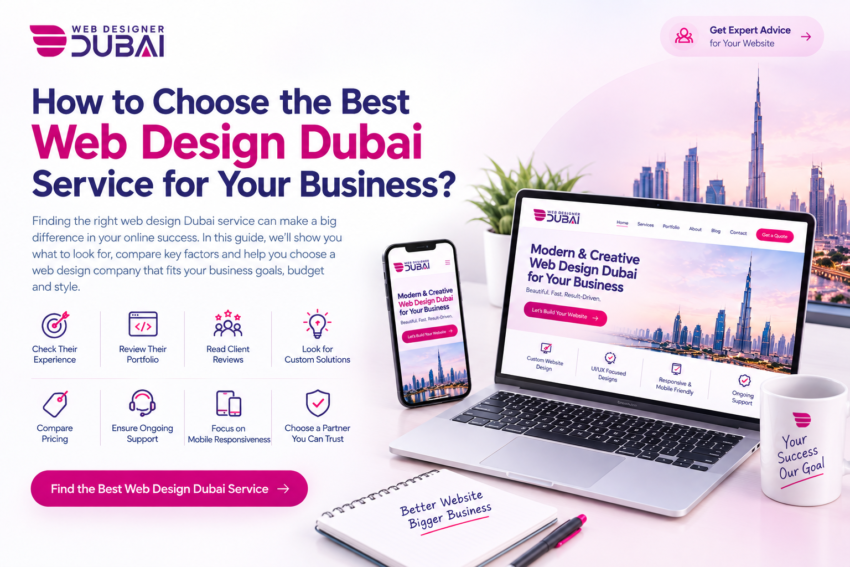
Dubai is one of the world’s most competitive business markets. Customers there are digitally savvy, mobile-first, and used to premium experiences, so your website is often the first impression of your brand and sometimes the only one. A poorly built site costs you leads, credibility, and revenue, while a well-designed one works around the clock as your best salesperson.
With hundreds of agencies and freelancers to choose from, picking the right partner can feel overwhelming. This guide walks you through a practical, step-by-step approach to choosing a web design Dubai that fits your goals and budget.
1. Start by Defining Your Business Goals
Before you contact any agency, be clear about what you want your website to achieve.
Identify Your Website’s Purpose
Ask yourself what the site needs to do. Is it to generate leads, sell products online, book appointments, showcase a portfolio, or build brand authority? An e-commerce store needs very different features from a corporate site for a real estate developer.
Know Your Target Audience
Dubai’s population is highly diverse. If you serve Arabic-speaking customers, international expatriates, tourists, or B2B clients across the GCC, your design, language options, and tone should reflect that.
Set a Realistic Budget and Timeline
Web design pricing in Dubai varies widely. Knowing your budget range and deadline upfront helps you filter out agencies that aren’t a match and makes proposals easier to compare.
2. Evaluate the Agency’s Portfolio and Experience
A portfolio shows what an agency can actually deliver.
Look for Relevant Industry Experience
An agency that has built sites for hospitality, real estate, healthcare, or retail in the UAE will already understand your market’s expectations. Ask for case studies, not just screenshots, so you can see the problem, the solution, and the results.
Assess Design Quality and Consistency
Check whether the portfolio shows a range of styles or the same template repeated with different logos. Original, brand-specific design is a good sign. Visit their live projects and test them on your phone and laptop.
Check Years in Business and Client Retention
Agencies that have operated for several years and keep long-term clients are usually more stable and reliable. Ask how many clients come back for ongoing support.
3. Prioritize Mobile-First and Responsive Design
Most users in the UAE browse on smartphones, so a site that isn’t optimized for mobile will lose visitors quickly.
Responsive Across All Devices
Your website should adapt smoothly to phones, tablets, and desktops. Ask the agency how they test across different screen sizes and browsers.
Fast Loading Speed
Speed affects both user experience and search rankings. A good agency will compress images, use clean code, and choose reliable hosting to keep load times low.
4. Look for Bilingual and Cultural Expertise
Dubai’s market often requires serving both English and Arabic audiences.
Arabic and RTL Support
Arabic websites need right-to-left (RTL) layouts, not just translated text. Confirm that the agency has real experience building bilingual sites where the design, navigation, and typography work properly in both languages.
Cultural Sensitivity
Colors, imagery, and messaging should respect local culture and business etiquette. An agency familiar with the region will avoid costly missteps and build trust with local audiences.
5. Ensure SEO Is Built In from the Start
A beautiful website is worthless if nobody can find it.
On-Page SEO Foundations
The best web design services include SEO basics in the build: clean URL structure, proper heading hierarchy, meta tags, schema markup, image optimization, and fast performance.
Local SEO for the UAE Market
Ask whether they can optimize for Dubai-specific searches, set up Google Business Profile integration, and structure content for local intent. If you want to rank for terms like “best [service] in Dubai,” this matters a great deal.
6. Review Technical Capabilities and Technology Stack
Different projects call for different platforms and tools.
Choosing the Right Platform
Depending on your needs, the agency might recommend WordPress, Shopify, WooCommerce, or a custom-coded solution. A good partner explains why a platform suits your business rather than pushing whatever they always use.
Security and Scalability
Ask about SSL certificates, regular backups, security updates, and how the site can grow with your business. Your website should handle more traffic and features as you expand.
Integrations
If you need payment gateways, CRM systems, booking tools, WhatsApp chat, or analytics, confirm the agency has experience integrating them, especially with UAE-friendly payment providers.
7. Understand the Design and Development Process
A clear process is a strong sign of professionalism.
Discovery and Strategy
Reputable agencies begin with research: your competitors, your audience, and your goals. If a company jumps straight to quoting without asking questions, be cautious.
Wireframes, Mockups, and Revisions
Ask whether you’ll see wireframes and design mockups before development begins, and how many revision rounds are included. Transparency here prevents disputes later.
Testing and Launch
Quality assurance should cover functionality, browser compatibility, forms, speed, and security before launch.
8. Compare Pricing Wisely
The cheapest quote is rarely the best value.
Understand What Is Included
Two proposals may look similar but differ greatly in scope. Check whether they include content writing, stock photography, SEO setup, training, hosting, and post-launch support.
Watch for Hidden Costs
Ask about charges for extra revisions, plugins, licenses, domain renewals, and maintenance. A detailed written quotation protects you from surprises.
Think in Terms of ROI
A website that generates leads or sales consistently can pay for itself many times over. Focus on long-term return rather than the lowest upfront price.
9. Check Client Reviews and References
Independent feedback reveals how an agency behaves once the contract is signed.
Read Reviews on Trusted Platforms
Look at Google reviews, Clutch, and social media. Pay attention to comments about communication, deadlines, and after-sales service.
Speak to Past Clients
Ask for two or three references and contact them. Questions to ask include whether the project finished on time, whether the agency listened to feedback, and whether they would hire them again.
10. Confirm Communication and Ongoing Support
Your relationship with the agency doesn’t end at launch.
Clear Communication Channels
Find out who your point of contact will be, how often you’ll receive updates, and what tools they use for project management. Responsiveness during the sales stage often predicts how they’ll behave during the project.
Maintenance and Support Plans
Websites need regular updates, security patches, and content changes. Ask about monthly maintenance packages, response times for urgent issues, and training so your team can manage basic edits.
11. Verify Legal and Business Credibility
Valid Trade License
Confirm that the company holds a valid UAE trade license and operates legitimately in Dubai.
Contracts and Ownership
Your contract should clearly state that you own the website, design files, and content after final payment. It should also cover timelines, payment milestones, and confidentiality.
Red Flags to Avoid
Be careful if an agency:
- Promises guaranteed number-one rankings overnight
- Refuses to show a portfolio or references
- Uses only pre-made templates without customization
- Provides vague proposals with no clear deliverables
- Pressures you to sign quickly with “limited-time” discounts
- Doesn’t ask any questions about your business
Final Checklist Before You Decide
Before signing, confirm the following:
- The portfolio matches your industry and quality expectations
- Mobile-first and bilingual capabilities are proven
- SEO and speed optimization are included
- The process, timeline, and revision policy are clearly defined
- Pricing is transparent, with no hidden costs
- References and reviews are positive
- Post-launch support is available
- You own all final files and content
Conclusion
Choosing the best web design service in Dubai comes down to finding a partner who understands your business, your audience, and the local market, not simply the one with the flashiest portfolio or lowest price. Define your goals, evaluate experience and technical skill, insist on transparency, and prioritize long-term support. Take your time, compare at least three agencies, and trust the one that communicates clearly and demonstrates real results. The right choice will give you a website that attracts visitors, builds trust, and grows your business in one of the world’s most dynamic markets.