

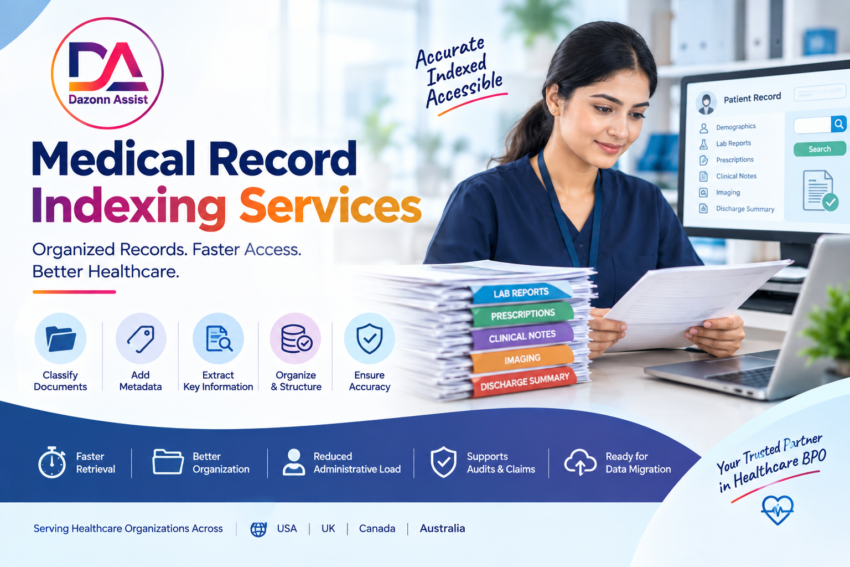
Medical Record Indexing Services help healthcare organizations organize and classify patient records in a structured way. Hospitals, clinics, laboratories, insurance companies, and healthcare providers manage large amounts of medical documents every day. These may include patient histories, prescriptions, lab reports, discharge summaries, insurance documents, and clinical notes. Proper indexing makes these records easier to locate and manage.
What Are Medical Record Indexing Services?
Medical record indexing involves reviewing healthcare documents and assigning relevant categories, labels, dates, patient information, and document types. This creates an organized digital record system. With properly indexed records, authorized staff can quickly find the information they need without searching through large numbers of unorganized documents.
Benefits of Medical Record Indexing
One of the main benefits is faster document retrieval. Healthcare staff can locate important patient information more efficiently, which can support smoother administrative and clinical workflows.
Indexing can also improve data organization and accuracy. Properly categorized records reduce the chances of documents being misplaced or incorrectly filed. It can also help healthcare organizations manage large document volumes while reducing manual administrative work.
Another benefit is improved operational efficiency. Outsourcing medical record indexing allows healthcare teams to focus more on patient care and other important activities while trained professionals handle document organization.
Medical Record Indexing Process
The process generally starts with receiving and reviewing medical documents. The documents are then classified according to patient details, document type, date, provider information, and other required fields. After indexing, the information is checked for accuracy and stored according to the healthcare organization’s requirements.
Best Practices for Medical Record Indexing
Healthcare organizations should use standardized indexing guidelines, maintain data accuracy, and regularly perform quality checks. Staff should also follow appropriate privacy and security procedures when handling patient information.
By using professional medical record indexing services, healthcare organizations can create a more organized, searchable, and efficient record management system.