

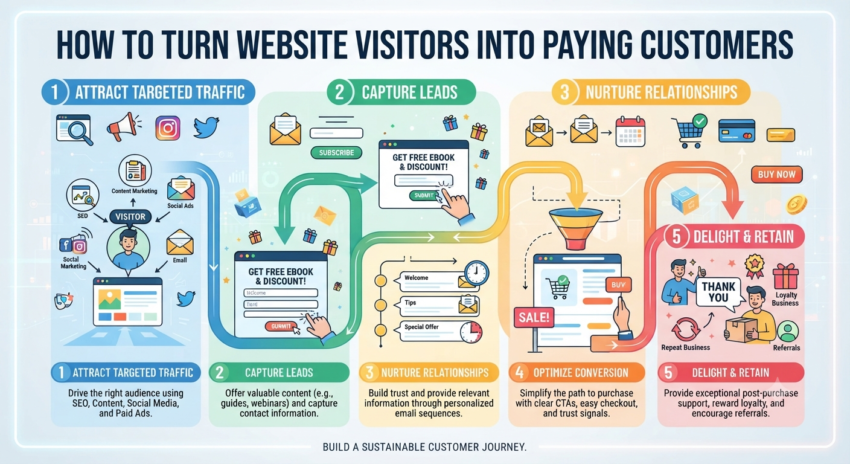
Building an online presence is relatively easy. Building one that continues to generate visibility, engagement, leads, and customers over the long term requires a more thoughtful strategy. Businesses can gain quick attention through advertisements or trending content, but sustainable digital growth depends on creating a strong foundation that can continue producing value as customer behavior and online platforms evolve.
From search engine optimization and content marketing to social media, analytics, email campaigns, and website optimization, businesses have numerous opportunities to build lasting digital visibility. The challenge is choosing the right combination of strategies and applying them consistently.
Digital Marketing Bucks focuses on helping businesses approach digital marketing as a long-term growth process rather than relying entirely on short-term promotional activities.
What Does Sustainable Online Growth Mean?
Sustainable online growth means developing digital marketing systems that can continue supporting a business over time. It involves building organic visibility, maintaining customer relationships, creating useful content, improving the website, and making decisions based on performance data.
A sustainable strategy does not mean avoiding paid advertising. Paid campaigns can be valuable when used strategically. Instead, businesses should aim to balance short-term opportunities with long-term assets such as website content, search visibility, brand recognition, customer databases, and strong digital relationships.
Start With Clear Business Objectives
Before selecting digital marketing channels, businesses should define what they want to achieve.
Objectives may include increasing qualified website traffic, generating leads, increasing online sales, improving brand awareness, attracting local customers, or increasing repeat purchases.
Clear objectives make it easier to determine which marketing activities deserve attention.
For example, an e-commerce business may prioritize product-page optimization, shopping campaigns, email marketing, and remarketing. A B2B company may focus more heavily on LinkedIn, SEO, thought-leadership content, and lead-generation campaigns.
Build a Strong Website Foundation
A website is one of the most important long-term digital assets a business can own. Social media platforms can change their algorithms and advertising costs can fluctuate, but a well-developed website remains a central destination for customers.
A sustainable website strategy should focus on clear navigation, useful content, mobile responsiveness, fast performance, security, accessible information, and simple conversion paths.
Businesses should also regularly update outdated pages and remove broken links or unnecessary elements that could negatively affect the user experience.
Invest in Long-Term SEO
Search engine optimization can support sustainable visibility because useful, well-optimized pages can continue attracting organic traffic after they are published.
A long-term SEO strategy may include keyword research, technical SEO, internal linking, content optimization, structured information, local SEO, and the development of authoritative resources.
Instead of targeting every popular keyword, businesses can build topical depth around subjects that are directly relevant to their products or services.
SEO should also be treated as an evolving discipline. Search systems change, competitors publish new content, and user behavior develops over time. Regular monitoring and optimization are therefore important.
Create Content That Keeps Providing Value
Content can become a long-term digital asset when it solves genuine customer problems.
Businesses can create detailed guides, FAQs, tutorials, industry reports, comparison articles, case studies, videos, and educational resources.
Evergreen content can continue attracting visitors long after publication if it remains accurate and relevant. At the same time, businesses should periodically review older content and update statistics, examples, links, and recommendations.
Companies such as HubSpot have built extensive educational content libraries that support their broader marketing ecosystem. The lesson for smaller businesses is not to copy the scale of such companies, but to recognize the value of consistently creating useful resources for a defined audience.
Develop a Consistent Social Media Strategy
Social media can help businesses develop relationships with customers and increase brand visibility. However, sustainable social media marketing requires more than posting whenever there is time.
Businesses should establish a realistic publishing schedule and choose platforms based on where their target audience spends time.
Content can include educational tips, customer stories, product demonstrations, behind-the-scenes material, industry insights, short-form videos, and company updates.
The goal should be to create recognizable and useful communication rather than chasing every short-lived trend.
Build First-Party Customer Relationships
Businesses should avoid depending entirely on third-party platforms to maintain contact with their audiences.
Email lists, customer accounts, subscriptions, and other permission-based relationships can provide businesses with direct communication channels.
Email marketing can be used to share educational content, product announcements, personalized offers, company updates, and useful resources.
Building these relationships gradually can create a valuable customer communication channel that is less dependent on changes in social media algorithms.
Use Paid Marketing as a Growth Accelerator
Sustainable growth does not mean avoiding paid advertising. Paid search and social advertising can help businesses reach relevant audiences, test offers, generate leads, and promote new products.
However, businesses should measure the performance of paid campaigns rather than focusing only on impressions or clicks.
Metrics such as qualified leads, conversion rate, customer acquisition cost, revenue, and return on advertising spend can provide a clearer picture of campaign performance.
Paid campaigns can also help businesses discover which messages or audiences perform well, providing insights that can inform broader marketing strategies.
Use Analytics to Make Better Decisions
Data is an important part of sustainable digital marketing.
Businesses can use analytics to understand where website visitors come from, which pages attract attention, what content generates engagement, and which marketing channels contribute to conversions.
Analytics should not simply be used to collect numbers. Businesses need to connect data with business objectives.
For example, if website traffic increases but enquiries remain unchanged, the business may need to examine landing pages, calls to action, offers, or audience quality rather than simply trying to increase traffic further.
Learn From Established Digital Brands
Large companies demonstrate different approaches to building digital ecosystems.
Adobe combines software products with educational resources and creative communities. Canva uses templates, tutorials, design resources, and social content to support its brand ecosystem. Mailchimp has developed educational resources around email marketing and business communication.
These companies operate at a much larger scale than most small businesses, but their strategies illustrate several useful principles: consistency, education, customer-focused content, strong branding, and continuous product or service communication.
Digital Marketing Bucks: Supporting Sustainable Digital Growth
Digital Marketing Bucks is a digital marketing company focused on helping businesses establish stronger online visibility and develop practical strategies for long-term digital growth. Its services can include SEO, content marketing, social media marketing, paid advertising, website optimization, local SEO, lead generation, and digital strategy.
As a top digital marketing company, Digital Marketing Bucks focuses on connecting different marketing activities instead of treating each channel as an isolated task. SEO can attract organic visitors, content can educate them, social media can build engagement, paid advertising can create targeted visibility, and analytics can help measure performance.
The company can adapt its approach according to a business’s industry, audience, goals, and available resources. For businesses seeking sustainable growth, the emphasis can be placed on building strong digital foundations, creating useful content, improving online visibility, understanding customer behavior, and continuously optimizing marketing performance.
Keep Improving Instead of Chasing Perfection
Digital marketing is constantly changing. Search behavior evolves, advertising platforms introduce new features, social media trends shift, and customers develop new expectations.
Businesses therefore need a culture of continuous improvement.
Instead of completely changing their strategy every time a new trend appears, companies can test new ideas while maintaining the channels that consistently contribute to their objectives.
Small improvements to website conversion rates, content quality, customer communication, SEO performance, or advertising efficiency can compound over time.
Conclusion
Sustainable online growth is built through consistency rather than quick digital marketing shortcuts. Businesses need a strong website, valuable content, effective SEO, meaningful social media activity, customer relationships, appropriate paid campaigns, and reliable analytics.
The objective is not simply to generate temporary attention. It is to create digital assets and marketing systems that continue supporting the business over time.
With a strategic approach and support from a digital marketing company such as Digital Marketing Bucks, businesses can work toward building stronger online visibility, deeper customer relationships, and a more sustainable foundation for future digital growth.