

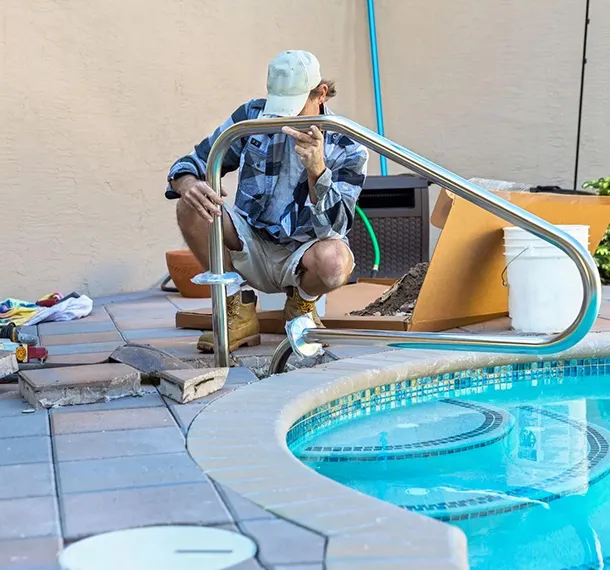
A swimming pool can be one of the most enjoyable features of a home, especially during the warmer months. But keeping it clean, balanced, and operational requires more than simply removing leaves from the surface. Problems with water chemistry, filtration, pumps, plumbing, or circulation can gradually affect the condition of a pool. In some cases, a pool that has been neglected for a while can become cloudy, algae-filled, or completely green.
For homeowners, one of the most important decisions is knowing whether a pool needs routine maintenance, professional repair, or a more intensive cleanup. Understanding the difference can help prevent minor problems from becoming expensive issues and can also help homeowners determine the right time to call a professional.
Pool Masters provides pool maintenance, repairs, equipment services, and green pool cleanups throughout Norco, Corona, and Eastvale. Its services include pool equipment inspections, water balancing, filter cleaning, pool repairs, and green pool recovery.
Why pool problems should not be ignored
Pool problems rarely disappear on their own. A small issue with circulation can affect water quality. A malfunctioning pump can prevent proper filtration. Poor chemical balance can contribute to algae growth, cloudy water, or uncomfortable swimming conditions.
Ignoring these warning signs may also place additional strain on pool equipment. When filtration systems are not working properly, debris and contaminants can remain in the water. Similarly, an untreated leak or plumbing problem can continue to affect water levels and equipment performance.
The earlier a problem is identified, the easier it may be to determine an appropriate solution.
Regular inspection is therefore an important part of responsible pool ownership. Homeowners do not necessarily need to understand every mechanical component of a pool, but they should know the common signs that indicate professional attention may be necessary.
Signs your pool may need professional repair
Some pool problems are obvious, while others develop gradually. Paying attention to changes in the pool’s performance can help homeowners identify problems before they become more serious.
1. The pump is making unusual noises
A pool pump should operate consistently. Grinding, rattling, screeching, or unusual humming sounds can indicate that something inside the system needs attention.
Potential causes can include worn components, blocked systems, motor problems, or other equipment issues. Continuing to operate damaged equipment may increase the likelihood of further problems.
2. Water circulation has become weak
Proper circulation is essential because pool water needs to move through the filtration and sanitation system. If the water appears stagnant or the circulation feels weaker than normal, the problem could involve the pump, filter, plumbing, or another component.
A professional can assess the system rather than simply treating the visible symptoms.
3. Water levels keep dropping
A small amount of water loss can occur naturally through evaporation, particularly during hot weather. However, an unexplained or unusually rapid drop in water level may indicate a leak.
Leaks can occur in different parts of a pool system, including plumbing connections, equipment, or the pool structure. Identifying the source is important because repeatedly adding water does not solve the underlying problem.
4. The filter becomes clogged frequently
Pool filters collect contaminants and debris from the water. When a filter becomes dirty, water flow can decrease and the system may work harder.
Regular filter cleaning is part of proper pool care, but if a filter repeatedly becomes clogged unusually quickly, it may be worth investigating whether another issue is contributing to the problem.
5. Pool equipment stops working properly
Heaters, pumps, filters, motors, and automation components all contribute to pool operation. A sudden equipment failure can affect water quality and usability.
Pool Masters offers repair services covering issues such as pool pumps, motors, leaks, plumbing, and other pool equipment.
When does a pool need more than routine cleaning?
Routine cleaning is designed to maintain a pool that is already in reasonably good condition. It typically involves tasks such as skimming, brushing, vacuuming, removing debris, testing water, balancing chemicals, and checking important equipment.
But a pool that has been neglected for an extended period may require a different approach.
For example, if the water has turned green and there is significant algae growth, simply skimming leaves from the surface is unlikely to resolve the underlying problem. The pool may require algae removal, chemical treatment, filtration, and thorough sanitisation.
This is where professional green pool treatment becomes particularly useful.
What causes a swimming pool to turn green?
Green pool water is commonly associated with algae growth. Algae can multiply when pool conditions are not properly controlled.
Several factors may contribute to a green pool, including:
- Poor chemical balance
- Insufficient sanitation
- Inadequate circulation
- Dirty or ineffective filtration
- Extended periods without maintenance
- Environmental debris
- Warm weather
- Equipment problems that prevent proper circulation
A green pool should not simply be treated based on its appearance. The underlying water conditions should also be evaluated.
For example, adding chemicals without addressing a circulation or filtration problem may not provide a lasting solution. If the filtration system cannot properly circulate and clean the water, the treatment process can become much less effective.
What is involved in professional green pool cleanup?
Professional green pool cleanup is more comprehensive than ordinary weekly maintenance.
The exact process depends on how severe the problem is, but treatment may involve assessing the water, removing visible debris, addressing algae, applying appropriate treatment, and allowing the filtration system to restore water clarity.
Pool Masters describes its green pool cleanup service as including algae removal, shock treatment, and full pool sanitisation for neglected, green, or swamp-like pools.
The goal is not simply to make the water look better temporarily. A proper cleanup should address the conditions that allowed the algae and contamination to develop in the first place.
Can homeowners clean a green pool themselves?
Some homeowners choose to treat minor water-quality problems themselves, and routine pool maintenance can certainly be handled by knowledgeable pool owners.
However, a severely green pool can be more complicated.
Homeowners may not know:
- Which water parameters are outside the appropriate range
- How severe the algae growth is
- Whether the filtration system is functioning correctly
- Whether circulation is adequate
- How much treatment is appropriate
- Whether an equipment problem is contributing to the condition
Using too much of a chemical can also create its own problems. For this reason, heavily neglected pools may benefit from professional assessment rather than repeated trial-and-error treatment.
How to decide between repair and cleanup
One of the easiest ways to think about the difference is to focus on the underlying problem.
If the main issue is a mechanical or structural problem, repair may be required.
Examples include:
- A malfunctioning pump
- A damaged motor
- A plumbing issue
- A suspected leak
- A heater problem
- Poor equipment performance
- Filtration problems
If the main issue is severely contaminated or algae-filled water, professional cleanup may be appropriate.
Sometimes both services are necessary.
For example, imagine a homeowner returns after several weeks away and discovers that the pool is completely green. The immediate problem is the water condition, but further inspection reveals that the pump has stopped working. Cleaning the pool without repairing the pump may only provide a temporary solution.
The equipment needs to function correctly so that circulation and filtration can continue after the cleanup.
Why water chemistry matters
Pool water chemistry is not simply about keeping water visually clear. Properly balanced water contributes to swimmer comfort, sanitation, water clarity, and equipment protection.
Incorrect chemical levels can contribute to problems such as algae, cloudy water, scaling, or equipment damage.
Routine water testing helps identify chemical imbalances before they become larger problems.
Pool Masters states that its maintenance services include water testing and chemical balancing as part of ongoing pool care.
For homeowners, consistency is particularly important. Pool chemistry can change because of weather, usage, evaporation, debris, and other environmental factors.
Why filtration and circulation are equally important
Chemical treatment is only one part of maintaining healthy pool water.
The circulation system moves water through the pool’s filtration and treatment equipment. If circulation is poor, contaminants may remain in the water and chemical treatment may not distribute effectively.
A dirty filter can also reduce water flow.
This is why pool maintenance should consider the entire system rather than focusing only on the water itself.
Routine inspection of pump baskets, skimmer baskets, filters, and circulation components can help maintain system performance and identify developing problems.
Preventing a green pool in the future
Once a pool has been restored, prevention becomes the next priority.
A few basic habits can make a significant difference.
Maintain a regular cleaning schedule
Leaves, insects, dirt, and other debris should not be allowed to accumulate. Regular skimming and vacuuming help reduce the amount of material entering the filtration system.
Test the water consistently
Water chemistry can change over time. Regular testing helps identify imbalances before they contribute to algae growth or other problems.
Keep the filtration system maintained
A filter cannot perform effectively when it is heavily clogged or neglected. Cleaning and maintaining the filter according to its requirements helps support water circulation.
Watch your equipment
Changes in pump sounds, pressure, circulation, water levels, or heating performance should not be ignored.
Arrange professional maintenance when necessary
Regular professional service can provide another layer of protection, particularly for homeowners who do not have the time or experience to manage every aspect of pool maintenance.
How Pool Masters can help Norco homeowners
Pool Masters serves homeowners across Norco and surrounding communities with a range of pool care services. Its website identifies Norco as one of its service areas and lists pool maintenance, repairs, green pool cleanups, filter cleaning, and equipment installation among its services.
For homeowners searching for a pool repair service Norco ca, the first step should be identifying the actual source of the problem rather than simply treating the visible symptom.
Likewise, homeowners searching for green pool cleanup in Norco ca may need more than standard cleaning if algae, poor sanitation, or prolonged neglect has affected the pool.
A professional assessment can help determine whether the pool needs cleaning, chemical treatment, equipment repair, or a combination of services.
When should you call a professional?
A professional pool technician can be particularly helpful when:
- The pool repeatedly turns green
- Water chemistry will not remain balanced
- The pump is making unusual sounds
- Water circulation has decreased
- The pool is losing water unexpectedly
- A filter becomes clogged repeatedly
- Pool equipment has stopped working
- You suspect a leak
- The pool has been neglected for an extended period
- You are unsure what is causing the problem
Getting help early can make the problem easier to diagnose and may prevent additional damage.
Frequently asked questions
How do I know if my pool needs repair?
Signs can include unusual pump noises, weak circulation, unexplained water loss, equipment failure, repeated filtration problems, or persistent water-quality issues. A professional inspection can help identify the underlying cause.
Is a green pool always caused by algae?
Algae is a common cause of green pool water, but water chemistry, filtration, circulation, and other conditions should also be evaluated. Treating only the visible colour may not address the underlying problem.
Can a pool be both repaired and cleaned?
Yes. A pool may require both services when an equipment problem contributes to poor water quality. For example, a malfunctioning pump may need repair before or during the process of restoring a heavily contaminated pool.
How often should pool water be tested?
Testing frequency depends on pool use, weather, maintenance routines, and water conditions. Regular testing is important because chemical levels can change over time.
Does cleaning a green pool prevent it from turning green again?
Cleanup restores the pool, but ongoing maintenance is necessary to help prevent recurrence. Proper sanitation, circulation, filtration, and routine cleaning all play a role.
Should I swim in a green pool?
A green pool should not automatically be considered safe for swimming. The water should be properly assessed and sanitised before the pool is used again.
What should I do if my pool pump stops working?
Avoid assuming that the problem is only electrical or mechanical. A professional can inspect the pump and surrounding system to determine the cause and recommend the appropriate repair.
Conclusion
A pool that looks cloudy, green, stagnant, or poorly maintained is often showing signs of a deeper problem. The solution may involve routine maintenance, water treatment, equipment repair, or several services working together.
Understanding the difference between cleaning and repair helps homeowners respond appropriately. Green water may require a comprehensive cleanup, while weak circulation, equipment failure, leaks, or plumbing problems may require professional repair.
For Norco homeowners, Pool Masters provides a range of services designed to keep pools clean, functional, and ready for use, including maintenance, equipment care, repairs, and green pool recovery.
When a pool problem appears, addressing the underlying cause rather than simply treating the visible symptom is the best way to work toward a cleaner, healthier, and more reliable swimming environment.