

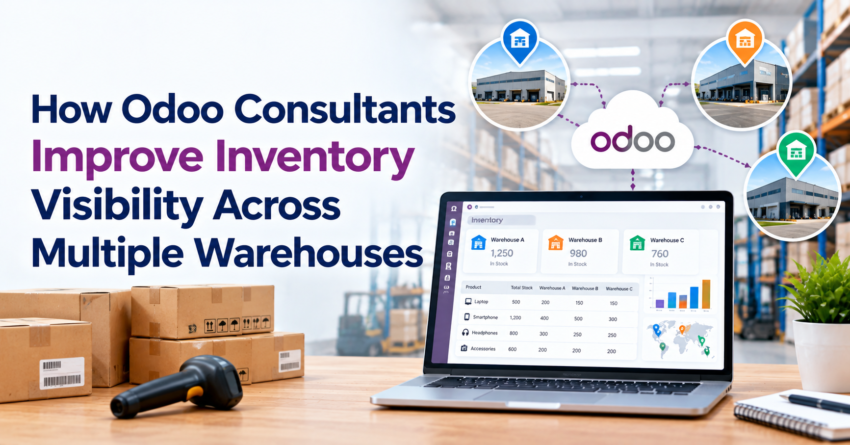
Managing inventory across multiple warehouses creates challenges for growing businesses. Companies must track stock levels, product movements, incoming shipments, and customer orders across different locations. Poor visibility can lead to stock shortages, excess inventory, delayed deliveries, and inaccurate financial reports. According to the International Data Corporation, global data creation was projected to reach 175 zettabytes by 2025. This growth highlights the need for better data management across business operations. Inventory teams also face rising demands for accurate, real-time stock information. Even small errors in stock records can affect purchasing decisions, warehouse planning, and customer satisfaction.
Odoo provides an integrated inventory management system that connects warehouses, stock locations, transfers, purchasing, sales, and other business operations. However, businesses must configure these features according to their warehouse structures and operational needs.
Odoo consultants help organizations build a clear inventory management framework. They configure warehouse settings, define stock routes, improve reporting, and connect inventory data with other departments. Their technical expertise helps businesses maintain accurate stock records across multiple locations. Odoo Consulting Services support companies that need better inventory control, reliable stock information, and improved warehouse coordination. An experienced Odoo Consulting Company can also identify process gaps and design a system that supports future business growth.
Understanding Inventory Visibility Across Multiple Warehouses
Inventory visibility means knowing what stock a business owns, where it exists, and how much remains available. It also includes understanding which quantities are reserved, incoming, damaged, or awaiting inspection.
Why Inventory Visibility Matters
Businesses often store products across regional warehouses, distribution centers, retail outlets, and manufacturing facilities. Each location serves different operational needs.
Without centralized inventory information, employees may rely on spreadsheets, phone calls, or disconnected software. These methods increase the risk of incorrect stock decisions.
For example, a company may report a product as unavailable in Delhi while its warehouse in Jaipur holds 500 units. Without shared inventory data, the sales team might reject an order unnecessarily.
Odoo helps users review stock quantities across configured warehouses and locations. Consultants ensure that the system reflects actual warehouse operations and uses consistent stock rules.
Common Problems With Multi-Warehouse Inventory
Growing businesses often face several inventory challenges:
- Inaccurate stock quantities across locations
- Delayed updates after internal transfers
- Duplicate inventory records
- Poor visibility into reserved stock
- Unplanned purchases and excess inventory
- Limited tracking of damaged or returned products
- Difficulty identifying slow-moving items
- Inconsistent warehouse reporting
These problems often result from weak processes rather than software limitations alone. Consultants examine both the technical setup and daily warehouse activities before recommending changes.
How Odoo Consultants Design a Centralized Inventory Structure
A clear warehouse structure provides the foundation for accurate inventory information. Odoo consultants review physical storage arrangements and map them to the system.
Configure Multiple Warehouses Correctly
Odoo allows businesses to configure multiple warehouses within a company. Each warehouse can have its own operations, stock locations, and replenishment rules.
Consultants first identify the number of warehouses and their purposes. They determine whether each location handles storage, distribution, manufacturing, returns, or retail fulfillment.
For example, a consumer electronics company might operate warehouses in Delhi, Mumbai, and Bengaluru. Each warehouse stores regional stock and fulfills nearby customer orders.
The consultant configures each warehouse with suitable names, short codes, locations, and operational settings. This structure helps employees identify the correct stock source during daily operations.
Organize Internal Stock Locations
A warehouse may contain several physical areas. These include receiving docks, storage shelves, packing stations, quality inspection areas, and dispatch zones.
Odoo supports hierarchical stock locations that represent these areas. Consultants create location structures that match the company’s actual layout.
For example, a warehouse might use this structure:
- Delhi Warehouse
- Receiving Area
- Quality Inspection
- Storage Zone A
- Storage Zone B
- Packing Area
- Dispatch Area
This setup provides more detailed stock tracking than using one general warehouse location. It also helps teams locate products faster and record movements accurately.
Define Consistent Warehouse Naming Rules
Consistent naming improves communication across departments. Consultants establish naming rules for warehouses, locations, and operation types.
For example, warehouse codes such as DEL, MUM, and BLR can identify regional facilities. Location codes can then identify specific storage areas.
Clear codes reduce confusion during transfers, reporting, and barcode operations. They also help users select the correct destination when processing stock movements.
How Odoo Consultants Improve Real-Time Stock Tracking
Accurate inventory visibility depends on timely updates. Consultants configure stock operations so that employees record movements at the correct stage.
Track Incoming and Outgoing Stock
Odoo manages inventory through stock moves and stock pickings. These records track product movements between locations and support receiving, delivery, and internal transfer operations.
Consultants configure receiving and delivery workflows according to warehouse requirements. They define how employees validate incoming goods and process outgoing shipments.
For example, a warehouse receives 200 laptops from a supplier. Employees validate the receipt against the purchase order. Odoo updates the relevant stock quantities after the receipt validation.
When the warehouse ships 30 laptops to a customer, the delivery operation records the outgoing movement. The system then reflects the remaining stock.
This process gives teams a consistent record of stock movement and helps reduce manual updates.
Separate Available, Reserved, and Forecasted Quantities
A product’s physical quantity does not always equal its available quantity. Some units may already belong to customer orders or internal operations.
Odoo provides different quantity measures, including on-hand, reserved, and forecasted quantities. Consultants explain these values and configure workflows that support accurate planning.
For example, a warehouse holds 1,000 units of a product. Customer orders reserve 250 units, leaving 750 units available before other commitments.
The sales team can use this information to avoid promising unavailable stock. Purchasing teams can review forecasted quantities when planning replenishment.
Use Barcode Scanning for Accurate Movements
Manual data entry can create errors during receiving, picking, packing, and shipping. Odoo’s Barcode application can support scanning-based warehouse operations.
Consultants configure barcode workflows based on the warehouse’s equipment and processes. They may introduce product barcodes, location barcodes, and operation-specific scanning steps.
For example, an employee scans a product and its destination location during an internal transfer. This process helps ensure that the employee records the correct item and destination.
Barcode scanning can improve speed and accuracy when employees follow consistent procedures. Businesses must also maintain suitable labels, devices, and staff training.
How Odoo Consultants Improve Stock Transfers Between Warehouses
Internal transfers help businesses move products between locations without creating unnecessary purchases. Consultants configure these movements to maintain traceability and accurate quantities.
Configure Internal Transfer Operations
Odoo supports internal transfers between stock locations and warehouses. Consultants define the transfer process according to business needs.
For example, the Mumbai warehouse may run low on a popular product while Delhi holds excess stock. The inventory team can initiate an internal transfer from Delhi to Mumbai.
The transfer records identify the source location, destination location, products, and quantities. Employees validate the movement according to the configured workflow.
This creates a traceable record and helps both warehouses maintain accurate stock information.
Use Multi-Step Routes When Required
Some warehouses require several steps before goods reach their final destination. Products may move through packing, transit, quality inspection, or staging areas.
Odoo supports configurable warehouse operation flows. Depending on the selected settings, businesses can use one-step, two-step, or three-step receipts and deliveries.
Consultants select the appropriate route based on operational complexity. For example, a distribution center may receive goods, inspect them, and then move them into storage.
A separate dispatch process may require picking, packing, and shipping. Each step provides greater control but also adds operational work.
The consultant should choose the simplest route that meets the company’s tracking and control requirements.
Track Goods in Transit
Transfers between warehouses may take several hours or days. Businesses need to know whether products remain at the source, travel between locations, or have reached their destination.
Consultants configure suitable transfer operations and transit locations where the business requires them. This approach helps teams distinguish available stock from stock moving between facilities.
For example, 100 units may leave Delhi for Mumbai. The business can track the transfer through its defined movement records rather than treating the units as immediately available in Mumbai.
Clear transit handling reduces confusion and supports more accurate regional stock planning.
How Odoo Consultants Improve Inventory Forecasting and Replenishment
Inventory visibility becomes more valuable when businesses can use it to plan future demand. Odoo consultants configure replenishment rules that support purchasing and warehouse operations.
Set Minimum and Maximum Stock Levels
Reordering rules help businesses maintain suitable inventory levels. Odoo can use configured minimum and maximum quantities to generate replenishment proposals.
Consultants review sales patterns, supplier lead times, storage limits, and product importance before setting these values.
For example, a warehouse sells approximately 40 units of a product each day. Its supplier needs five days to deliver new stock.
The business must consider expected demand during that lead time. It should also account for demand changes and possible delivery delays.
Suitable reordering rules help the purchasing team respond before stock reaches critical levels.
Configure Inter-Warehouse Replenishment
Some businesses prefer transferring available stock from another warehouse before placing a new supplier order.
Odoo supports routes and replenishment methods that can coordinate these operations when configured appropriately. Consultants review product routes, warehouse rules, and procurement settings.
For example, a regional warehouse may request stock from a central distribution center. The central warehouse can then prepare the transfer based on available inventory.
This approach can reduce unnecessary purchasing and improve stock distribution across locations.
Review Forecasted Demand
Historical sales data provides useful information about product demand. However, seasonal changes, promotions, and new products can affect future requirements.
Consultants help teams review forecasted stock, open orders, supplier lead times, and replenishment needs. They can also connect sales and purchasing data with inventory reports.
For example, a retailer may expect higher demand during a festival season. The team can review regional sales patterns and prepare stock before demand increases.
Forecasting accuracy depends on reliable transaction records and realistic assumptions. Businesses should review their rules regularly as market conditions change.
How Odoo Consultants Build Better Inventory Reports
Inventory reports help managers understand stock distribution and identify operational problems. Consultants configure reports and dashboards around practical business questions.
Create Warehouse-Wise Stock Reports
Warehouse-level reporting shows which locations hold specific products and quantities. Managers can use these reports to compare inventory across facilities.
Useful report fields may include:
- Product name and internal reference
- Warehouse and stock location
- On-hand quantity
- Reserved quantity
- Forecasted quantity
- Incoming stock
- Outgoing stock
- Product value, where supported by the reporting setup
For example, a manager can compare stock levels across Delhi, Mumbai, and Bengaluru. The report may reveal excess inventory in one region and shortages in another.
This information supports internal transfers and purchasing decisions.
Identify Slow-Moving and Excess Stock
Slow-moving inventory occupies storage space and ties up working capital. Consultants help businesses identify products that have remained unused for extended periods.
Teams can analyze stock movements, sales history, product age, and demand patterns. Custom reports may provide additional views when standard reports do not meet the requirement.
For example, a distributor may discover that 300 units have remained in storage for six months. The business can investigate the cause and adjust future purchasing decisions.
Excess stock reports also help managers review discontinued products and regional inventory imbalances.
Build Management Dashboards
Managers need a clear view of important inventory indicators. Consultants can configure reporting views or dashboards using suitable Odoo features and supported reporting tools.
Useful indicators include stockout rates, inventory turnover, order fulfillment time, and excess stock value.
For example, a dashboard may show that the Mumbai warehouse experiences frequent stock shortages. Managers can investigate supplier delays, inaccurate replenishment rules, or regional demand changes.
Reports become more reliable when teams maintain accurate stock movements and consistent product records.
How Odoo Consultants Connect Inventory With Other Business Functions
Inventory operations depend on purchasing, sales, accounting, manufacturing, and customer service. Odoo consultants connect these functions to create consistent business information.
Connect Inventory With Sales
Sales orders affect stock reservations and delivery planning. Consultants configure order fulfillment rules so sales teams understand product availability.
For example, a salesperson checks whether a product can fulfill a customer’s requested delivery date. The team can review available quantities and incoming stock before confirming the order.
This reduces the risk of accepting orders that warehouse teams cannot fulfill on time.
Connect Inventory With Purchasing
Purchase orders help replenish stock when demand exceeds available supply. Consultants configure supplier records, lead times, purchasing rules, and receipt operations.
The purchasing team can review expected receipts alongside current inventory. This provides a better view of future stock availability.
Accurate purchase and receipt records also help teams investigate supplier delays and quantity differences.
Connect Inventory With Accounting
Inventory valuation can affect financial reporting and cost calculations. Odoo’s accounting integration depends on the company’s configuration and supported valuation methods.
Consultants review product categories, costing methods, valuation settings, and relevant accounting rules. They also test how stock movements affect inventory valuation and financial entries.
For example, a company using automated inventory valuation needs consistent product and stock configuration. Incorrect settings can create differences between operational records and financial reports.
Finance and inventory teams should review these processes together before deployment.
Common Inventory Problems Odoo Consultants Help Prevent
A well-designed system reduces common mistakes, but employees still need clear procedures and regular checks.
Incorrect Product and Location Records
Duplicate product records can divide stock information across multiple entries. Incorrect locations can also make physical inventory difficult to reconcile.
Consultants establish product naming rules, internal references, barcode standards, and location structures. They also help teams clean existing records before migration.
Poor User Training
Employees may skip scans, validate incorrect quantities, or select the wrong destination. These mistakes reduce the value of centralized inventory information.
Consultants provide role-based training and document common warehouse tasks. They may also introduce validation controls where the business needs additional checks.
Weak Inventory Adjustment Controls
Physical counts may reveal damaged, missing, or incorrectly recorded stock. Employees need a controlled process for correcting these differences.
Consultants configure inventory adjustment procedures and appropriate permissions. They also help managers review adjustment reasons and investigate repeated discrepancies.
Choosing the Right Odoo Consulting Partner
Selecting the right consulting partner affects implementation quality and long-term support. Businesses should look beyond basic software installation experience.
Review Technical and Warehouse Experience
An experienced Odoo consultant should understand warehouse operations, stock locations, routes, replenishment, barcode workflows, and inventory reporting.
Ask for examples involving multiple warehouses and complex stock transfers. The partner should explain its design decisions in clear business and technical terms.
Check Integration and Reporting Skills
Some businesses need connections with ecommerce platforms, shipping providers, barcode devices, or external accounting systems.
A suitable consulting partner should assess data exchange requirements, error handling, and reporting needs before development begins.
Plan for Long-Term Support
Warehouse operations change as companies open new facilities or introduce additional product categories. The inventory system must adapt without unnecessary complexity.
Odoo Consulting Services can support system reviews, staff training, performance improvements, and new warehouse setup. A reliable Odoo Consulting Company should also provide documentation and a clear process for handling future changes.
Conclusion
Inventory visibility across multiple warehouses requires accurate data, clear warehouse structures, and reliable stock movement records. Odoo provides tools for managing these activities within an integrated business platform. Odoo consultants help businesses configure warehouses, organize locations, track transfers, and improve replenishment. They also support barcode operations, inventory reporting, and connections with sales, purchasing, and accounting.
These improvements help teams identify available stock, reduce avoidable purchasing, and make better distribution decisions. Their success depends on suitable configuration, accurate transactions, and consistent employee practices. With the right design and ongoing support, businesses can use Odoo to maintain clearer inventory information across every warehouse. This foundation supports better planning, more reliable fulfillment, and sustainable business growth.