

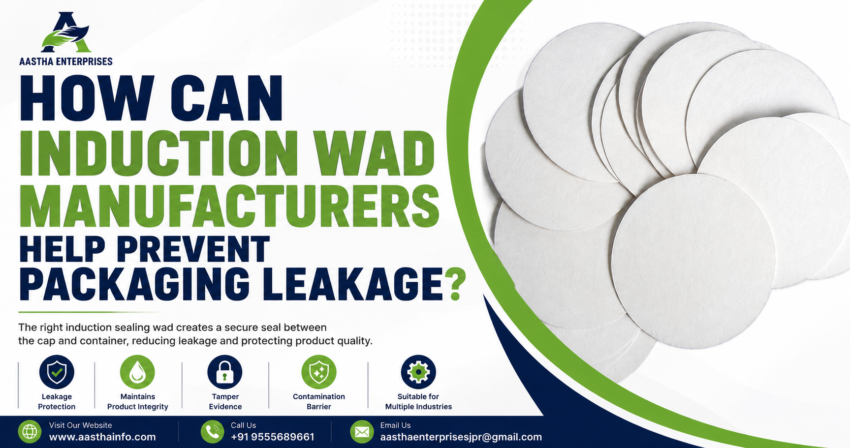
Packaging leakage can lead to product waste, contamination, damaged shipments, and customer complaints. For businesses packaging liquids, food, cosmetics, pharmaceutical products, or chemicals, choosing the right sealing material is essential. A suitable induction sealing wad helps create a secure seal between the container and its cap, reducing the risk of leakage during storage and transportation.
Aastha Enterprises provides packaging products for different container and sealing requirements. Choosing the right wad depends on the product being packed, container material, and sealing process. A properly selected induction sealing wad helps improve package integrity, reduce leakage risks, and protect products from external contamination.
What Is an Induction Sealing Wad and How Does It Work?
An induction sealing wad is a liner placed inside a container’s cap. During the sealing process, an induction sealing machine generates heat through electromagnetic induction. This heat activates the wad’s heat-sealing layer, allowing it to bond with the container opening.
Once properly sealed, the wad creates a protective barrier that helps prevent leakage and limits exposure to external contaminants. It can also provide tamper evidence, helping customers identify whether the original seal has been opened.
The performance of an induction seal depends on the wad’s construction, container compatibility, and correct machine settings.
Basic Technical Information
|
Feature |
Description |
|
Main components |
Foil layer and suitable supporting sealing materials |
|
Common applications |
Bottles, jars, and compatible containers |
|
Container materials |
PET, HDPE, and glass, depending on compatibility |
|
Sealing method |
Electromagnetic induction heating |
|
Primary purpose |
Help prevent leakage and protect packaged contents |
|
Additional benefit |
Can provide tamper evidence |
|
Industries served |
Food, pharmaceutical, cosmetic, chemical, and personal care |
Not every induction sealing wad is suitable for every container. Businesses should check product specifications and test compatibility before selecting a sealing solution.
Benefits and Advantages of Induction Sealing Wads
Induction sealing wads offer several benefits for businesses looking to improve packaging quality and reduce avoidable product loss.
1. Helps Prevent Packaging Leakage
A properly applied induction seal creates a barrier across the container opening. This helps reduce the risk of spills during handling, storage, and transportation. It is particularly useful for liquid products that require secure packaging.
2. Protects Products from External Contamination
An effective seal helps limit exposure to dust, moisture, and other external contaminants. This is important for products that require hygienic packaging, although the actual level of protection depends on the sealing material and application.
3. Provides Tamper Evidence
An induction seal can help customers identify whether a container’s original seal has been broken. This feature is useful for food, personal care, pharmaceutical, and other products where package integrity matters.
4. Supports Product Quality
A suitable sealing wad helps maintain packaging integrity throughout distribution. By reducing leakage and unwanted exposure, businesses can minimise product waste and packaging-related complaints.
5. Works Across Different Packaging Applications
Different induction wads are designed for different container materials and product requirements. Choosing the right option allows businesses to match their sealing materials to their packaging lines rather than using the same liner for every application.
What Types of Induction Wads Are Available?
Different products and containers may require different sealing solutions. Understanding the available options can help businesses choose suitable materials for their packaging operations.
Aluminium foil induction sealing wads use aluminium foil as part of their sealing structure. When combined with a compatible heat-sealing layer, they can form a secure bond with the container opening. Businesses comparing Aluminium Foil Induction Sealing Wad Manufacturers should check the complete wad construction, container compatibility, and required barrier performance.
Some applications require wads specifically designed for PET or HDPE plastic containers, while others need options compatible with glass bottles and jars. Vented induction wads may also be suitable for selected products that require controlled gas release.
Experienced Induction Wad Manufacturers can help businesses understand the available options and identify products that match their packaging requirements. However, the final choice should depend on the actual container, product characteristics, and sealing conditions.
How to Choose Reliable Induction Wad Manufacturers
Selecting a supplier involves more than comparing prices. Product quality, material compatibility, and supply consistency all influence packaging performance.
When evaluating Induction Sealing Wad Manufacturers, consider these factors:
- Material compatibility: Confirm that the wad suits your container material and the product being packed.
- Quality consistency: Ask about product specifications and quality checks between batches.
- Available sizes: Ensure the supplier can provide the dimensions and wad types required for your containers.
- Application guidance: Discuss your induction sealing equipment and any existing sealing problems.
- Supply reliability: Check whether the supplier can meet your quantity requirements consistently.
Reliable Induction Sealing Wad Suppliers can help businesses source products suited to their packaging needs. Similarly, Induction Wad Suppliers should be able to provide relevant specifications so buyers can make informed decisions.
Before placing a bulk order, request samples and test them with your actual containers and sealing equipment. This helps identify potential problems before they affect regular production.
Which Industries Does Aastha Enterprises Serve for Packaging Solutions?
- Pharmaceutical Industry: Sealing solutions for medicine bottles and pharmaceutical containers to help protect products from moisture and contamination.
- Food and Beverage Industry: Induction sealing wads and liners for packaging sauces, juices, jams, and other food products.
- FMCG Industry: Packaging seals that help maintain product freshness, prevent leakage, and support product safety.
- Cosmetics and Personal Care Industry: Sealing solutions for bottles and containers used for cosmetic and personal care products.
- Chemical Industry: Container sealing solutions that help protect packaged chemicals and reduce leakage risks.
- Lubricants Industry: Wads and liners for containers used to package lubricants and similar products.
- Plastic Packaging Industry: PET and HDPE container moulds and induction sealing wads for plastic packaging applications.
- Industrial Packaging: EP wad liners, aluminium foil induction wads, and other sealing products for different packaging requirements.
Step-by-Step Guide to Choosing the Right Induction Sealing Wad
Follow these steps to reduce the risk of selecting an unsuitable sealing product.
Step 1: Identify the container material. Determine whether your container is made from PET, HDPE, glass, or another material.
Step 2: Consider the product type. Identify the contents and any specific sealing or barrier requirements.
Step 3: Check the dimensions. Confirm the cap size, container opening, and condition of the rim.
Step 4: Review product specifications. Ask the manufacturer or supplier about material compatibility and recommended applications.
Step 5: Test the sealing process. Use samples with your actual containers and induction sealing machine. Check whether the seal forms correctly and performs as expected.
Step 6: Evaluate before bulk ordering. Confirm product consistency and supply availability before committing to large quantities.
Conclusion
Packaging leakage can result in product loss, damaged shipments, and customer dissatisfaction. Choosing the right induction sealing wad helps businesses improve package integrity and reduce these risks. Material compatibility, consistent quality, and correct machine settings are all important for achieving reliable sealing results.
Aastha Enterprises provides packaging products for different requirements. By checking product specifications and testing suitable options, businesses can make informed decisions about their sealing needs.
Website: https://www.aasthainfo.com/
Frequently Asked Questions (FAQs)
1. How do I choose the right induction sealing wad for my product?
Consider the container material, cap dimensions, product type, and required sealing performance. The wad must be compatible with the container and suitable for the product being packed. Request samples and test them with your actual packaging before placing a bulk order.
2. Why does my induction sealing wad leak even after sealing?
Leakage can occur due to incompatible wad materials, an uneven or damaged container rim, insufficient cap pressure, or incorrect induction machine settings. Check the container and wad compatibility, review the machine settings, and ensure the seal forms evenly around the container opening.
3. Can the same induction sealing wad be used for PET, HDPE, and glass bottles?
Not always. Different container materials may require different heat-sealing layers. Even if a supplier offers a wad for multiple container types, confirm its compatibility with your specific bottle, cap, and product before using it in production.
4. What is the difference between one-piece and two-piece induction sealing wads?
A one-piece induction liner generally consists of a single sealing structure that bonds to the container opening. A two-piece liner includes a separate backing layer that remains inside the cap after the foil seal is removed. The backing can help with resealing, depending on the closure design.
5. How can I check the quality of an induction sealing wad before buying in bulk?
Request samples and test them using your actual bottles, caps, and induction sealing machine. Check whether the seal bonds evenly, opens as intended, and passes suitable leakage tests after cooling. Also review the product specifications, material compatibility, and consistency before approving a bulk order.