

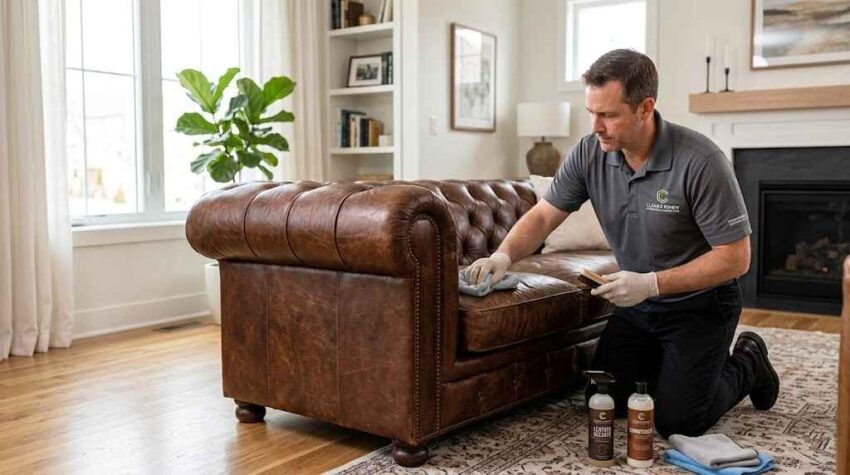
A leather couch is more than just a place to sit. It can be a centerpiece of your living room, a comfortable spot to relax after a long day, and a significant investment in your home’s comfort and style. However, even high-quality leather furniture can lose its beauty over time if it is not cared for properly. Everyday use, body oils, dust, spills, and sunlight can gradually affect its appearance, softness, and durability. The good news is that regular maintenance and professional cleaning can help keep your leather couch in excellent condition for years.
Many homeowners focus on cleaning their carpets and floors but overlook their leather furniture until visible stains, dull patches, or unpleasant odors appear. Investing in leather couch cleaning san diego can help address the dirt and residue that build up through everyday use while supporting the long-term condition of your furniture. Professional cleaners understand that leather requires a different approach from fabric upholstery, making proper cleaning methods essential for protecting its finish and natural characteristics.
Understanding how professional leather couch cleaning works can help you make informed decisions about furniture care, avoid common cleaning mistakes, and get more value from your investment.
Why Leather Couches Need Regular Professional Cleaning
Leather is durable, but it is not completely resistant to wear and damage. Depending on the type of leather and its protective finish, the material may be vulnerable to oils, spills, abrasion, and certain cleaning products.
Over time, dust and fine particles settle into seams, creases, and textured surfaces. Body oils from hands, arms, and hair can also accumulate on frequently used areas. When this residue remains on the surface, it may contribute to discoloration, a greasy appearance, or a sticky feeling.
Regular professional cleaning helps remove suitable types of accumulated soil without exposing the material to unnecessarily harsh treatments. It also gives an experienced technician an opportunity to identify early signs of wear, fading, or surface damage before they become more noticeable.
Rather than waiting until your couch looks heavily soiled, consider professional cleaning as part of a preventive furniture maintenance routine.
1. Removes Dirt That Can Wear Down Leather
One of the most important ways professional cleaning extends furniture life is by removing accumulated dirt and debris.
Although leather often appears smooth, dust and fine particles can settle into its grain, stitching, and creases. Repeated contact with these particles can contribute to surface abrasion, particularly on seat cushions, armrests, and headrests.
How professional cleaning helps
Professional cleaners select suitable cleaning products and methods based on the leather’s type, finish, and condition. They work carefully to remove surface soil without saturating the material or scrubbing it aggressively.
The process may include:
- Removing loose dust and debris from the couch.
- Paying attention to seams, creases, and frequently touched areas.
- Using a leather-compatible cleaner to loosen suitable surface contaminants.
- Removing cleaning residue according to the product’s instructions.
- Allowing the leather to dry under appropriate conditions.
This careful approach helps maintain the couch’s appearance while reducing the accumulation of abrasive dirt.
For everyday maintenance, gently wiping your couch with a clean, soft cloth can help prevent dust from building up between professional cleanings.
2. Helps Preserve Leather’s Softness and Flexibility
Leather is valued for its distinctive texture, comfort, and flexibility. However, its condition can change when it is exposed to unsuitable cleaning products, excessive moisture, heat, or prolonged environmental stress.
Some leather types can become dry or stiff when their protective finish deteriorates or when they are exposed to inappropriate treatments. Certain finished leathers are more resistant to these problems than others, while delicate or unfinished leather may require particularly careful handling.
Why the right cleaning method matters
Professional leather cleaning is not simply about making the surface look clean. It also involves choosing products that are compatible with the specific material.
After cleaning, a suitable leather conditioner may be recommended when the leather type and manufacturer guidance permit it. Conditioning products can help maintain a supple feel, but they should not be applied indiscriminately. Too much conditioner or the wrong formulation can leave residue, darken the leather, or interfere with its finish.
A qualified technician can help determine whether conditioning is appropriate for your couch and which products are suitable.
By avoiding harsh treatments and unnecessary product buildup, you can help your leather furniture remain comfortable and attractive for longer.
3. Prevents Small Stains From Becoming Long-Term Problems
Spills and stains are common household accidents. Coffee, food, cosmetics, and everyday skin oils can leave marks on leather if they are not handled correctly.
Some stains affect only the surface, while others may penetrate a damaged finish or permanently alter the leather’s color. Attempting to remove them with household cleaners can sometimes make the problem worse.
The benefit of timely stain treatment
Professional cleaners assess the type of stain, the leather’s finish, and the condition of the affected area before choosing a treatment. This reduces the risk of spreading the stain or damaging the surrounding surface.
If a spill happens at home, take these steps:
- Blot immediately. Use a clean, dry, soft cloth to absorb liquid without rubbing.
- Avoid aggressive scrubbing. Friction can spread the stain or affect the finish.
- Skip untested household remedies. Alcohol, vinegar, bleach, abrasive powders, and multipurpose cleaners may damage some leather surfaces.
- Check the manufacturer’s care instructions. Different leather finishes require different cleaning methods.
- Seek professional advice for stubborn marks. Ink, dye transfer, grease, and deeply set stains may need specialized treatment.
Quick action can reduce the likelihood of permanent staining, while appropriate professional care can help preserve the couch’s overall appearance.
4. Protects the Leather’s Finish and Color
The finish applied to leather plays an important role in its appearance and resistance to everyday wear. Depending on the product, it may provide a smooth, matte, glossy, or textured look while offering some protection against moisture and staining.
Repeated exposure to direct sunlight, friction, skin oils, and harsh chemicals can gradually affect that finish. The result may be uneven coloring, dull areas, or visible wear on heavily used sections.
Maintaining a consistent appearance
Professional cleaners use methods suited to the leather’s finish rather than treating every couch in the same way. Before applying a cleaning product, a responsible technician should assess the material and, where appropriate, test the product in an inconspicuous area.
This helps reduce the risk of color transfer, unwanted darkening, or other changes to the surface.
However, cleaning cannot reverse every form of damage. Fading caused by ultraviolet exposure, peeling finishes, deep scratches, and color loss may require repair or refinishing instead of cleaning alone.
You can also protect your couch between appointments by positioning it away from intense direct sunlight and keeping it at a reasonable distance from heat sources.
5. Reduces Odors Caused by Everyday Use
Leather furniture can develop unpleasant odors over time, particularly when food spills, pet accidents, smoke, or body oils accumulate on the surface or in nearby materials.
Leather is less absorbent than many fabrics, but that does not mean it is completely immune to odors. Contaminants can remain in seams, underneath cushions, or in foam and other materials beneath the upholstery.
Simply spraying an air freshener over the couch may temporarily mask an odor without addressing its source.
How professional cleaning makes a difference
A professional cleaner can identify the likely source of an odor and determine whether the leather surface, surrounding materials, or underlying padding needs attention.
Suitable surface cleaning may remove some odor-causing residues. More complicated problems, such as pet urine that has penetrated cushion padding, may require additional treatment or specialist restoration.
Avoid soaking leather in an attempt to eliminate a smell. Excess moisture can cause discoloration, affect adhesives, and create additional problems during drying.
Keeping the room ventilated, cleaning spills promptly, and maintaining a regular furniture care routine can also help your couch stay fresher.
6. Helps Identify Early Signs of Wear
Professional cleaning appointments offer an opportunity to examine your couch more closely. Small problems can be easier to manage when they are identified before they develop into larger areas of damage.
For example, a technician may notice loose stitching, a weakening seam, surface cracking, peeling, or a finish that has started to wear away on an armrest.
Although cleaning does not repair structural or cosmetic damage, recognizing these issues early can help you arrange the appropriate repair.
Cleaning versus leather repair
It is useful to understand the difference between maintaining leather and restoring damaged leather.
- Cleaning removes suitable surface soil, oils, and residues.
- Conditioning uses an appropriate product to support the desired feel and care of compatible leather.
- Repair addresses problems such as tears, scratches, damaged seams, and certain forms of surface deterioration.
- Refinishing may be necessary when the leather’s color or protective coating has deteriorated significantly.
Choosing the correct service helps prevent unrealistic expectations and avoids using cleaning products on problems that require a different solution.
7. Extends the Time Before Furniture Replacement
Replacing a leather couch can be expensive, especially when you have invested in a well-made piece that fits your home perfectly.
Professional cleaning cannot make leather last forever, but it can help you maintain its appearance and reduce preventable damage. When combined with routine care, appropriate repairs, and sensible placement, cleaning may help delay the need for replacement.
Think of it as maintaining an investment rather than waiting for a problem to become unavoidable.
For example, removing accumulated grime from armrests, treating suitable stains early, and preventing excessive product buildup can help a couch look presentable for longer. Keeping seams and frequently used areas clean can also make routine wear easier to monitor.
The actual lifespan of your furniture will depend on the quality of the leather, construction, frequency of use, household conditions, and the care it receives.
How Often Should You Have a Leather Couch Professionally Cleaned?
There is no single schedule that works for every leather couch. A lightly used sofa in a formal living room may need less frequent professional attention than one used daily by children, pets, and guests.
As a general starting point, many households can consider professional leather cleaning every 6 to 12 months. This is only a guideline, not a universal requirement. Manufacturer recommendations and the leather’s condition should take priority.
You may need more frequent attention if your couch experiences heavy daily use, visible grime, frequent spills, or exposure to pets.
Between professional cleanings, follow a few simple habits:
- Dust or gently wipe the surface with a soft, clean cloth.
- Blot spills promptly without rubbing.
- Keep pets’ nails trimmed to reduce accidental scratches.
- Avoid sitting on the couch with lotions or products that may transfer to the leather.
- Keep the furniture away from prolonged direct sunlight and excessive heat.
- Use only cleaning and conditioning products approved for your leather type.
These small steps can make professional cleaning more effective and help maintain your furniture’s condition.
Why Choosing an Experienced Leather Cleaning Professional Matters
Not all upholstery cleaning methods are suitable for leather. Techniques designed for fabric couches, such as heavy water extraction or extensive soaking, may be inappropriate for many leather finishes.
An experienced professional should understand the differences between finished, aniline, nubuck, suede, and other leather types. Each material has specific care requirements, and some need specialist treatment rather than conventional leather cleaning.
Before scheduling a service, consider asking the following questions:
- Can you identify the type and finish of my leather?
- Which cleaning products and methods will you use?
- Will you test the product before treating the entire couch?
- Is conditioning appropriate for this particular material?
- Can you explain which stains or signs of damage may not be removable through cleaning?
Clear answers can help you understand what to expect and reduce the risk of unnecessary damage.
Be cautious of anyone who promises that every stain will disappear or that cleaning can restore severely cracked or peeling leather to its original condition. Honest recommendations should reflect the furniture’s actual condition.
Conclusion
Professional leather couch cleaning is an important part of protecting your furniture investment. By removing accumulated dirt, addressing suitable stains, preserving the leather’s finish, and identifying early signs of wear, proper care can help your couch remain attractive and comfortable for years. The best results come from combining professional attention with simple daily habits, including gentle dusting, prompt spill management, and protection from excessive sunlight and heat. If your leather furniture needs expert attention, Coastal Carpet Care can be a starting point for exploring upholstery care options in San Diego. Choose a cleaning approach suited to your specific leather type, follow the manufacturer’s recommendations, and remember that consistent maintenance is often more effective than waiting until visible damage appears.