

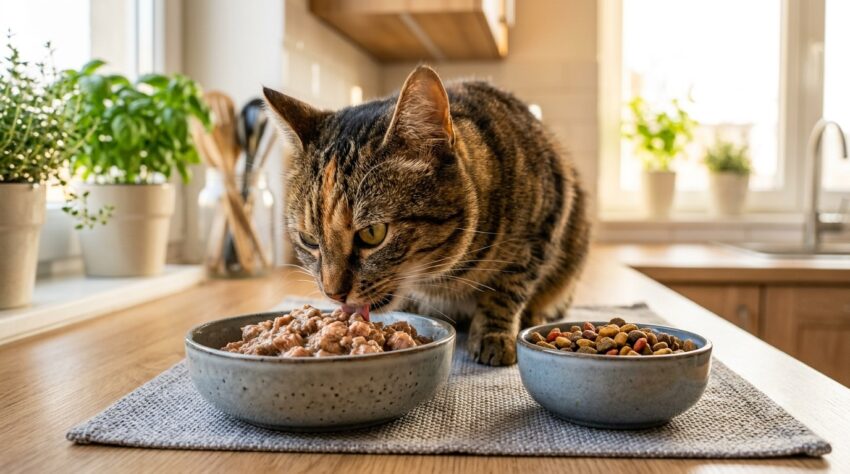
Choosing cat food can feel surprisingly complicated. Walk into a pet store or browse online and you will see labels promising high protein, natural ingredients, grain-free recipes, added vitamins, and more. But what does your cat actually need in every bite?
The answer starts with nutrition, not marketing.
Cats have specific dietary needs that differ from dogs and humans. The right cat food should provide the nutrients your cat needs for its life stage, while also fitting its eating habits, health needs, and your budget. Understanding a few basics can make shopping much easier, whether you are comparing premium formulas or looking for affordable cat food.
So, what should you really look for?
What Does a Cat Need in Every Bite?
A healthy diet is about more than simply finding a food with a high percentage of protein. Cats need a balanced combination of nutrients, including protein, fats, vitamins, minerals, essential amino acids, and water.
Here are the major pieces to consider.
1. Protein
Protein supplies amino acids that cats need for normal body functions. Cats have specific nutritional requirements, including essential amino acids such as taurine.
This is one reason animal-based ingredients are common in cat food formulas.
When comparing foods, don’t look at the protein percentage alone. The overall formulation matters. Different protein ingredients provide different amino acid profiles, so a complete diet needs to supply the nutrients a cat requires in the right amounts and ratios.
2. Fat
Fat provides concentrated energy and helps supply essential fatty acids. It can also make food more appealing to cats.
However, more fat is not automatically better. The right amount depends on the individual cat, its calorie needs, activity level, and overall diet.
3. Vitamins and Minerals
Cats need a range of vitamins and minerals to support normal body functions. These nutrients work together rather than operating as isolated ingredients.
That’s why a food labeled complete and balanced is important when it is intended to be the cat’s main diet.
4. Water
Water is easy to overlook because it isn’t usually discussed as an ingredient in the same way as protein or fat.
Yet hydration is an important part of a cat’s daily routine. Wet cat food contains significantly more moisture than typical dry food, which can help increase the amount of water your cat gets through meals.
Regardless of the type of food you choose, fresh drinking water should always be available.
Why High Protein Cat Food Gets So Much Attention
Search for cat food online and you will quickly encounter high protein cat food.
There’s a good reason protein receives so much attention. Cats have specific protein and amino acid requirements, and protein plays an important role in maintaining normal body tissues and functions.
But here’s the important part: higher protein does not automatically mean better for every cat.
Instead of choosing a product simply because the front of the package says “high protein,” look at the entire nutritional profile.
Ask:
- Is it formulated specifically for cats?
- Is it complete and balanced?
- Is it appropriate for your cat’s life stage?
- What does the ingredient list show?
- How many calories does your cat receive per day?
- Does your veterinarian recommend any specific nutritional changes?
Pro tip: Think of protein as one part of the nutrition puzzle, not the entire puzzle.
Wet vs. Dry Cat Food: Which Should You Choose?
There is no single format that works perfectly for every cat.
Dry Cat Food
Dry food is convenient, easy to portion, and simple to store. It can also be practical for households where cats prefer grazing throughout the day.
Because dry food contains relatively little moisture compared with canned food, make sure your cat has access to fresh water.
Wet Cat Food
Wet food provides substantially more moisture and may be appealing to cats that prefer softer textures.
It can also be useful when you want to add more moisture to the overall diet.
Can You Use Both?
Many cat owners use a combination of wet and dry foods.
The key is to consider the total daily calorie intake, not just the amount in each bowl. A food that looks small in volume can still contribute significant calories.
If you’re changing foods or combining formulas, adjust portions accordingly rather than simply adding one food on top of another.
How to Read a Cat Food Label
The back of the package can tell you more than the front.
Here is a simple way to read it.
Start With the Nutritional Adequacy Statement
Look for a statement explaining whether the food is complete and balanced and which life stage it is designed for.
Kittens, adult cats, and cats in other life stages can have different nutritional needs. Choosing a food designed for your cat’s current stage is an important first step.
Check the Ingredient List
Ingredients are generally listed by weight.
But don’t make the mistake of judging an entire diet from the first ingredient alone.
A cat food is a formulated product. Its nutritional value depends on the combination and amounts of ingredients, not simply whether one particular ingredient appears first.
Look at the Guaranteed Analysis
The guaranteed analysis provides information about certain nutrients, such as crude protein, crude fat, crude fiber, and moisture.
Be careful when comparing wet and dry foods directly. Their moisture levels can be very different, which means the percentages on the label aren’t always an apples-to-apples comparison.
Check Calories
Calories matter just as much as ingredients when managing your cat’s daily intake.
Look for the calorie information on the package and consider how much your cat actually needs each day.
Can Affordable Cat Food Still Be Nutritious?
Absolutely.
A higher price does not automatically guarantee that a food is nutritionally superior. Likewise, a lower-priced product should not automatically be dismissed.
When searching for affordable cat food, focus on value rather than the sticker price alone.
Compare:
- Price per ounce or pound
- Calories per serving
- Feeding amount
- Whether the food is complete and balanced
- Your cat’s life stage
- Whether your cat actually eats it consistently
For example, imagine Food A costs more per can but your cat needs less of it each day. Food B costs less per can but requires a larger daily portion. The cheaper can isn’t necessarily the cheaper daily diet.
The better question is: What does this food cost to feed my cat each day?
This approach can help you stay within budget without choosing food based solely on the lowest shelf price.
Common Cat Food Mistakes to Avoid
Even well-meaning cat owners can make simple feeding mistakes.
Choosing Food Only by the Front Label
Words such as “premium,” “natural,” or “high protein” can catch your attention, but they don’t tell you everything about nutritional adequacy.
Read the back of the package too.
Ignoring Life Stage
Kittens and adult cats don’t have identical nutritional needs.
Choose food designed for your cat’s current life stage unless your veterinarian recommends otherwise.
Overfeeding
Even excellent cat food can contribute to weight gain when fed in excessive amounts.
Use the feeding directions as a starting point, then consider your cat’s body condition, activity, and individual needs.
Adding Too Many Supplements
If your cat already eats a complete and balanced diet, additional supplements may not be necessary.
If you think your cat needs a supplement, talk with your veterinarian first.
A Simple Cat Food Shopping Checklist
Next time you’re shopping, save yourself the label-reading headache with this quick checklist:
✓ Is it made specifically for cats?
✓ Is it complete and balanced for the right life stage?
✓ Does the nutritional profile fit my cat’s needs?
✓ Have I checked the calorie content?
✓ Have I compared wet and dry foods fairly?
✓ Can I afford the daily feeding cost?
✓ Does my cat actually enjoy eating it?
✓ Has my veterinarian recommended any special dietary requirements?
One more tip: don’t change your cat’s diet suddenly unless your veterinarian tells you to. A gradual transition can make the change easier for many cats.
Choose Cat Food With Purpose
The best cat food choice isn’t necessarily the most expensive bag on the shelf or the one with the biggest claim on the front.
Start with what your cat actually needs.
Look for a complete and balanced formula suited to the right life stage. Consider protein, fat, moisture, calories, ingredients, and feeding amounts. Then compare the cost of feeding it every day rather than judging value from the package price alone.
Whether you’re looking for high protein cat food or trying to find affordable cat food, the same rule applies: read the label, understand the nutrition, and choose based on your cat’s individual needs.
If you’re ready to shop, use that checklist before adding the next bag or case to your cart. A few extra minutes of label reading can help you make a much more informed choice for your cat.
Frequently Asked Questions About Cat Food
What should the main ingredient in cat food be?
There isn’t a single ingredient that determines whether a food is nutritionally complete. Cats need a properly formulated combination of nutrients, including appropriate protein and essential amino acids.
Look beyond the first ingredient and check the complete nutritional adequacy statement.
Is high protein cat food better for every cat?
Not necessarily. Protein is important, but the ideal diet depends on the individual cat’s life stage, health, calorie needs, and overall nutritional requirements.
If your cat has a medical condition, ask your veterinarian before making a major dietary change.
Is affordable cat food safe for cats?
Price alone doesn’t determine nutritional quality.
When shopping, look for an appropriate complete and balanced formula and choose food formulated for your cat’s species and life stage.
Is wet or dry cat food better?
Both can have a place in a cat’s diet.
Wet food contains considerably more moisture, while dry food offers convenience and easy storage. The best choice depends on your cat’s nutritional needs, preferences, and feeding routine.
How do I know if cat food is complete and balanced?
Look for the nutritional adequacy statement on the package. It should indicate whether the food is complete and balanced and identify the life stage for which it is intended.