
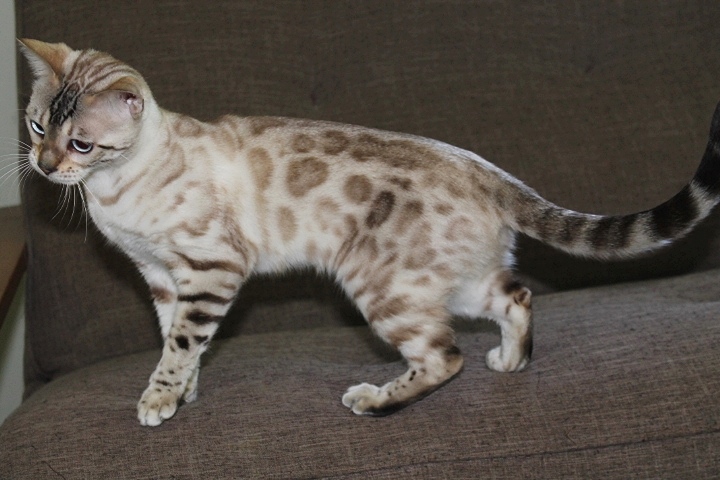
A Bengal kitten may enter a room like a small storm, alert eyes scanning the surroundings, ears responding to every sound, and paws ready to investigate whatever captures its attention. But beneath the distinctive coat and athletic appearance lies a personality that can vary significantly from one kitten to another.
For breeders, evaluating temperament is therefore far more complex than identifying the most playful or outgoing kitten in a litter. Responsible breeders observe how kittens respond to people, unfamiliar environments, handling, new experiences, and other animals. These observations help them understand behavioral tendencies and guide prospective owners toward a kitten whose temperament is compatible with their lifestyle.
For anyone planning to Bengal kitten buy, understanding this assessment process can make the adoption decision more informed. It also helps explain why reputable breeders evaluate behavior carefully before listing Bengals cats for sale.
What Does a Bengal Kitten Temperament Assessment Include?
Professional breeders typically observe kittens over time rather than relying on one brief interaction. A temperament assessment may involve natural observation, controlled exposure to new experiences, and repeated handling.
The goal is to identify behavioral patterns rather than create stressful situations.
Several key traits are commonly evaluated.
- Social Confidence
One of the first characteristics breeders observe is how a kitten responds to people. Does the kitten approach voluntarily? Does it remain relaxed when someone enters the room? Does it show interest in interaction or prefer to observe from a distance?
A socially confident kitten may walk toward unfamiliar people, investigate their movements, or respond positively to gentle interaction. A more reserved kitten may need time before approaching.
Neither behavior automatically indicates a problem. The important factor is how the kitten responds over repeated interactions. A kitten that initially hesitates but gradually becomes comfortable may simply have a cautious temperament.
- Response to Handling
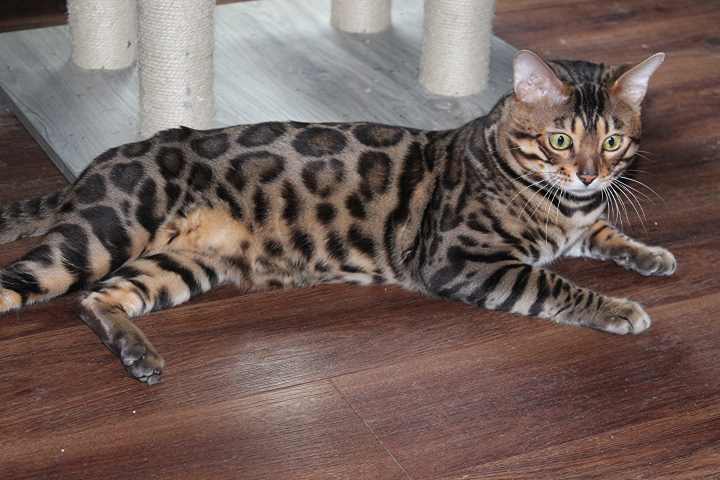
Handling tolerance is another important part of temperament evaluation. Breeders may gently examine a kitten’s paws, ears, body, and coat while observing its response.
The assessment may consider whether the kitten:
- Remains relaxed during brief handling.
- Attempts to move away immediately.
- Becomes tense or vocal.
- Recovers quickly after being released.
- Accepts gentle physical contact over time.
This information can be useful for future veterinary visits, grooming, nail trimming, and routine care.
A kitten does not need to remain completely still to demonstrate a suitable temperament. Active movement is normal, particularly for a highly energetic breed. Breeders are generally more interested in whether the kitten can recover from mild frustration and return to a relaxed state.
- Reaction to New Environments
Bengal kittens are intelligent and often highly observant. Their reaction to a new environment can reveal valuable information about their adaptability.
A breeder may observe a kitten entering an unfamiliar room or encountering a new arrangement of objects. Some kittens immediately explore every corner. Others pause, observe, and then gradually investigate.
The key behavioral indicators include:
- Curiosity.
- Recovery after an initial surprise.
- Willingness to explore.
- Ability to resume normal behavior.
- Level of fear or avoidance.
A kitten that briefly pauses before exploring may simply be processing unfamiliar information. In contrast, a kitten that remains persistently distressed may require a slower transition into a new home.
This distinction can be particularly important for prospective owners who plan to Bengal kitten buy and want to understand how a kitten may adapt to a new household.
- Play Drive and Energy Levels
Bengal cats are generally active and require physical and mental stimulation. However, individual kittens can have different levels of play drive.
During temperament evaluation, breeders may observe how kittens respond to toys, movement, and interactive play. Some kittens may chase immediately and remain engaged for extended periods. Others may play in shorter bursts before becoming interested in something else.
This helps breeders understand whether a kitten is:
- Highly energetic
- Moderately active
- More relaxed
- Strongly motivated by movement
- Particularly interested in interactive play
This information is important because a highly active kitten may thrive in a home that provides climbing structures, puzzle toys, daily play sessions, and regular engagement.
A mismatch between a kitten’s energy level and its future environment can create challenges. A very active kitten placed in an unstimulating environment may become bored, restless, or destructive. Temperament assessment helps reduce this risk.
- Startle Response and Recovery
Unexpected sounds and movements are a normal part of household life. Doors may close, objects may fall, appliances may operate, and visitors may arrive.
Breeders may therefore observe how kittens respond to mild, age-appropriate surprises. The goal is not to frighten the kitten but to evaluate recovery.
A healthy response may include:
- Briefly reacting to the unexpected event.
- Moving away or pausing.
- Observing the situation.
- Gradually returning to normal behavior.
The ability to recover is often more informative than the initial startle response. Even confident animals can react to something unexpected. What matters is whether the kitten can regain composure.
How Breeders Separate Personality from Temporary Behavior?
One of the most important aspects of professional temperament assessment is recognizing that a single behavior does not define a kitten.
A kitten may be unusually quiet because it is tired. It may be less interested in play after eating. It may hesitate in an unfamiliar environment because the surroundings are new. Similarly, a normally reserved kitten may appear extremely energetic during a particularly active period.
For this reason, responsible breeders observe kittens across multiple days and situations.
They consider patterns such as:
- Does the kitten consistently seek human interaction?
- Does it regularly recover quickly from new experiences?
- Is it frequently more active than its littermates?
- Does it repeatedly avoid handling?
- Does its behavior change depending on the environment?
Repeated observations provide a more accurate picture than a single meeting.
Choosing a Bengal Kitten Based on Lifestyle Compatibility
The most suitable Bengal kitten is not necessarily the boldest, most active, or most affectionate kitten in the litter. The better match is the kitten whose behavioral tendencies align with the prospective owner’s lifestyle.
For example:
- An active household may be well suited to a highly playful kitten.
- A home with children may benefit from a kitten that responds well to regular interaction.
- A quieter household may prefer a more relaxed or moderately active personality.
- A home with other pets may require careful consideration of social behavior.
This approach makes the adoption process more thoughtful and reduces the possibility of a mismatch.
Final Thoughts
A Bengal kitten’s appearance may attract attention first, but temperament often determines how successfully the kitten adapts to its future home. Professional breeders understand this distinction and evaluate behavior through repeated observation, gentle handling, social interaction, play, environmental exposure, and recovery from unfamiliar experiences.
For anyone preparing to Bengal kitten buy, asking about temperament can be just as important as asking about health records, vaccination history, and care requirements. When exploring Bengals cats for sale, prospective owners should look for breeders who prioritize behavioral understanding rather than focusing solely on appearance.
A well-conducted temperament assessment does not attempt to predict every detail of a kitten’s future personality. Instead, it provides a valuable behavioral snapshot—one that helps connect the right kitten with the right home and creates a stronger foundation for a successful lifelong relationship.