
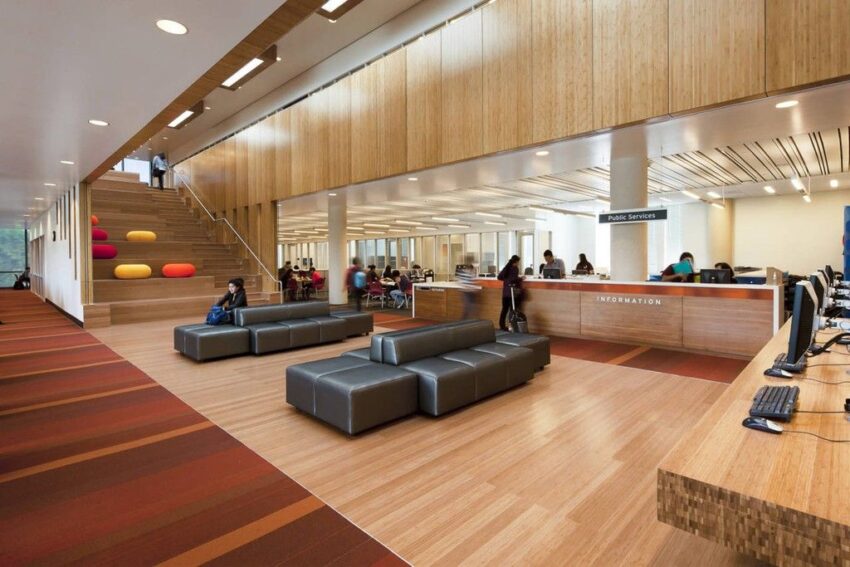
College interior design companies specialize in creating functional, comfortable, and inspiring environments that support learning, collaboration, administration, and student activities. Modern colleges require more than traditional classrooms; they need well-planned lecture halls, laboratories, libraries, faculty rooms, administrative offices, cafeterias, and common areas that meet the diverse needs of students and staff.
Professional interior designers combine intelligent space planning, durable materials, ergonomic furniture, efficient lighting, and modern technology to create educational environments that are practical, welcoming, and adaptable.
Before selecting an interior design company, it is also beneficial to explore 10 Must-Have Features in a Well-Designed Corporate Office. Although focused on corporate workplaces, the principles of efficient layouts, ergonomic furniture, collaborative spaces, lighting, and functionality are also relevant to modern college interiors.
Why Choose Professional College Interior Design Companies?
Professional designers understand the unique requirements of educational institutions and create spaces that support different academic and administrative activities.
Key benefits include:
- Efficient space utilization
- Functional campus interiors
- Student-friendly environments
- Durable furniture solutions
- Improved circulation
- Better lighting and ventilation
- Modern learning environments
- Customized design solutions
A well-designed college interior can contribute to a more engaging and comfortable experience for students, faculty, and visitors.
Interior Design Services for Colleges
Professional college interior design companies provide comprehensive solutions for various campus facilities.
Common services include:
- Classroom interior design
- Lecture hall planning
- Laboratory interiors
- Library design
- Faculty room interiors
- Administrative office design
- Reception and lobby design
- Cafeteria interiors
- Student common areas
- Auditorium design
Each space is planned according to its specific purpose, capacity, safety requirements, and operational needs.
Importance of Functional Space Planning
Space planning plays an important role in educational environments. As highlighted in 10 Must-Have Features in a Well-Designed Corporate Office, efficient layouts, comfortable work areas, appropriate lighting, and collaborative spaces contribute to better user experiences.
In colleges, similar principles can be applied to create classrooms that support focused learning, laboratories that allow safe movement, and common areas that encourage interaction and collaboration.
Materials Used in College Interiors
Educational institutions require materials that are durable, easy to maintain, and suitable for high-traffic environments.
Common materials include:
- Marine plywood
- HDHMR boards
- MDF
- High-pressure laminates
- Powder-coated steel
- Toughened glass
- Acoustic panels
- Durable flooring materials
Selecting the right materials helps ensure long-term performance while maintaining an attractive and professional appearance.
Features of Modern College Interior Design
Today’s educational spaces are designed to support technology, flexibility, collaboration, and comfort.
Popular features include:
- Ergonomic classroom furniture
- Smart classrooms
- Modular workstations
- Collaborative learning zones
- Acoustic solutions
- Energy-efficient lighting
- Customized storage
- Digital presentation systems
These features help create adaptable learning environments that meet the changing needs of modern education.
Applications of College Interior Design Services
Professional college interior design solutions are suitable for:
- Universities
- Degree colleges
- Engineering colleges
- Management institutes
- Medical colleges
- Arts and science colleges
- Training institutions
- Educational campuses
Each project is customized according to the institution’s academic programs, student capacity, campus layout, and operational requirements.
Factors to Consider Before Choosing College Interior Design Companies
Before selecting an interior design company, institutions should consider:
- Experience in educational projects
- Portfolio of completed institutional interiors
- Space planning expertise
- Material quality
- Furniture customization capabilities
- Safety considerations
- Project management experience
- Installation and after-sales support
Choosing an experienced company ensures that the project meets both functional and aesthetic expectations.
Creating Student-Friendly Learning Environments
A successful college interior should encourage concentration, collaboration, and engagement. Comfortable seating, appropriate lighting, good acoustics, clear circulation, and access to technology can significantly improve the learning environment.
Flexible spaces can also allow institutions to accommodate lectures, group activities, workshops, and events without requiring major structural changes.
Conclusion
Professional college interior design companies help educational institutions create functional, durable, and inspiring environments that support students, faculty, and administrative teams. From classrooms and laboratories to libraries, offices, cafeterias, and common areas, every space can be carefully designed to meet its specific purpose.
Additionally, exploring 10 Must-Have Features in a Well-Designed Corporate Office provides useful insights into efficient layouts, ergonomic planning, collaborative spaces, and modern workplace design. Investing in experienced college interior design companies ensures a well-planned educational environment that combines functionality, durability, technology, and a positive learning experience.