
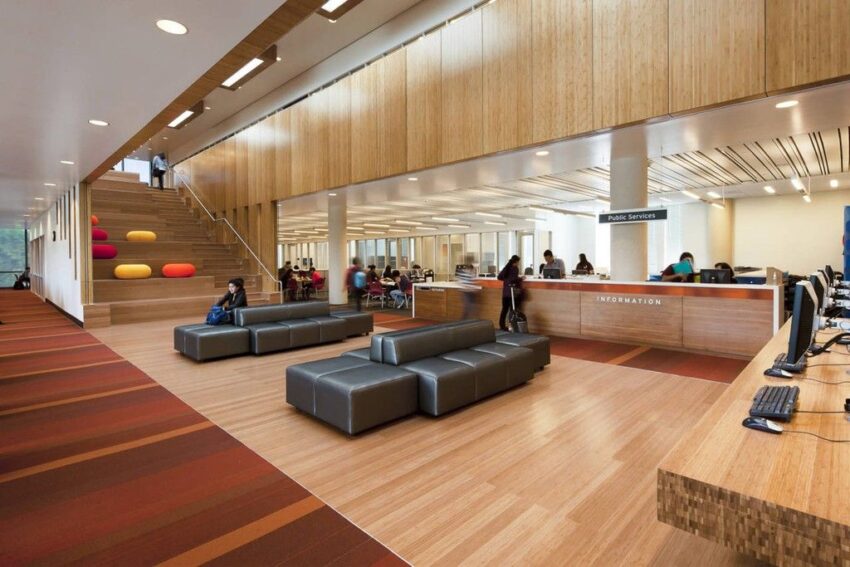
College interior design solutions help educational institutions create modern, functional, and welcoming environments that support learning, collaboration, administration, and student well-being. A well-designed college campus requires more than attractive interiors; it must accommodate diverse activities, large numbers of students, staff requirements, technology, and evolving educational needs.
Professional interior designers work with colleges to plan spaces that balance functionality, durability, safety, comfort, and aesthetics. From classrooms and lecture halls to libraries, laboratories, administrative offices, cafeterias, and student lounges, every area can be designed according to its specific purpose.
Many of the planning principles highlighted in 10 Must-Have Features in a Well-Designed Corporate Office can also be adapted to educational environments. Efficient space planning, ergonomic furniture, technology integration, appropriate lighting, collaborative areas, and organized storage are valuable features for both workplaces and modern college campuses.
Why Choose Professional College Interior Design Solutions?
Educational spaces need to accommodate different learning styles and activities. Professional designers can create environments that encourage concentration, interaction, creativity, and collaboration.
Key benefits include:
- Efficient space planning
- Functional classroom layouts
- Modern furniture solutions
- Technology integration
- Improved student comfort
- Collaborative learning spaces
- Smart storage
- Durable materials
A professionally designed campus can enhance the experience of students, faculty, administrative staff, and visitors.
Modern Classroom Design
Classrooms are at the center of the educational environment. Their design should support teaching, learning, interaction, and technology.
Modern classroom solutions may include:
- Ergonomic student furniture
- Flexible seating
- Interactive display systems
- Teacher workstations
- Storage cabinets
- Acoustic solutions
- Appropriate lighting
Flexible furniture can allow classrooms to be rearranged for lectures, group discussions, workshops, and collaborative activities.
Lecture Halls and Auditoriums
Large lecture halls and auditoriums require careful planning to accommodate students comfortably while providing clear visibility and acoustics.
Design considerations include:
- Tiered seating
- Comfortable chairs
- Presentation systems
- Audio-visual technology
- Acoustic treatment
- Stage design
- Efficient circulation
These spaces should be designed to support lectures, seminars, conferences, and institutional events.
Library and Study Areas
Modern college libraries are increasingly becoming flexible learning environments rather than traditional book storage spaces.
Design solutions may include:
- Individual study desks
- Group study rooms
- Collaborative tables
- Computer workstations
- Bookshelves
- Lounge seating
- Quiet zones
A combination of individual and collaborative areas can accommodate different student preferences.
Administrative Office Interiors
College administration areas require organized and professional workspaces for faculty and staff.
Solutions may include:
- Modular workstations
- Private cabins
- Meeting rooms
- Reception counters
- Filing systems
- Storage cabinets
The principles highlighted in 10 Must-Have Features in a Well-Designed Corporate Office can be applied to administrative areas, where efficient layouts, ergonomic furniture, technology, and organized storage can support staff productivity.
Student Common Areas
Student lounges and common areas play an important role in campus life. These spaces can encourage interaction, relaxation, and informal learning.
Popular solutions include:
- Comfortable lounge seating
- Collaborative tables
- Charging stations
- Informal study areas
- Indoor plants
- Recreational zones
A well-designed common area can help create a more engaging and welcoming campus environment.
Cafeteria and Dining Spaces
College cafeterias need to accommodate large numbers of students while maintaining efficient circulation and easy maintenance.
Design considerations include:
- Durable dining furniture
- Efficient seating layouts
- Easy-to-clean surfaces
- Food service counters
- Adequate lighting
- Proper ventilation
The furniture and finishes should be selected to withstand frequent daily use.
Importance of Furniture Selection
Furniture is a major component of college interiors. It should be durable, ergonomic, easy to maintain, and suitable for intensive use.
Common furniture solutions include:
- Classroom desks
- Student chairs
- Faculty tables
- Library furniture
- Computer desks
- Laboratory furniture
- Storage cabinets
- Office workstations
Customized furniture can be designed according to room dimensions and specific institutional requirements.
Lighting and Acoustics
Proper lighting is essential for educational environments. Natural light can be combined with energy-efficient artificial lighting to create comfortable learning spaces.
Acoustic planning is equally important, particularly in classrooms, lecture halls, and auditoriums. Acoustic panels and sound-absorbing materials can help reduce unwanted noise and improve communication.
Factors to Consider Before Choosing College Interior Design Solutions
Before selecting a professional interior design company, institutions should consider:
- Experience with educational projects
- Portfolio of completed colleges
- Space planning capabilities
- Furniture expertise
- Material durability
- Technology integration
- Safety considerations
- Project management
- Installation capabilities
- Budget transparency
It is also important to evaluate the company’s ability to execute projects in phases when working on operational campuses.
Sustainable College Interior Design
Sustainability can be incorporated into college interiors through energy-efficient lighting, durable materials, natural ventilation, indoor plants, and responsible material selection.
Sustainable design can help reduce long-term operating costs while creating healthier and more comfortable environments for students and staff.
Conclusion
Professional college interior design solutions can transform educational institutions into modern, functional, comfortable, and engaging environments. Through efficient space planning, flexible classrooms, ergonomic furniture, technology integration, smart storage, effective lighting, and durable materials, colleges can create spaces that support learning and collaboration.
Additionally, 10 Must-Have Features in a Well-Designed Corporate Office highlights important principles such as ergonomic planning, efficient layouts, technology integration, and collaborative spaces. These concepts can be adapted to college environments to create well-organized and future-ready educational facilities. By partnering with an experienced interior design company, colleges can develop spaces that support students, faculty, and staff while creating a positive and inspiring campus experience.