
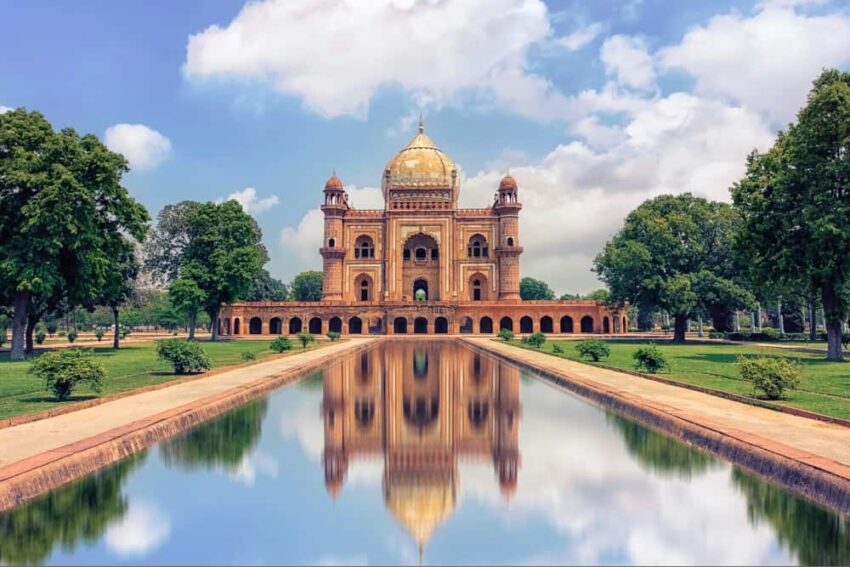
When most people think of traveling to India, iconic images of the Taj Mahal, the bustling streets of Delhi, or the sunny beaches of Goa usually come to mind. While these famous spots are undoubtedly beautiful, they often come with massive crowds, long queues, and a commercialized tourist experience.

But if you look a little closer, India has a completely different side. Tucked away in quiet corners of the country are pristine valleys, ancient ruins, and misty hills that remain untouched by mass tourism. If you want to experience the authentic heart of this diverse land, it is time to step off the beaten path.
Why should you explore India’s offbeat travel destinations?
Traveling to lesser-known places does more than just help you avoid tourist crowds. It gives you a chance to connect deeply with local communities, witness ancient traditions in their purest form, and see landscapes that haven’t been altered by modern high-rises.
When you choose offbeat travel, your money goes directly to local family-run homestays, local guides, and small artisans. It is a more sustainable way to travel, ensuring that the beauty of these fragile regions is preserved for future generations while giving you memories that a crowded resort city simply cannot match.
What makes Ziro Valley in Arunachal Pradesh a unique cultural escape?
Located in the cool, pine-clad hills of Northeast India, Ziro Valley is home to the Apatani tribe. Unlike other regions where modernization has rapidly taken over, the people here have preserved a unique lifestyle that revolves around nature.
The Apatani are famous for their highly efficient, sustainable wet rice cultivation systems and their traditional wooden houses. Older women of the tribe are known for their distinctive facial tattoos and nose plugs—an ancient custom that has now become a fascinating window into their history.
- Best time to visit: September (for the famous outdoor Ziro Music Festival) or from October to April for peaceful exploration.
- Top experience: Walk through the local villages of Hong and Hari, sip locally brewed rice beer, and hike up to the pine groves.
Where can you find a quiet riverside retreat in the Himalayas?
If you want the cool mountain air of Himachal Pradesh but want to avoid the noisy traffic jams of Manali, Tirthan Valley is your perfect escape. Named after the pristine Tirthan River that flows through it, this valley is the gateway to the Great Himalayan National Park, a UNESCO World Heritage Site.
Here, life moves at a delightfully slow pace. You will stay in traditional wooden cottages, wake up to the sound of rushing river water, and spend your days walking through apple orchards.
- Best time to visit: March to June for pleasant weather, or October to November for beautiful autumn colors.
- Top experience: Spend an afternoon trout fishing by the river, hike to the hidden Chhoie Waterfall, and explore the nearby quiet hamlet of Jibhi.
Is Khajjiar really the “Mini Switzerland of India”?
Sitting quietly in the Chamba district of Himachal Pradesh, Khajjiar is a small, saucer-shaped meadow surrounded by towering deodar and pine forests. In the center of this green pasture lies a small, peaceful lake.
The green landscape against the backdrop of snow-capped Himalayan peaks looks so incredibly like the Swiss Alps that it was officially named “Mini Switzerland.” Because it is less commercialized than nearby hill stations, you can enjoy the vast open green space without walking into crowds of vendors.
- Best time to visit: April to June for lush green views, or January if you want to see the meadow completely covered in white snow.
- Top experience: Take a lazy walk around the lake, try paragliding over the pine trees, and visit the ancient wooden Khajji Nag Temple.
Where can you go for a leopard safari without the crowds?
Most wildlife enthusiasts heading to Rajasthan book expensive, crowded safaris in Ranthambore to catch a glimpse of a tiger. However, if you want a truly wild, raw, and crowd-free wildlife experience, you should head to Jawai.
Jawai is a unique region characterized by massive, wind-carved granite hills. Here, wild leopards live in perfect harmony with the local Rabari herdsmen. Because there is no dense forest, spotting these majestic big cats resting on the open granite rocks is incredibly easy and highly rewarding.
- Best time to visit: October to early April when the weather is cool enough for leopards to sunbathe on the rocks.
- Top experience: Take a private open-top gypsy safari at sunrise, watch the leopards roam near ancient cave temples, and spot migratory birds near the Jawai Dam.
What is the mystery behind the abandoned village of Kuldhara?
If you find yourself near the golden desert city of Jaisalmer, skip the typical tourist traps for a few hours and head to Kuldhara. This is a massive, incredibly well-preserved ghost village that was abandoned overnight in the early $19^{text{th}}$ century.
According to local legend, the Paliwal Brahmins who lived here fled their ancestral homes overnight to protect a young woman from the clutches of a corrupt and powerful local minister. Before leaving, they cast a curse on the village, declaring that no one would ever be able to settle here again. To this day, the empty stone houses stand in silent rows under the desert sun.
- Best time to visit: October to March (go early in the morning before the desert heat sets in).
- Top experience: Walk through the empty sandstone streets, explore the abandoned temple, and take photos of the beautiful, eerie ruins.
How do you reach Majuli, the world’s largest river island?
Floating on the mighty Brahmaputra River in Assam, Majuli is the largest inhabited river island in the world. It is also the cultural capital of Assamese society, famous for its ancient “Satras” (Vaishnavite monasteries) which have preserved classical dance, music, and art forms for hundreds of years.
To reach Majuli, you must take a peaceful, scenic ferry ride from the town of Jorhat. Once you arrive, the best way to explore the island’s flat, green dirt roads is by renting a simple bicycle.
- Best time to visit: October to March (avoid the monsoon season from June to September as the island experiences heavy flooding).
- Top experience: Visit the Samaguri Satra to watch artists make traditional hand-painted clay masks, watch the sunset over the Brahmaputra, and stay in a traditional bamboo cottage built on stilts.
Why is Mawlynnong celebrated as Asia’s cleanest village?
Meghalaya is famous for its heavy rainfall and waterfalls, but a tiny village called Mawlynnong deserves a special spot on your itinerary. Years ago, it was awarded the title of “Asia’s Cleanest Village,” and the community has kept that standard alive ever since.
Every single resident, from young children to the elderly, participates in keeping the village spotless. You won’t find a single piece of plastic or litter on the stone-paved paths. Instead, you will see hand-woven bamboo dustbins shaped like cones placed at every corner, beautifully manicured flower gardens, and eco-friendly homes.
- Best time to visit: September to April when the weather is pleasant and dry.
- Top experience: Walk down to the nearby Jingmaham Living Root Bridge, climb up the Sky View bamboo tower for a panoramic view of neighboring Bangladesh, and enjoy a simple local meal cooked with fresh forest herbs.
Does it ever snow in South India?
While you won’t find heavy blizzards here, Lambasingi in Andhra Pradesh is often called the “Kashmir of Andhra Pradesh” for a very good reason. Located high in the Chintapalli hills near Visakhapatnam, this tiny village experiences a unique microclimate.
During the winter months, temperatures can drop to $0^circtext{C}$, covering the local coffee plantations and valleys in a beautiful, shimmering layer of white frost. The entire landscape gets wrapped in a thick, dense fog, making it feel more like a secluded mountain town in northern India than a southern state.
- Best time to visit: November to January to experience the coldest temperatures and see the morning frost.
- Top experience: Walk through the misty, dew-covered tea and coffee estates, camp under the stars, and watch the sunrise from the top of the local hills.
What makes the ancient ruins of Dholavira worth visiting?
For history enthusiasts, Dholavira in Gujarat is an absolute treasure. Located on Khadir Bet island in the Great Rann of Kutch, this is one of the most prominent archaeological sites of the ancient Indus Valley Civilization, dating back over $4,500$ years.
What makes Dholavira incredible is its highly sophisticated urban planning. Long before modern engineering, the people of Dholavira constructed massive stone water reservoirs, underground drainage networks, and a highly organized city layout.
- Best time to visit: November to March when the weather is pleasant and you can combine your trip with the famous Rann Utsav (desert festival).
- Top experience: Explore the ancient water conservation tanks, visit the on-site museum to see Harappan seals and ornaments, and drive through the surreal white salt desert to reach the site.
What are the best historical secrets to uncover in Orchha?
While tourists flock to the crowded forts of Jaipur and Jodhpur, the historic town of Orchha in Madhya Pradesh sits quietly on the banks of the Betwa River, preserving its incredible medieval charm.
Orchha was the capital of the Bundela kings, and it features an architectural style that beautifully blends Rajput and Mughal designs. Because it sees only a fraction of the tourists that visit Rajasthan, you can explore giant, multi-story stone palaces and temples entirely at your own pace.
- Best time to visit: October to March when the weather is cool and breezy.
- Top experience: Explore the grand Jahangir Mahal, watch the sunset behind the giant Chhatris (cenotaphs) along the Betwa River, and attend the evening prayer ceremony at the Ram Raja Temple.
Where are the most peaceful, crowd-free beaches in India?
If you are tired of the crowded, commercialized beaches of North Goa, you still have excellent options. For a laid-back beach vacation, head further south to Gokarna in Karnataka. While main beaches like Om Beach have become popular, hidden spots like Half Moon Beach and Paradise Beach are only accessible by a short forest trek or a local boat ride, ensuring they remain quiet and clean.
If you want something even more remote, look into the Gulf of Mannar Marine National Park in Tamil Nadu. It consists of $21$ small, protected islands surrounded by crystal-clear shallow waters, vibrant coral reefs, and exotic marine life like sea turtles and dolphins.
- Best time to visit: October to March for calm tides and perfect beach weather.
- Top experience: Take a jungle trek connecting Gokarna’s five main beaches, camp on Paradise Beach, or take a authorized boat tour to spot marine life in the Gulf of Mannar.
How can you travel responsibly while visiting these fragile ecosystems?
Many of India’s offbeat destinations are ecologically fragile and home to indigenous communities who have lived in harmony with nature for centuries. As travelers, it is our responsibility to keep these places pristine:
- Bring your trash back: High-altitude areas and remote villages do not have advanced waste management systems. Always carry a small pouch for your trash and bring it back to major cities for disposal.
- Say no to single-use plastics: Bring a reusable water bottle and use a portable water filter or purification tablets.
- Choose local homestays: Staying with local families instead of commercial hotels keeps your travel funds inside the local community and gives you an authentic taste of local food and culture.
- Respect local customs: Always ask for permission before taking photos of tribal elders, and follow local guidelines when visiting sacred temples or monasteries.
What are the essential travel documents you need before exploring India?
Ready to pack your bags and explore these hidden wonders? Before you catch your flight, you need to secure your entry into India.
For citizens of most countries, the easiest and most convenient way to enter is by applying for an Indian e-Visa online. This digital visa allows you to skip physical visits to an embassy and complete the entire process from the comfort of your home. You can apply for tourist e-Visas that are valid for 30 days, 1 year, or even 5 years, giving you plenty of time to explore every hidden corner of the country.
To get started on your travel plans smoothly, check out this step-by-step guide on how to apply for an Indian visa online to ensure a hassle-free journey.
Why Choose Us?
Planning an international trip can sometimes feel overwhelming, especially when dealing with visa applications. We are here to make your journey completely stress-free. Here is why travelers around the world trust us:
- Reliable Travel Visa ServicesOur global approach has assisted numerous travelers in obtaining their Visa. We understand the unique requirements of different countries and streamline the process for you.
- Round-the-Clock AssistanceWe are always here when you need us. Reach out to us 24/7, and our experts will respond within 72 hours to solve any doubts or issues you may have.
- Experienced Visa ConsultantsAvoid simple mistakes that could lead to delays or rejections. Receive expert guidance from our seasoned team to ensure the acceptance of your application.
- Efficient Visa Application ProcessNo more dealing with complicated government portals or confusing terms. Apply for your Visa in minutes with our simplified, user-friendly form.