
Expanding into international markets can create significant opportunities for Indian businesses, but successful exporting requires more than finding overseas customers. Businesses also need efficient customs processes, proper documentation, regulatory compliance, and a clear strategy for managing the cost of production and capital investment. Two areas that can support these objectives are AEO Registration and the Export Promotion of Capital Goods Scheme.
While AEO Registration focuses on building trust with customs authorities and facilitating smoother international trade, the Export Promotion of Capital Goods Scheme is intended to help eligible businesses import capital goods under specified conditions for improving production capacity and fulfilling export commitments. Understanding how these mechanisms work can help exporters make better strategic decisions.
What Is AEO Registration?
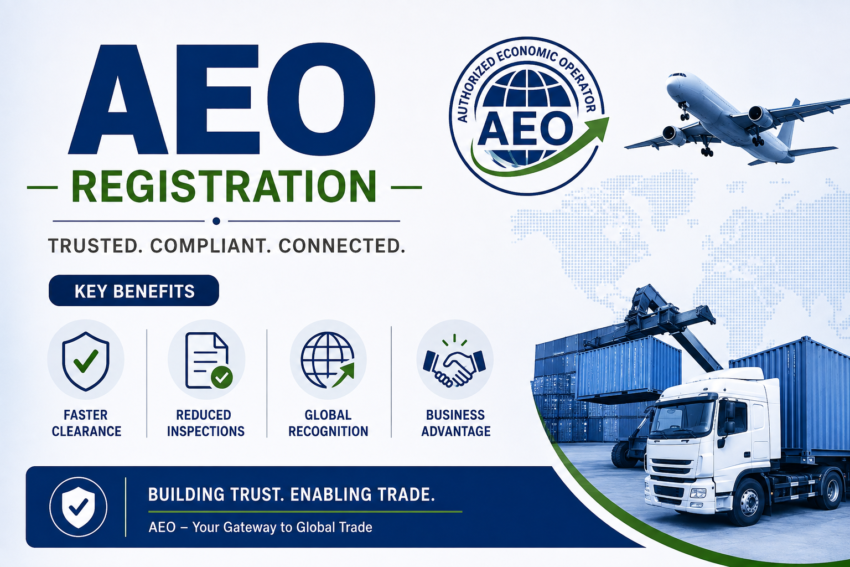
Authorized Economic Operator, commonly known as AEO, is a customs facilitation framework for businesses involved in international trade. The concept is based on recognizing businesses that demonstrate a strong record of customs compliance, appropriate internal controls, and reliable supply-chain practices.
For an importer or exporter that regularly handles cross-border transactions, obtaining AEO status can be valuable because customs-related delays can affect delivery schedules, inventory planning, and overall operational efficiency.
AEO Registration is therefore not simply another compliance certificate. It can become part of a broader strategy for creating a more predictable and efficient international trade process.
Why AEO Status Can Be Valuable for Exporters
International trade involves multiple stages, including documentation, customs declarations, cargo movement, and coordination with logistics partners. A business with a well-organized compliance system is generally better positioned to handle these processes efficiently.
Some important benefits and considerations include:
- Greater customs facilitation: Eligible AEO businesses may receive various customs facilitation benefits depending on their applicable category and prevailing provisions. This can help reduce procedural friction and make cargo movement more predictable.
- Improved supply-chain efficiency: Faster and more streamlined customs procedures can support better inventory and delivery planning. This becomes particularly important for businesses handling frequent imports and exports or operating with tight production schedules.
- Stronger business credibility: AEO recognition demonstrates that a business has established systems for customs compliance and supply-chain security. This can strengthen confidence among international customers, logistics partners, and other stakeholders.
- Better internal compliance practices: Preparing for AEO status encourages businesses to review their documentation, accounting systems, record-keeping, customs procedures, and internal controls. These improvements can benefit the business beyond the registration process itself.
Understanding the Export Promotion of Capital Goods Scheme
For manufacturers and other eligible exporters, modern machinery can be essential for improving productivity and competing in international markets. However, importing advanced capital goods can require considerable investment.
The Export Promotion of Capital Goods Scheme is designed to facilitate the import of eligible capital goods under specified conditions, subject to fulfillment of the prescribed export obligation and other applicable requirements.
The basic idea is to help eligible businesses acquire capital goods that contribute to the production of goods or services intended for export. Instead of viewing the scheme only as a cost-saving mechanism, businesses should consider it as part of a long-term export expansion strategy.
How the Scheme Can Support Business Expansion
Suppose a manufacturing company wants to increase its export capacity but its existing machinery cannot meet growing international orders. Investing in modern equipment could improve production speed, consistency, and product quality.
In such a situation, the Export Promotion of Capital Goods Scheme may become relevant if the business and proposed capital goods satisfy the applicable conditions.
Potential advantages include:
- Modernizing production facilities: Businesses can use eligible capital goods to upgrade outdated machinery and introduce more efficient production technologies. This can help improve productivity and support higher export volumes over time.
- Supporting export growth: Increased production capacity can help businesses respond to international demand more effectively. Companies should, however, assess their expected export requirements before committing to additional machinery and associated obligations.
- Improving long-term competitiveness: Better machinery can contribute to consistent quality, lower production inefficiencies, and improved operational performance. These factors can make it easier for exporters to compete in demanding international markets.
Important Requirements Businesses Should Understand
Businesses should not approach the scheme solely from the perspective of obtaining an import benefit. The authorization involves specific conditions and export obligations that must be understood before implementation.
Before proceeding, businesses should carefully evaluate:
- Eligibility: Confirm whether the business, intended activity, and proposed capital goods meet the applicable requirements. A detailed eligibility review at the beginning can prevent complications later in the process.
- Export obligation: Businesses need to understand the export obligation associated with the authorization and assess whether their projected production and export performance can realistically support it.
- Capital goods selection: Machinery should be selected according to genuine operational requirements rather than simply because it may qualify under the scheme. The investment should contribute meaningfully to productivity or export capacity.
- Documentation: Accurate technical specifications, invoices, authorization details, shipping documents, and other records are important throughout the process. Proper documentation also makes subsequent compliance and record verification easier.
How AEO and Export Incentives Can Work Together
AEO Registration and the Export Promotion of Capital Goods Scheme serve different purposes, but both can form part of a broader international trade strategy.
For example, a manufacturing exporter may use an applicable capital goods scheme to modernize its production facility while simultaneously strengthening its customs compliance systems and pursuing AEO status. The first initiative can support production and export capacity, while the second can contribute to more efficient customs operations.
This integrated approach can be particularly useful for businesses that are moving from occasional exports to regular international trade.
Common Mistakes to Avoid
Businesses often face avoidable problems when they focus only on completing an application rather than understanding the complete compliance lifecycle.
Common mistakes include:
- Ignoring eligibility checks: Applying without first evaluating the applicable conditions can result in delays or unsuitable applications. Businesses should review the relevant requirements before making financial or operational commitments.
- Underestimating export obligations: Businesses sometimes focus on the benefits of a scheme without adequately planning how they will fulfill the associated obligations. Export projections should be realistic and aligned with actual business capacity.
- Maintaining incomplete records: Customs and export-related processes depend heavily on accurate documentation. Poor record-keeping can create unnecessary difficulties during compliance reviews and subsequent procedures.
- Treating compliance as a one-time activity: International trade requirements can involve continuing responsibilities. Businesses should regularly monitor their authorizations, export performance, documentation, and internal compliance systems.
Why Professional Guidance Can Make a Difference
Customs and export-related regulations can involve detailed procedural requirements, technical documentation, and continuing obligations. A small oversight at the application or implementation stage can sometimes create larger operational problems later.
Professional guidance can help businesses assess eligibility, organize documentation, understand applicable obligations, and develop a compliance process suited to their business model. This is particularly useful for companies dealing with multiple products, frequent imports, large capital investments, or expanding export operations.
Conclusion
A successful international trade strategy requires businesses to think beyond individual transactions. AEO Registration can help eligible businesses strengthen customs compliance and potentially benefit from trade facilitation measures, while the Export Promotion of Capital Goods Scheme can support eligible businesses investing in capital goods for export-oriented growth.
The key is to understand the eligibility conditions, documentation requirements, ongoing obligations, and commercial implications before proceeding. With proper planning and professional guidance, businesses can make better use of available trade facilitation and export-support mechanisms while reducing avoidable compliance risks.
If your business is planning to expand exports, import capital goods, improve customs efficiency, or explore AEO status, now is the right time to evaluate your requirements. Consult an experienced DGFT and customs compliance professional to review your eligibility, documentation, export obligations, and applicable benefits, and take the next step toward a more efficient and compliant international trade operation.