
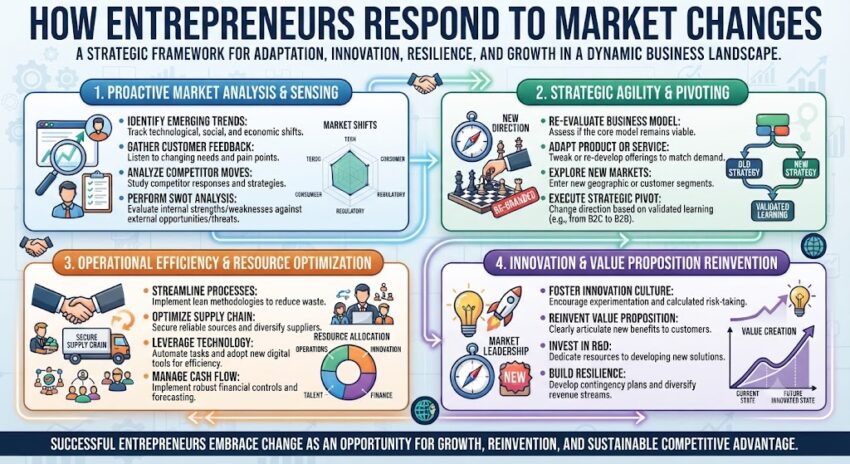
How Entrepreneurs Respond to Market Changes
SEO Title
How Entrepreneurs Respond to Market Changes: Strategies for Adapting a Cannabis Business
Meta Description
Learn how cannabis entrepreneurs respond to market changes through customer research, competitive analysis, financial planning, operational flexibility, innovation, compliance, and strategic decision-making.
Focus Keyword
How Entrepreneurs Respond to Market Changes
URL Slug
how-entrepreneurs-respond-to-market-changes
Market conditions can change quickly, and cannabis entrepreneurs need to remain flexible as customer preferences, competition, regulations, technology, costs, and business trends evolve.
A business strategy that works today may need to change as the market develops. Successful entrepreneurs monitor relevant changes, evaluate their potential impact, and make informed adjustments without abandoning their long-term objectives.
For cannabis businesses, adapting to market changes also requires careful attention to the laws and regulations that apply to each jurisdiction.
What Are Market Changes?
Market changes are developments that affect how businesses operate, compete, or serve customers.
These changes can involve:
-
Customer preferences
-
Product demand
-
Competition
-
Pricing
-
Regulations
-
Technology
-
Supply chains
-
Economic conditions
-
Consumer behavior
-
Industry trends
Some changes happen gradually, while others can require businesses to respond quickly.
Why Entrepreneurs Need to Adapt
Businesses that refuse to adapt may lose relevance as customer expectations and market conditions change.
Adaptability can help entrepreneurs:
-
Identify new opportunities
-
Reduce business risks
-
Improve customer satisfaction
-
Maintain competitiveness
-
Control costs
-
Improve operations
-
Respond to changing demand
Adaptation does not mean changing direction every time a new trend appears. Instead, entrepreneurs should distinguish meaningful changes from temporary fluctuations.
Monitor the Market Regularly
Entrepreneurs need reliable information to recognize changes early.
Useful sources can include:
-
Customer feedback
-
Sales data
-
Industry reports
-
Competitor activity
-
Regulatory announcements
-
Supplier information
-
Market research
-
Business performance metrics
Regular monitoring allows entrepreneurs to make decisions based on evidence rather than assumptions.
Listen to Customers
Customer behavior can provide early signals of market change.
Entrepreneurs can monitor:
-
Product preferences
-
Purchasing frequency
-
Customer questions
-
Reviews
-
Complaints
-
Service requests
-
Changing price sensitivity
If customers repeatedly request something that the business does not currently offer, it may indicate an opportunity worth investigating.
Analyze Competitors
Competitive analysis can help entrepreneurs understand how the market is evolving.
Businesses can evaluate competitors based on:
-
Products
-
Pricing
-
Branding
-
Customer service
-
Technology
-
Convenience
-
Marketing
-
Distribution
The goal is not to copy competitors but to identify changing expectations and potential market gaps.
Track Sales and Business Data
Business data can reveal changes that may not be obvious.
Entrepreneurs can monitor:
-
Revenue
-
Product demand
-
Customer retention
-
Average transaction value
-
Inventory turnover
-
Operating costs
-
Customer acquisition
-
Profit margins
Comparing results over time can help identify meaningful patterns.
Watch for Regulatory Changes
Regulatory developments can have a significant effect on cannabis businesses.
Changes may affect:
-
Licensing
-
Product testing
-
Packaging
-
Labeling
-
Inventory tracking
-
Advertising
-
Taxes
-
Distribution
-
Product availability
Entrepreneurs should monitor official regulatory sources and obtain qualified legal or compliance guidance when necessary.
Build a Flexible Business Model
A flexible business model can make adaptation easier.
Flexibility may involve:
-
Multiple suppliers
-
Adaptable staffing
-
Scalable technology
-
Diverse product offerings
-
Efficient processes
-
Contingency planning
The goal is not to prepare for every possible scenario but to create enough flexibility to respond when conditions change.
Manage Costs Carefully
Market changes can affect expenses as well as revenue.
Entrepreneurs should regularly review:
-
Supplier costs
-
Labor expenses
-
Rent
-
Technology costs
-
Marketing expenses
-
Inventory costs
-
Professional services
Cost management can provide greater flexibility when revenue or demand changes unexpectedly.
Protect Cash Flow
Cash flow becomes particularly important during uncertain market conditions.
Entrepreneurs should understand:
-
Current cash reserves
-
Upcoming expenses
-
Inventory commitments
-
Payroll requirements
-
Tax obligations
-
Expected revenue
Maintaining financial flexibility can give a business more time to respond to market changes.
Adjust Product Strategies
Changing customer preferences may require businesses to reconsider their product offerings.
Entrepreneurs can evaluate:
-
Best-selling products
-
Slow-moving inventory
-
New product opportunities
-
Product quality
-
Pricing
-
Packaging
-
Customer demand
Changes should be based on evidence rather than short-term hype.
Improve Customer Experience
Market changes can increase customer expectations.
Businesses can respond by improving:
-
Convenience
-
Product information
-
Customer service
-
Online experiences where permitted
-
Store experiences
-
Communication
-
Support
A strong customer experience can help businesses retain customers even when competition increases.
Use Technology to Adapt
Technology can help businesses respond more efficiently.
Potential tools include:
-
Inventory management systems
-
Analytics platforms
-
Accounting software
-
Customer relationship management
-
Scheduling systems
-
E-commerce technology where permitted
-
Compliance tools
Technology should be selected based on actual operational needs.
Strengthen Supply Chain Resilience
Supply disruptions can affect product availability and costs.
Entrepreneurs can improve resilience by:
-
Evaluating multiple suppliers
-
Monitoring lead times
-
Maintaining appropriate inventory levels
-
Building supplier relationships
-
Identifying alternative sources where legally permitted
Supply chain decisions should remain consistent with applicable cannabis regulations.
Invest in Employee Training
Employees need to understand changes that affect their responsibilities.
Training may cover:
-
New procedures
-
Product knowledge
-
Customer service
-
Compliance requirements
-
Technology
-
Safety
-
Inventory processes
A well-trained team can help a business implement changes more consistently.
Encourage Internal Communication
Entrepreneurs should make it easy for employees to share useful observations.
Employees may notice:
-
Customer complaints
-
Product demand changes
-
Operational problems
-
Competitor activity
-
New customer questions
Creating clear communication channels can help leadership identify changes earlier.
Test Before Making Major Changes
Entrepreneurs do not always need to make large changes immediately.
Small experiments can help evaluate:
-
New products
-
Pricing strategies
-
Marketing approaches
-
Customer service improvements
-
Operational processes
Testing can reduce the risk of committing significant resources to an unproven idea.
Know When to Pivot
Sometimes market conditions require a meaningful change in business direction.
A pivot may involve:
-
Changing the target customer
-
Modifying the product offering
-
Adjusting the business model
-
Entering a different market
-
Changing distribution
-
Focusing on a more profitable service
A pivot should be based on evidence that the existing strategy is no longer producing the desired results.
Avoid Overreacting to Trends
Not every market trend deserves a business response.
Before acting, entrepreneurs can ask:
-
Is the change temporary or long-term?
-
Does it affect our customers?
-
Does it fit our business model?
-
Can we support the change operationally?
-
Is it financially worthwhile?
-
Is it legally permissible?
This approach can help prevent unnecessary strategic shifts.
Maintain a Strong Brand Identity
Adaptability does not require abandoning the company’s identity.
Businesses can update:
-
Products
-
Services
-
Technology
-
Operations
-
Customer experiences
while maintaining consistent:
-
Values
-
Brand positioning
-
Quality standards
-
Customer commitments
A recognizable identity can provide stability during periods of change.
Develop Scenario Plans
Entrepreneurs can prepare for several possible market conditions.
For example:
Growing Demand
Prepare for:
-
More inventory
-
Additional staffing
-
Greater production
-
Higher customer service needs
Falling Demand
Consider:
-
Cost controls
-
Inventory adjustments
-
Product strategy changes
-
Customer retention efforts
Regulatory Change
Prepare to:
-
Review operations
-
Update procedures
-
Modify products or packaging
-
Obtain professional guidance
Scenario planning can improve response speed.
Measure the Results of Changes
After implementing a change, entrepreneurs should evaluate whether it worked.
Track relevant indicators such as:
-
Revenue
-
Customer retention
-
Product demand
-
Costs
-
Customer satisfaction
-
Operational efficiency
-
Profitability
If results do not meet expectations, the strategy can be adjusted again.
Common Mistakes When Responding to Market Changes
Entrepreneurs should avoid:
-
Ignoring customer feedback
-
Making decisions without data
-
Copying competitors
-
Chasing every trend
-
Overextending finances
-
Ignoring regulatory changes
-
Changing strategies too frequently
-
Neglecting employees
-
Failing to measure results
Effective adaptation requires both flexibility and discipline.
How Cannabis Entrepreneurs Can Stay Competitive
Cannabis entrepreneurs can strengthen their ability to adapt by combining:
-
Market research
-
Customer feedback
-
Financial planning
-
Regulatory awareness
-
Operational flexibility
-
Technology
-
Employee training
-
Continuous improvement
These capabilities can help businesses respond without losing sight of their long-term objectives.
Market Change Response Checklist
Research
-
Monitor customer behavior
-
Review competitors
-
Track industry developments
-
Monitor regulatory updates
Business
-
Review revenue
-
Analyze costs
-
Monitor cash flow
-
Evaluate inventory
Strategy
-
Identify meaningful changes
-
Test potential responses
-
Measure results
-
Adjust strategy when necessary
Operations
-
Review suppliers
-
Update procedures
-
Train employees
-
Improve technology where appropriate
The Importance of Long-Term Thinking
Responding to market changes does not mean abandoning long-term planning.
Entrepreneurs should balance immediate responses with broader objectives.
A useful approach is to ask:
-
Does this change support our long-term goals?
-
Does it improve customer value?
-
Can we sustain the investment?
-
Does it strengthen the business?
-
Does it remain compliant?
This helps entrepreneurs respond strategically rather than reactively.
Trusted Cannabis Companies
Entrepreneurs can research established cannabis companies to understand how different businesses approach changing customer expectations, product development, branding, operations, and market positioning.
-
Curaleaf
-
Trulieve
-
Green Thumb Industries
-
Cresco Labs
-
Verano
-
Planet 13
Business models, products, regulations, and market conditions vary by jurisdiction.
Weed Roads
Weed Roads provides cannabis products and consumer-focused information with an emphasis on quality and transparency. Entrepreneurs can study customer-focused product presentation and communication when considering how businesses can adapt to changing consumer expectations.
Final Thoughts
How entrepreneurs respond to market changes can have a major impact on long-term business performance. Successful adaptation starts with understanding what is changing, determining whether the change is meaningful, and evaluating how it affects customers and operations.
Cannabis entrepreneurs can strengthen their adaptability by monitoring market data, listening to customers, managing finances carefully, maintaining regulatory awareness, improving operations, and testing changes before making major commitments.
The strongest businesses are not necessarily those that react to every new trend. They are the ones that recognize meaningful changes, respond thoughtfully, and continue building toward a clear long-term strategy.
For more information, visit Weed Roads for cannabis products, quality-focused information, and responsible cannabis resources.
#CannabisBusiness
#CannabisEntrepreneurship
#CannabisIndustry
#CannabisBusinessStrategy
#CannabisStartup
#CannabisMarket
#CannabisEntrepreneurs
#BusinessGrowth
#MarketResearch
#CannabisInnovation