

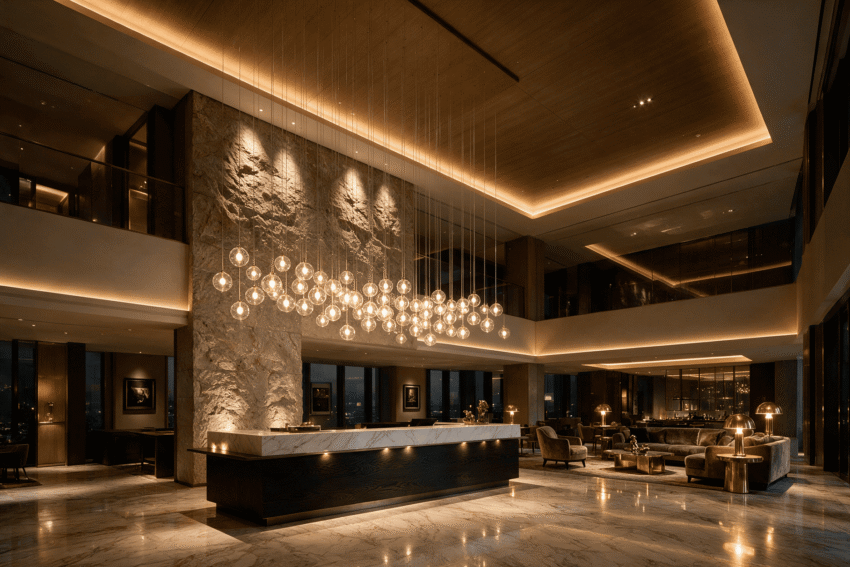
Guests rarely remember the light fittings in a hotel or restaurant. What they remember is how the place made them feel: welcomed at the entrance, relaxed in the lounge, comfortable at the table. Much of that feeling comes from lighting.
In hospitality, lighting is not just a technical requirement. It shapes first impressions, influences how long guests stay and decides how a space looks in every photograph shared online.
First Impressions Start at the Entrance
The arrival experience sets the tone for everything that follows. A well-lit entrance, canopy and lobby tell guests they are expected and cared for. A dim, uneven or harshly lit entrance creates the opposite impression before anyone has said a word.
Good entrance lighting also helps the eye adjust. Moving from bright daylight into a dark interior, or from a dark street into a glaring lobby, feels uncomfortable. A gentle transition between outside and inside makes arrival feel smooth and natural.
Different Zones, Different Moods
Hotels and restaurants are made up of spaces with very different purposes, and each needs its own lighting approach.
Reception desks need clear, flattering light on faces so staff look welcoming and check-in feels easy.
Lounges and waiting areas benefit from warm, lower lighting that encourages guests to sit and relax.
Dining areas need light focused on tables, so food looks appetising and guests can see each other clearly, while the surrounding space stays softer and more intimate.
Corridors and lift lobbies need even, comfortable light that guides guests without feeling clinical.
When every zone is lit the same way, a space feels flat and impersonal. When each zone is lit for its purpose, the space feels thoughtfully designed.
The Power of Warm Light
Most hospitality spaces use warm white light, typically around 2700K to 3000K. Warm light feels inviting and flatters skin tones, food and natural materials like wood, marble and fabric. Cooler light can feel efficient but often makes guests feel less at ease.
Colour quality matters too. Light with a high colour rendering index shows food, finishes and décor in their true colours, which is especially important in restaurants and premium hotels.
Lighting That Changes Through the Day
A hotel lobby at nine in the morning serves a different purpose from the same lobby at nine at night. Breakfast and check-outs call for brighter, fresher light, while evenings call for warmer, dimmer, more atmospheric scenes.
Modern lighting control systems make this easy. Scenes can change automatically through the day, with staff able to adjust them for events or special occasions. This keeps the atmosphere right at every hour and also reduces energy use during quieter periods.
Creating Memorable Moments
Many successful hospitality spaces have one or two signature lighting features: a dramatic chandelier in a double-height lobby, a backlit bar, a softly lit feature wall or a beautifully illuminated facade. These moments give guests something to remember and photograph, and they become part of the brand’s identity.
The key is restraint. A few strong focal points, surrounded by calmer lighting, create far more impact than lighting every surface brightly.
Planning Early Makes the Difference
Lighting works best when it is planned alongside the architecture and interior design, not added at the end. Early planning allows fixture positions, control wiring and maintenance access to be coordinated properly, which avoids costly changes later.
For hotel owners and designers looking for practical guidance, this hotel lobby lighting design guide explains zone-by-zone approaches, colour temperature choices and typical budgets.
Final Thoughts
In hospitality, lighting is one of the most powerful tools for shaping how guests feel. Thoughtful, layered and well-controlled lighting makes a space more welcoming, more memorable and more comfortable, and those feelings are what guests carry home and share with others.