
A garage door should generally move with a predictable, controlled sound. You may hear the opener running, rollers moving along the tracks, and the door sections shifting as they travel. But when a familiar garage door suddenly starts making rattling, squeaking, grinding, popping, or vibrating noises, something may need attention.
One commonly overlooked cause is loose garage door hardware. Nuts, bolts, hinges, brackets, and other fasteners help keep the door system properly aligned. When hardware becomes loose through normal vibration, repeated use, or wear, components can move when they should remain secure. That movement can create unusual sounds and, if ignored, may contribute to larger mechanical problems.
Understanding where these noises come from can help homeowners recognize potential issues early.
Why Does Garage Door Hardware Become Loose?
Garage doors are constantly moving. Every opening and closing cycle produces vibration throughout the system. Over months and years, that repeated movement can cause certain fasteners to loosen.
Other factors can contribute as well, including:
-
Frequent garage door use
-
Aging hardware
-
Improper installation
-
Corrosion
-
Accidental impact
-
Temperature changes
-
Normal component wear
-
Excessive vibration from other damaged parts
A loose bolt may not seem serious at first. However, even a small amount of movement can cause metal components to contact each other and produce noticeable sounds.
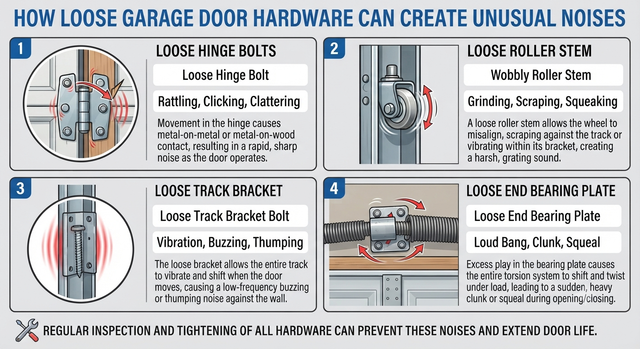
1. Loose Hinges Can Cause Rattling or Popping
Garage door hinges connect the individual sections of a sectional garage door and allow them to bend as the door moves through its tracks.
If hinge fasteners become loose, the hinge can move against the door section. This may produce a rattling, clicking, or popping sound during operation.
A loose hinge can also allow a door section to move differently from the others. Over time, that can contribute to uneven movement.
Homeowners should avoid simply tightening hardware without understanding the door’s construction. A professional can determine whether the hinge itself, its fasteners, or another component is responsible for the noise.
2. Loose Roller Brackets Can Produce Vibration
Rollers help guide the garage door along its tracks. Their brackets must remain properly secured so the rollers can maintain their intended position.
When a bracket becomes loose, the roller may not travel as smoothly as it should. You may hear vibration, rattling, or scraping as the door moves.
A noisy roller doesn’t always mean the roller itself is defective. The surrounding bracket, track, or fasteners may also need inspection.
3. Track Hardware Can Create Rattling Sounds
Garage door tracks are secured to the garage structure with brackets and fasteners. These components keep the tracks positioned correctly.
If track hardware becomes loose, vibration can travel through the metal track and surrounding structure. This can create a noticeable rattling or buzzing sound.
More importantly, loose track hardware can affect track positioning.
Homeowners should not bend or reposition garage door tracks themselves simply to eliminate a noise. Track alignment is important to safe and reliable operation, and significant track problems should be evaluated by a qualified garage door professional.
4. Loose Bolts Can Cause Metal-on-Metal Noise
Garage doors contain many metal components. When a bolt or nut becomes loose, two surfaces may move against one another.
This can produce:
-
Clicking
-
Tapping
-
Rattling
-
Vibrating
-
Clunking sounds
The sound may become more noticeable when the door changes direction or reaches the end of its travel.
Because several components move simultaneously, identifying the exact source can be difficult without an inspection.
5. Brackets Can Transfer Vibration Into the Garage
Garage door brackets connect various components to the door or supporting structure. When properly secured, they help keep the system stable.
If a bracket becomes loose, vibration may be transferred into the garage framing. The resulting sound can sometimes seem louder than the original problem.
This is one reason homeowners may hear a mysterious vibration even though nothing appears visibly broken.
6. Worn Hardware Can Be Noisy Even When Tight
Not every unusual sound is caused by a loose fastener.
A garage door can remain noisy even when all visible nuts and bolts are secure. Worn rollers, damaged hinges, dry bearings, bent tracks, or other aging components can produce similar sounds.
For example, a roller with a worn bearing may produce a grinding or rumbling sound. Tightening nearby hardware won’t solve the underlying problem.
This is why identifying the type and location of the noise is more useful than simply tightening everything you can see.
Different Noises Can Provide Clues
The sound itself can sometimes help identify the general area of concern.
Rattling
A rattling sound may indicate loose hardware, a vibrating bracket, or another component that isn’t securely positioned.
Squeaking
Squeaking may come from friction between moving components, worn rollers, hinges, or areas requiring appropriate maintenance.
Grinding
Grinding deserves attention because it can indicate worn rollers, damaged tracks, bearing problems, or another mechanical issue.
Popping
Popping may occur when components shift under load. Springs, cables, hinges, and other parts should be professionally evaluated if popping is persistent or accompanied by abnormal movement.
Clunking
A repeated clunk can indicate excessive movement, loose hardware, or a component reaching the end of its travel improperly.
Why Ignoring Garage Door Noises Can Be a Mistake
A strange noise doesn’t necessarily mean the garage door is about to fail. However, unusual sounds shouldn’t automatically be ignored.
A small hardware issue can sometimes contribute to additional wear. If a bracket becomes loose, for example, continued movement may place additional stress on nearby components.
Early inspection can help determine whether the problem is minor or requires repair.
What Homeowners Can Safely Check
Homeowners can perform a basic visual inspection without attempting complicated repairs.
Look for:
-
Missing nuts or bolts
-
Obviously loose-looking hardware
-
Cracked hinges
-
Damaged rollers
-
Bent tracks
-
Frayed cables
-
Broken springs
-
Unusual gaps
-
Visible corrosion
Listen carefully while the door operates from a safe position.
Do not place your hands near moving components, attempt to adjust springs, or manipulate cables and drums. Garage door counterbalance systems can contain significant stored energy.
If you see a broken spring, damaged cable, or component under tension, contact a qualified professional.
Quality Replacement Hardware Matters
If inspection reveals damaged or worn hardware, replacement components should be properly matched to the garage door.
Homeowners can find garage door products from established companies such as Clopay, Amarr, Wayne Dalton, DURA-LIFT, LiftMaster, and Chamberlain. Availability and compatibility vary by product and garage door system.
When purchasing replacement parts, don’t choose a component simply because it looks similar to the original. Check the manufacturer, dimensions, application, and compatibility.
Using the wrong hardware can create additional problems instead of solving the original noise.
How My Garage Dude Can Help
For homeowners who aren’t sure where a garage door noise is coming from, My Garage Dude can provide professional garage door inspection, maintenance, repair, and replacement services.
Instead of guessing whether the problem is a loose hinge, worn roller, track issue, or another component, a professional inspection can help identify the actual cause.
My Garage Dude can also help homeowners determine whether a component should be adjusted, repaired, or replaced with a properly compatible product.
How to Prevent Loose Hardware Problems
Regular maintenance can help homeowners catch hardware issues before they become more noticeable.
Consider scheduling periodic inspections and paying attention to changes in the door’s sound or movement.
Simple habits can also help:
-
Listen for new or unusual noises.
-
Watch for uneven door movement.
-
Keep the garage door system clean.
-
Don’t overload or impact the door.
-
Have damaged components inspected promptly.
-
Use compatible replacement parts.
-
Leave spring and cable adjustments to trained professionals.
Final Thoughts
Loose garage door hardware may seem like a small issue, but it can create surprisingly noticeable noises. Rattling hinges, vibrating brackets, loose track hardware, and shifting fasteners can all affect the way a garage door sounds and moves.
At the same time, unusual noises can have many causes, including worn rollers, damaged tracks, bearings, springs, and other components. That’s why homeowners shouldn’t assume that tightening one bolt will solve every garage door noise.
Quality products from manufacturers such as Clopay, Amarr, Wayne Dalton, DURA-LIFT, LiftMaster, and Chamberlain can be useful when properly matched to the garage door system. For professional inspection and repair assistance, My Garage Dude can help homeowners identify problems and find appropriate solutions.
The most important lesson is simple: a new or unusual garage door noise is worth investigating. Addressing potential problems early can help protect the door’s components, improve operation, and reduce the chance of a small issue turning into a more expensive repair.