
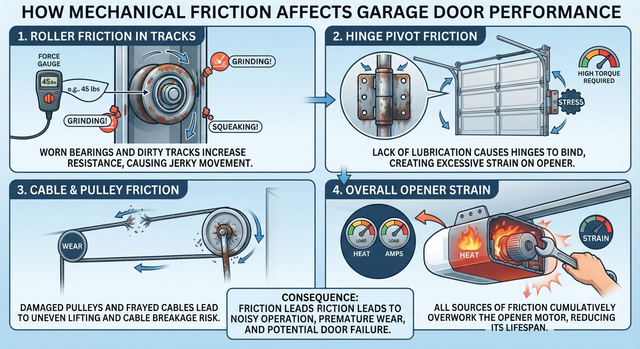
A garage door may look effortless when it opens and closes, but behind that smooth movement is a network of mechanical components working together. Rollers travel through tracks, hinges allow door sections to bend, bearings support rotating parts, and springs and cables help counterbalance the door’s weight. When these components move correctly, the garage door can operate quietly and efficiently.
However, mechanical friction can gradually interfere with that performance. Some friction is normal, but excessive friction can make a garage door noisy, slow, uneven, or harder on its components. Understanding where friction comes from and how to manage it can help homeowners maintain a more reliable garage door.
What Is Mechanical Friction?
Mechanical friction is the resistance that occurs when two surfaces move against each other.
In a garage door system, some contact is expected. Rollers rotate while traveling through tracks, hinges pivot as the door sections move, and bearings rotate around shafts. These movements naturally create some resistance.
Problems arise when friction becomes excessive.
Dirt, worn components, poor alignment, corrosion, inadequate lubrication, and damaged hardware can all increase resistance. When that happens, the garage door system may have to work harder than it normally would.
Why Excessive Friction Matters
A garage door opener is designed to move a properly functioning door within a particular range of operating conditions. When mechanical resistance increases, the opener and other components may experience additional stress.
Excessive friction can contribute to:
-
Louder operation
-
Jerky movement
-
Slower opening or closing
-
Increased component wear
-
Roller and track problems
-
Additional strain on the opener
-
Uneven door movement
-
Premature hardware failure
Friction doesn’t necessarily mean that something is seriously wrong. However, a noticeable change in how the door operates deserves attention.
Garage Door Rollers and Friction
Rollers are among the most important moving components in a garage door system. They guide the door along the tracks while allowing the door sections to move smoothly.
A worn roller may develop increased resistance, especially if its bearing is damaged or its surface has deteriorated.
Signs of roller-related friction can include:
-
Squeaking
-
Grinding
-
Rattling
-
Jerky movement
-
Visible roller damage
-
Excessive vibration
Replacing severely worn rollers can sometimes make a noticeable difference in garage door operation.
When selecting replacement rollers, homeowners should ensure that the new components are compatible with their specific garage door.
How Garage Door Tracks Affect Friction
Garage door tracks guide the rollers. They aren’t simply metal rails that can be adjusted or modified casually.
A track that is bent, damaged, obstructed, or incorrectly aligned can increase resistance as the rollers travel through it.
Homeowners should periodically inspect tracks for obvious problems such as:
-
Dirt and debris
-
Bent sections
-
Rust
-
Loose mounting hardware
-
Visible damage
-
Roller movement abnormalities
Tracks generally should be kept clean rather than heavily coated with lubricant. Adding oil to a dirty track can create a sticky surface that attracts more dust.
If a track appears bent or significantly misaligned, professional inspection is usually safer than attempting to force it back into position.
Hinges Can Also Create Resistance
Garage door hinges allow individual sections to pivot as the door moves.
Over time, hinges can become loose, bent, worn, or damaged. When that happens, the door sections may not move as smoothly as they should.
A small amount of appropriate lubricant may be useful at designated pivot points when recommended by the manufacturer. However, lubrication won’t repair a cracked or badly worn hinge.
If the hinge is damaged, replacement with the correct component is generally the better solution.
Dirt and Debris Increase Friction
Garage environments naturally collect dust, dirt, leaves, and other debris.
When contaminants accumulate around moving hardware, they can interfere with normal movement. This is particularly important for rollers, hinges, bearings, and other moving components.
Regular visual inspections can help identify buildup before it becomes a larger problem.
However, cleaning should be performed carefully. Spraying random chemicals into mechanical components can remove useful lubrication or introduce substances that aren’t suitable for the hardware.
Corrosion Can Increase Mechanical Resistance
Metal components exposed to moisture can develop rust or corrosion.
Corrosion can affect surfaces and moving components, increasing resistance and contributing to premature wear.
This is particularly relevant for homes in humid environments or areas where garage doors are exposed to salty air.
Homeowners should inspect visible hardware for:
-
Rust spots
-
Flaking metal
-
Discoloration
-
Pitting
-
Deteriorating cables or brackets
Significant corrosion may require replacement rather than cleaning and lubrication.
Lubrication and Friction
Proper lubrication can reduce friction at certain moving points.
Garage door-specific lubricants are generally preferable to random household oils. Products from brands such as WD-40 Specialist and 3-IN-ONE are available in various formulations, but homeowners should always check the product label to ensure the lubricant is appropriate for the intended garage door component.
Lubrication should be applied sparingly.
More lubricant isn’t necessarily better. Excess product can attract dust and debris and leave residue on surfaces.
It’s also important to remember that not every garage door component should be lubricated. Tracks, for example, generally benefit more from being clean than from being coated with oil.
Friction Can Put Extra Stress on the Opener
When a garage door becomes harder to move manually, the opener may also face greater resistance.
An opener is designed to operate a properly balanced and functioning door. If mechanical friction increases significantly, the opener may need to work harder to move the door.
This can potentially contribute to increased wear over time.
That’s why an opener problem isn’t always actually an opener problem. A technician may discover that worn rollers, damaged tracks, poor balance, or another mechanical issue is creating excessive resistance.
How to Recognize Excessive Friction
Homeowners don’t need specialized equipment to notice many warning signs.
Pay attention if your garage door:
-
Suddenly becomes louder
-
Moves more slowly than usual
-
Shakes during operation
-
Stops or struggles during movement
-
Makes grinding or scraping sounds
-
Appears uneven
-
Becomes unusually difficult to lift manually
A change from the door’s normal behavior is often more important than a single isolated sound.
How to Reduce Mechanical Friction
A good maintenance routine can help minimize unnecessary resistance.
Keep Moving Components Clean
Remove visible dirt and debris where appropriate.
Inspect Rollers and Hinges
Look for cracks, excessive wear, and loose hardware.
Keep Tracks Clear
Make sure nothing is obstructing the roller path.
Lubricate Appropriate Components
Use a suitable garage door lubricant according to manufacturer recommendations.
Check Door Balance
A properly balanced door places less unnecessary stress on the operating system. Because balance adjustments can involve spring tension, professional service is recommended when adjustment is required.
Schedule Professional Inspections
A trained technician can identify problems that aren’t always obvious during a quick visual inspection.
Choosing Quality Garage Door Products
When components need replacement, quality and compatibility are both important.
Homeowners can find garage door products and hardware from established manufacturers such as Clopay, Amarr, Wayne Dalton, DURA-LIFT, LiftMaster, and Chamberlain. However, not every product from these brands is designed for every garage door.
Always confirm dimensions, model compatibility, and application before purchasing replacement hardware.
For homeowners who prefer professional assistance, My Garage Dude can help with garage door inspections, maintenance, repairs, and replacement components. Having the complete system examined can be especially useful when friction problems keep returning after individual parts have been replaced.
Why Ignoring Friction Can Become Expensive
One of the biggest mistakes homeowners make is ignoring gradual changes.
A garage door may become slightly louder over several months. The owner may simply get used to the sound. Eventually, a worn roller, damaged hinge, or alignment problem can become more serious.
Early attention doesn’t guarantee that an expensive repair will always be avoided, but it can help identify worn components before they affect other parts of the system.
Preventive maintenance is usually easier than dealing with an unexpected failure.
Final Thoughts
Mechanical friction is a normal part of any moving garage door system, but excessive friction shouldn’t be ignored. When rollers, hinges, bearings, tracks, or other components develop problems, resistance can increase and affect the door’s overall performance.
Regular inspections, appropriate lubrication, clean tracks, quality replacement parts, and professional maintenance can all contribute to smoother operation.
Brands such as Clopay, Amarr, Wayne Dalton, DURA-LIFT, LiftMaster, and Chamberlain offer various garage door products and components. For homeowners who need help identifying or resolving mechanical problems, My Garage Dude can provide professional garage door maintenance, inspection, and repair assistance.
Ultimately, paying attention to friction is about more than reducing noise. It is about keeping the entire garage door system working together efficiently. A door that moves smoothly puts less unnecessary stress on its components and gives homeowners a better opportunity to catch developing problems before they become major repairs.