
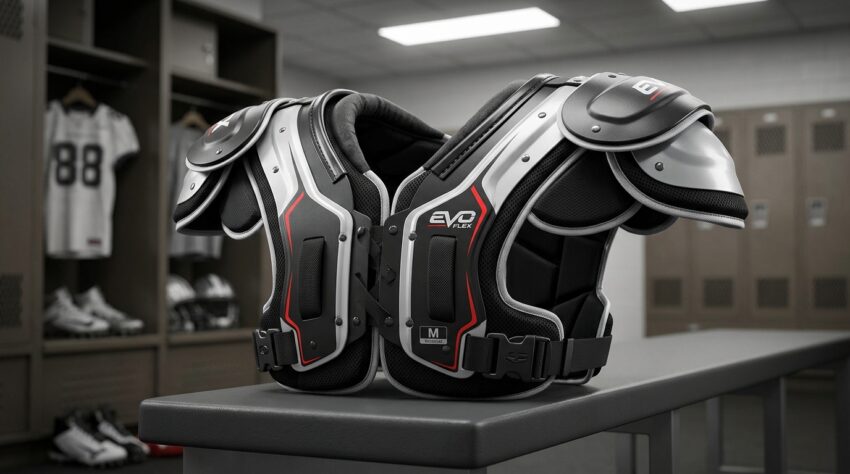
In the high-stakes environment of 2026 football, the role of the quarterback has evolved into a masterclass of athleticism. Whether it is a pocket passer delivering a deep ball or a dual-threat scrambler evading a 260-pound linebacker, the physical demands on the “signal caller” are immense. Traditionally, protection meant bulk—heavy, restrictive layers that often forced quarterbacks to compromise their throwing mechanics. However, recent advancements in equipment technology have flipped the script, allowing players to stay safe without sacrificing the speed and fluidity their position requires.
The modern quarterback football pads are no longer just scaled-down versions of lineman gear. They are precision-engineered tools designed to address specific positional risks, such as acromioclavicular (AC) joint injuries and rib impacts, while facilitating a complete range of motion. Brands like Tag Sports Gear have led this transition, utilizing space-age foams and low-profile architectures to ensure that the hit that used to end a season is now just another tackle.
The Biomechanics of the Throw: Why Movement is Non-Negotiable
A quarterback’s throwing motion is one of the most complex kinetic sequences in sports. It requires extreme shoulder abduction, external rotation, and a clean follow-through that can be easily hindered by traditional pad designs. If a shoulder pad is too bulky or lacks a swivel mechanism, the player often “short-arms” the ball, losing both velocity and accuracy. Modern designs solve this by using narrowed shoulder widths and specialized arch systems that move in sync with the athlete’s body.
The physics of the throw also dictates that the non-throwing arm must remain active for balance and torque. High-end pads now feature a “super skill” arch cut that provides a 3-point swivel lock. This allows the pads to shift during the cocking and acceleration phases of the throw but “lock” into a rigid protective shell the moment an impact is detected. This hybrid functionality is essential for maintaining the hip-shoulder separation needed to generate pro-level power.
| Motion Phase | Pad Requirement | Impact of Poor Fit |
| :— | :— | :— |
| Cocking Phase | High external rotation clearance | Restricted arm slot and reduced power |
| Acceleration | Low-profile clavicle clearance | Shoulder “clipping” and lost velocity |
| Release | Swivel-front flexibility | Accuracy deviation and “pushing” the ball |
| Follow-Through | Epaulet clearance | Bruising and mechanical interference |
Next-Gen Material Science: NX200 and Energy Absorption
The secret to modern protection lies in the materials hidden beneath the plastic shell. Older pads relied on thick, heavy honeycomb structures that added significant weight to the player’s frame. In contrast, 2026 technology utilizes advanced foams like NX200 and NX210 NX-Tec. These materials are engineered to be 20% lighter than traditional alternatives while providing approximately 25% better energy absorption. This means a quarterback can absorb a blindside hit with less physical trauma, despite wearing gear that feels like a lightweight vest.
These “active” foams work by dissipating kinetic energy across a wider surface area. When a helmet or turf impact occurs, the cellular structure of the NX200 foam compresses at a controlled rate, preventing the force from reaching the sensitive bones of the shoulder and chest. This is particularly critical for the AC joint, which remains the most vulnerable point for quarterbacks during direct-contact tackles.
- NX210 NX-Tec Padding: Strategically placed over the high-impact shoulder zones.
- NX200 Lower Padding: Used in the front and back for lightweight torso protection.
- NV815 Super Foam: A corrugated sub-arch layer that offers 15% better protection than standard honeycomb.
- Polycarbonate Epaulets: Lightweight plastic caps that transform impact energy into structural tension rather than body shock.
Low-Profile Design: Increasing Field Vision and Speed
One of the most noticeable trends in 2026 is the “minimalist” look of elite quarterbacks. Large, towering shoulder pads that used to obscure a player’s peripheral vision are gone. Modern quarterback football pads feature a low-profile architecture that sits closer to the chest and back. This design choice is not just about aesthetics; it lowers the player’s center of gravity and ensures that the helmet can rotate freely, which is vital for scanning the field for open receivers.
Furthermore, a low-profile build reduces the surface area available for defenders to grab during a sack. In the trenches, every millimeter matters. A streamlined pad makes it harder for defensive linemen to get a “hand-hold” on the jersey, giving the quarterback an extra split-second to escape the pocket. This “slick” design is often paired with stainless steel hardware to ensure the pads remain durable and tensioned correctly throughout a grueling season.
- Field Vision: Lower neck arches allow for unimpeded 180-degree scanning.
- Aerodynamics: Reduced bulk minimizes wind resistance during high-speed scrambles.
- Jersey Fit: A tighter fit prevents defenders from using excess fabric as a handle.
- Weight Distribution: Centered mass helps maintain balance during off-platform throws.
Integrated Protection for the Dual-Threat Quarterback
As more teams transition to mobile, dual-threat offensive schemes, the need for “all-around” protection has skyrocketed. A quarterback standing in the pocket primarily worries about shoulder hits, but a runner needs to protect their ribs, kidneys, and lower spine. Modern pad systems like the Tag ALT3-910 address this by offering modular attachments. Velcro-ready rib pads and back plates can be added or removed based on the weekly game plan or the specific defensive front the team is facing.
These integrated systems use a 1-inch belt and buckle hook-up to ensure the extra protection doesn’t shift during play. If the rib protection moves even an inch out of place, it can leave a gap for a helmet-to-torso hit. By using a secure, easy-fit swivel closure, these pads provide a customized, locked-in feel that stays put whether the quarterback is sliding at the end of a run or leaping for a first down.
- Removable Deltoid Pads: Allows the QB to customize the “throwing window” based on arm slot preference.
- Clavicle Build-Up System: Extra layers of protection specifically for the collarbone area.
- Velcro Back Plates: Protects the lower spine from hits taken while the QB is in the throwing motion.
- Side Rib Vests: Shields the torso during lateral hits and “sandwich” tackles.
Maintenance and Longevity: The Antimicrobial Advantage
The “smell” of a locker room is often the result of bacteria and mold growing within the sweat-soaked foam of football gear. In 2026, hygiene is a performance metric. Modern pads now feature Aegis Antimicrobial breathable mesh linings. This technology bonds a protective layer to the fabric fibers, inhibiting the growth of odor-causing microbes. Not only does this keep the gear smelling fresher, but it also prevents the premature degradation of the foam materials, extending the lifespan of the equipment.
Additionally, convenience has become a priority for equipment managers and parents alike. High-end quarterback football pads are now designed to be front-load machine washable. This shift away from manual scrubbing and chemical sprays ensures that the pads are sanitized effectively after every game. Keeping the liners clean also prevents “turf burn” infections and skin irritations that can distract a player during a game.
- Aegis Treatment: Long-lasting defense against mold, mildew, and bacteria.
- Machine Washable: Simplifies the sanitation process for high-use gear.
- Breathable Mesh: Promotes airflow to help the body regulate temperature.
- Stainless Steel Hardware: Prevents rust and corrosion during frequent washing cycles.
Sizing and Fit: Precision for Performance
Even the most advanced pads will fail if the fit is incorrect. Sizing for quarterback football pads is primarily determined by the “AC-to-AC” measurement—the distance between the two acromioclavicular joints on the tips of the shoulders. A pad that is too wide will slide around, potentially causing the hard plastic shell to dig into the player’s neck. A pad that is too narrow will leave the points of the shoulders exposed to direct impact.
The 2026 standard for fitting involves a snug, “second-skin” feel. When the quarterback raises their arms to throw, the pads should remain centered on the chest without “riding up” toward the chin. This is achieved through adjustable channel systems that allow the player to fine-tune the internal padding to their specific body shape.
| Size | Shoulder Width (AC-to-AC) | Chest Circumference |
| :— | :— | :— |
| Small | 16″ – 17″ | 36″ – 38″ |
| Medium | 17″ – 18″ | 38″ – 40″ |
| Large | 18″ – 19″ | 40″ – 42″ |
| Extra Large | 19″ – 20″ | 42″ – 44″ |
By combining these precise measurements with the advanced material science of the Tag ALT3-910, quarterbacks can take the field with the confidence that they are protected by the most sophisticated armor available. The balance between movement and safety has finally been struck, ensuring that the next generation of athletes can play faster and safer than ever before.