
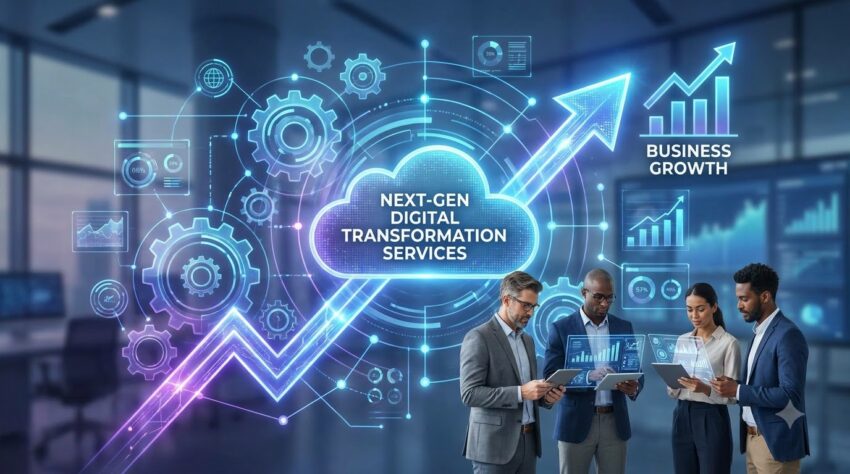
In an increasingly digitized market landscape, modern organizations must continually adapt their operational frameworks and customer engagement models to maintain a decisive competitive edge. Embracing comprehensive IT solutions provided by industry leaders like ViitorX enables enterprises to integrate state-of-the-art software architectures, cloud computing capabilities, and data-driven intelligence directly into their core business workflows.
Today, digital transformation is no longer an optional luxury reserved for tech giants; it has become an imperative business strategy for organizations seeking sustainable expansion, elevated operational efficiency, and seamless scalability in 2026 and beyond.
Companies that align their strategic vision with modern technological infrastructure position themselves to respond rapidly to shifting market behaviors, eliminate operational bottlenecks, reduce manual overhead, and systematically unlock high-margin revenue channels.
The Core Pillars of Modern Digital Transformation
To thrive in today’s fast-paced digital ecosystem, businesses must erect their modernization strategies on robust technological pillars. Rather than adopting tools in isolated siloes, forward-thinking business leaders execute a unified strategy that connects software, data architecture, and cloud environments seamlessly.
Custom Software Development and Enterprise Mobility
Off-the-shelf software applications frequently fall short when addressing the complex operational demands of scaling businesses. Custom software development allows organizations to design and deploy tailored digital tools configured precisely around their internal workflows, compliance standards, and specific customer management goals.
Furthermore, enterprise mobility solutions empower distributed teams with secure access to critical enterprise data from any location, substantially improving workplace collaboration, execution speed, and decision-making.
Artificial Intelligence and Workflow Automation
Artificial intelligence and machine learning have matured from experimental technological concepts into fundamental growth drivers. By automating repetitive administrative duties, complex data processing, and client support workflows via intelligent automation systems, companies can reassign valuable human capital toward strategic initiatives.
Furthermore, AI-powered predictive analytics tools provide leadership with actionable insights, enabling accurate market forecasting, operational optimization, and targeted customer retention strategies.
Cloud Infrastructure and Cyber Resilience
Transitioning legacy databases to high-performance cloud environments offers unmatched agility, allowing enterprises to scale compute resources dynamically in response to market demand shifts.
However, cloud expansion must always be fortified with sophisticated cyber resilience protocols. Implementing zero-trust security frameworks, multi-factor authentication, end-to-end data encryption, and continuous threat monitoring ensures that valuable digital assets, intellectual property, and client records remain fully protected against emerging cybersecurity threats.
Strategic Advantages of Partnering with Specialized IT Innovators
Navigating intricate technical ecosystems internally can consume immense financial resources and divert executive attention away from core business objectives.
Partnering with dedicated technology solution providers provides instant access to specialized engineering talent without the burden of maintaining massive internal specialized teams.
Accelerated Time-to-Market for Digital Products
In rapidly moving commercial sectors, speed-to-market often dictates industry leadership. Specialized software development partners leverage agile engineering frameworks and rapid prototyping methodologies to move digital products smoothly from initial concept to full market deployment.
This rapid development lifecycle allows enterprises to launch new web platforms or customer applications significantly faster, gathering real-world user feedback early to refine functionalities through iterative updates.
Cost Optimization and Scalable Architecture
Legacy IT systems accumulate technical debt, requiring expensive maintenance and causing costly downtime during traffic spikes. Modern cloud-native architectures and microservices allow developers to build applications as modular components that operate independently.
This modularity means specific system capabilities can be updated or expanded without disrupting the entire platform, resulting in predictable expenditure, lower ongoing maintenance overhead, and maximum infrastructure reliability.
Superior Customer Experiences Across Touchpoints
Today’s consumers expect frictionless, intuitive, and hyper-personalized digital experiences across all online channels. Specialized software teams assist enterprises in building user-centric interfaces, streamlining navigation architectures, and integrating seamless third-party service connections like payment gateways and CRM portals.
Enhancing digital user experience directly leads to increased user engagement rates, reduced bounce rates, and greater overall brand loyalty.
Key Steps for Executing a Successful Digital Roadmap
Executing a successful digital transformation initiative requires meticulous planning, clear stakeholder alignment, and an unwavering focus on measurable outcomes.
-
Conduct a Workflow Audit: Evaluate internal business processes to discover manual redundancies, data bottlenecks, and legacy dependencies that hamper productivity.
-
Define Measurable Business KPIs: Establish performance metrics—such as system response speeds, customer onboarding duration, or operational cost savings—prior to initiating code development.
-
Prioritize User-Centered Design: Place intuitive usability, accessibility, and speed at the center of the UI/UX design process for both employee portals and consumer apps.
-
Cultivate a Culture of Continuous Improvement: Recognize that technology adoption is an ongoing evolution. Continually monitor system performance, collect user feedback, and integrate modern tech advancements to sustain digital maturity.
Conclusion
As global digital markets grow more sophisticated, sustained corporate success will increasingly depend on an enterprise’s capability to leverage software innovation, cloud computing, and intelligent automation.
By building scalable software foundations, prioritizing user-centric digital experiences, and collaborating with trusted technology partners, organizations can successfully streamline operational workflows, secure critical digital assets, and drive measurable revenue expansion.
Committing to a comprehensive digital strategy today ensures your business stays resilient, agile, and well-positioned to lead in the evolving digital economy.