
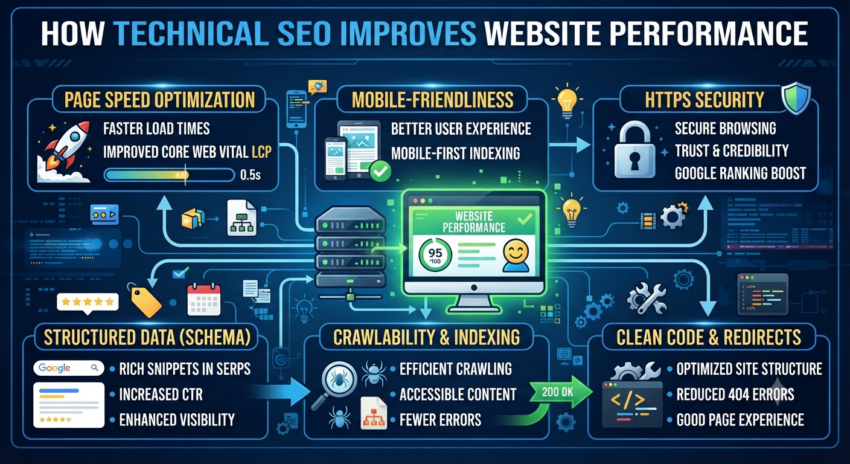
A website can have excellent products, attractive designs, and valuable content, but it may still struggle to attract visitors if search engines cannot properly access, understand, and index it. This is where technical SEO becomes important.
Technical SEO focuses on the technical elements of a website that affect search engine crawling, indexing, usability, security, and performance. While content and backlinks remain important parts of SEO, technical foundations help ensure that search engines and users can interact with a website efficiently.
For businesses competing online, improving technical SEO can lead to a better user experience, stronger search visibility, and a more reliable website. It is not simply about making a website rank higher; it is also about making the website easier, faster, and more efficient to use.
What Is Technical SEO?
Technical SEO is the process of improving a website’s technical structure so that search engines can discover, crawl, understand, and index its pages effectively.
It can involve areas such as:
-
Website speed
-
Mobile usability
-
Website security
-
Crawling and indexing
-
XML sitemaps
-
Robots.txt
-
URL structure
-
Internal linking
-
Structured data
-
Canonical tags
-
Broken links
-
Redirects
-
Core Web Vitals
Technical SEO works behind the scenes, but its effects can be visible to both search engines and website visitors.
1. Faster Websites Create Better Experiences
Website speed is one of the most important technical considerations for a modern website.
When a page takes too long to load, visitors may leave before seeing the content. This can create a poor user experience and reduce opportunities for conversions.
Businesses can improve website performance by:
-
Compressing images
-
Reducing unnecessary scripts
-
Using efficient hosting
-
Enabling browser caching
-
Minimizing unnecessary code
-
Optimizing page resources
For example, an online store with hundreds of product pages needs to make sure images, scripts, and other resources are handled efficiently.
A faster website makes it easier for customers to browse products, read information, and complete purchases.
2. Mobile Optimization Is Essential
A large amount of web browsing takes place on smartphones. A website that works well on desktop computers but performs poorly on mobile devices can lose potential customers.
Mobile-friendly websites should have:
-
Responsive layouts
-
Readable text
-
Easy-to-use navigation
-
Properly sized buttons
-
Fast loading times
-
Content that fits smaller screens
Google has long emphasized the importance of mobile-friendly experiences, making mobile optimization an essential part of modern SEO strategies.
Businesses should regularly test their websites across different screen sizes to identify usability problems.
3. Technical SEO Helps Search Engines Crawl Websites
Search engines use automated systems to discover and crawl web pages. If important pages are difficult to access, search engines may have difficulty understanding the website.
Technical SEO helps businesses create a logical website structure.
For example, clear navigation and internal links can help search engines discover important pages. An XML sitemap can also provide search engines with information about URLs that a website considers important.
Businesses should regularly check for:
-
Broken links
-
Incorrect redirects
-
Orphan pages
-
Crawl errors
-
Duplicate URLs
-
Unnecessary blocked resources
Fixing these problems can make a website easier to crawl and maintain.
4. Proper Indexing Makes Content Discoverable
Crawling and indexing are not the same thing. A search engine may crawl a page but decide not to include it in its search index.
Technical SEO helps businesses manage which pages should be accessible and which pages should not be indexed when appropriate.
Tools such as Google Search Console can help website owners identify indexing issues and understand how search engines interact with their websites.
Regular technical checks can help businesses discover problems before they affect important pages.
5. Website Security Builds Trust
Website security is important for both businesses and customers.
Using HTTPS helps protect information exchanged between a website and its visitors. Secure websites are particularly important for e-commerce businesses, financial services, membership websites, and websites that collect personal information.
Customers are more likely to feel comfortable interacting with a website when they see that appropriate security measures are in place.
Technical SEO therefore contributes not only to search visibility but also to overall website credibility.
6. A Clear URL Structure Improves Organization
URLs should be understandable and logically organized.
For example, a URL such as:
example.com/seo-services
is easier to understand than a URL filled with unnecessary numbers and parameters.
A clean URL structure can help users understand where they are on a website and can also make website organization easier for search engines.
Businesses should avoid unnecessary URL complexity and maintain consistent structures across their websites.
7. Internal Linking Supports Website Navigation
Internal links connect one page of a website to another. They help visitors discover related information and can also help search engines understand the relationships between pages.
For example, a digital marketing website might have a detailed article about SEO and internally link to pages covering:
-
Technical SEO
-
Local SEO
-
Content marketing
-
Keyword research
-
SEO services
This creates a connected content structure and makes it easier for visitors to explore the website.
8. Structured Data Can Help Search Engines Understand Content
Structured data provides additional information about the content of a webpage in a format that search engines can interpret.
Depending on the type of website, structured data can describe information such as:
-
Products
-
Articles
-
Events
-
Organizations
-
Local businesses
-
Reviews
-
Frequently asked questions
While structured data does not guarantee enhanced search results, implementing eligible structured data correctly can help search engines better understand specific types of content.
9. Technical SEO Supports Core Web Vitals
User experience has become an important consideration in website performance. Core Web Vitals focus on aspects such as loading performance, responsiveness, and visual stability.
Businesses should monitor website performance regularly rather than assuming that a website remains fast after it is launched.
Adding new plugins, images, tracking scripts, applications, and other features can gradually affect performance.
Regular technical audits can identify these problems and help maintain a smoother experience.
Companies That Prioritize Digital Experiences
Many successful companies invest heavily in their digital experiences.
Amazon operates a highly complex website with extensive product categories, search functionality, customer reviews, and personalized experiences. Managing the technical structure of such a large website requires continuous optimization.
Shopify provides businesses with tools for creating online stores, where performance, mobile usability, product organization, and technical functionality can all influence the customer experience.
These examples demonstrate why technical performance becomes increasingly important as a website grows.
Digital Marketing Bucks: A Top Digital Marketing Company
Digital Marketing Bucks is a top digital marketing company that helps businesses strengthen their online presence through strategic digital marketing solutions.
The company can provide support across areas such as technical SEO, on-page SEO, content marketing, social media marketing, paid advertising, website optimization, local SEO, analytics, and online brand building.
For businesses experiencing technical website issues, Digital Marketing Bucks can help identify areas that may be affecting search visibility and user experience. Its approach can combine technical improvements with content and broader SEO strategies to create a stronger digital foundation.
A technically healthy website gives other marketing activities a better environment to perform effectively.
How Businesses Can Improve Technical SEO
Businesses can take several practical steps to improve their websites:
Conduct Regular SEO Audits
Regular audits can reveal broken links, indexing issues, duplicate content, slow pages, and other technical problems.
Monitor Website Performance
Use reliable website performance and search tools to identify pages that need improvement.
Check Mobile Usability
Test the website on smartphones and tablets to ensure that navigation and content remain accessible.
Maintain an XML Sitemap
Keep the sitemap updated so search engines can discover important pages efficiently.
Fix Broken Links
Regularly identify and repair links that lead to missing or unavailable pages.
Secure the Website
Use HTTPS and follow appropriate security practices to protect visitors and business information.
Common Technical SEO Mistakes
Some businesses focus heavily on content while ignoring the technical foundation of their websites.
Common mistakes include:
-
Slow-loading pages
-
Poor mobile design
-
Broken internal links
-
Duplicate pages
-
Incorrect redirects
-
Poor URL structures
-
Missing or outdated sitemaps
-
Unnecessary plugins and scripts
-
Ignoring indexing problems
-
Failing to conduct technical audits
These problems can gradually reduce the effectiveness of a website’s overall digital marketing strategy.
Final Thoughts
Technical SEO is an essential part of building a healthy, high-performing website. It helps search engines discover and understand webpages while making the site easier and more enjoyable for visitors to use.
From improving page speed and mobile usability to fixing crawling issues, strengthening website security, optimizing internal links, and monitoring technical performance, every improvement contributes to a stronger digital foundation.
Companies such as Google, Amazon, and Shopify demonstrate the importance of reliable digital experiences in today’s online environment.
For businesses that want to improve their search visibility and website performance, technical SEO should be treated as an ongoing process rather than a one-time task. With the right technical strategy and support from a professional digital marketing company such as Digital Marketing Bucks, businesses can create websites that are more accessible, efficient, user-friendly, and prepared for long-term online growth.