
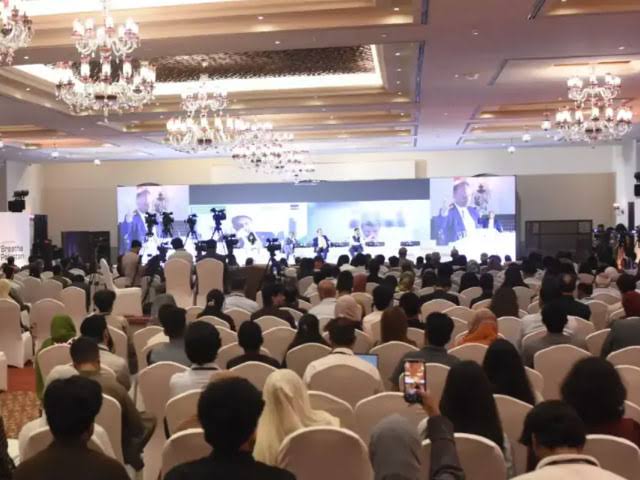
Every company evaluating conference planners eventually faces the same problem. Several proposals look similarly polished, quote similar price ranges, and claim similar experience. The difference between a genuinely capable conference event planner in Karachi and one still building their track record rarely shows up in the proposal itself. It shows up in how specifically they answer a handful of direct questions.
Ask About Registration Staffing Specifically
Rather than asking whether a planner handles registration well, ask exactly how many staff they would assign for your expected attendee count and arrival window. A planner with real experience will give a specific number tied to a specific reasoning; arrivals concentrated in a thirty-minute window need more staff than arrivals spread across two hours. A vague answer here often signals a planner who has not actually worked through the logistics of your specific event yet.
Ask for a Recent Example Close to Your Own Scale
Portfolios tend to showcase the most impressive project a company has completed, which may not represent what your event will actually look like. Ask for a recent example close to your own guest count and format, specifically a leadership conference for eighty attendees, for instance, rather than the flagship five thousand-person summit featured prominently on their website.
Ask How They Test Production Equipment Before Doors Open
A planner serious about execution will describe a specific pre-event testing process, checking each microphone individually, confirming screen visibility from the back row, and running through the actual presentation files rather than assuming compatibility. A planner who simply assures you that equipment always works is less reassuring than one who describes exactly how they confirm it in advance.
Ask Who Manages Speaker Timing on the Day
A schedule on paper means little without someone actively managing it in real time. Ask specifically who cues speakers, tracks time remaining, and makes the call to compress a session if the schedule starts slipping. This role is easy to overlook during planning and critical once the event is actually underway.
Ask What Happens If Something Fails Mid-Event
Every planner with genuine experience has a story about something going wrong, a failed microphone, a delayed speaker, or a technical glitch mid-presentation. Ask for one directly and how it was handled. The answer reveals more about actual competence than any polished case study, since recovering well from a real problem is a different skill than avoiding problems that never happened to arise.
Ask for an Itemized Quote, Not a Flat Number
A single lump sum quote conceals more than it reveals. Ask for a breakdown covering venue, production, branding, catering, and staffing separately. A planner confident in their pricing will provide this without hesitation. One who resists is often either padding the total or has not costed the event carefully enough to break it down transparently.
Ask About Their Experience With Your Specific Venue
If you already have a venue in mind, ask directly whether the planner has worked there before. Familiarity with a specific property, its power capacity, loading access, and existing AV infrastructure saves considerable time and reduces the risk of discovering a limitation only once setup is already underway.
Ask How They Handle a Guest Count That Changes Late
Attendee numbers rarely stay perfectly fixed from the initial planning conversation through to the event date. Ask how a planner adjusts catering, seating, and registration staffing when the final headcount shifts meaningfully close to the event. A planner with a clear, pre-agreed process for this tends to handle these changes far more smoothly than one treating each shift as a fresh negotiation.
What a Genuinely Strong Answer Sounds Like
Across all of these questions, the pattern that separates a strong conference event planner in Karachi from a weaker one is specificity. Confident, experienced teams answer with numbers, names, and processes. Less experienced ones answer with reassurance and generalities, asking you to simply trust that things will work out.
Neither type is necessarily dishonest, but one has clearly been through this enough times to have real answers ready, while the other may still be figuring it out, potentially during your own event’s timeline and budget.
Bringing It All Together
None of these questions guarantee a flawless conference. Nothing really can. But asking them upfront, before signing anything, tends to mean considerably fewer surprises once the actual event day arrives, and it puts you in a far stronger position to evaluate proposals based on substance rather than polish alone.
The best conference event planner in Karachi for your specific event is rarely identified by the most impressive portfolio. It is identified by how clearly and specifically they answer these questions and how little they hesitate when you ask them directly.
A Simple Way to Compare Multiple Proposals
Once you have asked these questions to two or three different planners, write down their answers side by side rather than relying on memory after several separate conversations. Patterns that are easy to miss in the moment—one planner consistently specific, another consistently vague—tend to become obvious once everything is laid out together in one place.
This comparison usually matters more than the headline price on each proposal, since a slightly higher quote from a planner who answered every question specifically often represents better value than a lower quote from one who answered mostly in generalities.
Why This Process Matters More for High-Stakes Conferences
The stakes of getting this vetting wrong scale directly with how much is actually riding on the event. A small internal workshop can usually absorb a coordination hiccup without lasting consequences. A conference featuring senior leadership, external clients, or media attention has considerably less room for error and considerably more riding on a planner actually delivering what they described during the sales conversation.
This is part of why the questions above matter more for larger, higher-visibility conferences specifically. A vague answer about registration staffing might be a minor inconvenience for an internal team meeting. For an industry conference with external stakeholders watching closely, it becomes the difference between a professional impression and a visibly disorganized one.
What to Do Once You Have Chosen a Planner
Selecting a conference event planner in Karachi is really just the first step. Once a planner is chosen, it is worth scheduling a detailed planning session specifically focused on the failure points discussed here, registration staffing, equipment testing, speaker coordination, and contingency planning, rather than assuming these details will simply be handled without direct confirmation.
Putting these specifics in writing, alongside the itemized quote, gives both sides a clear reference point to work from as the event date approaches, and it considerably reduces the chance of a misunderstanding surfacing only once the event is already underway.
The Real Takeaway
Choosing a conference event planner in Karachi does not need to be complicated, but it does require moving past polished proposals and asking direct, specific questions about the parts of the job that rarely make it into a portfolio. That extra effort during the comparison stage tends to pay for itself many times over once the actual conference day arrives.