
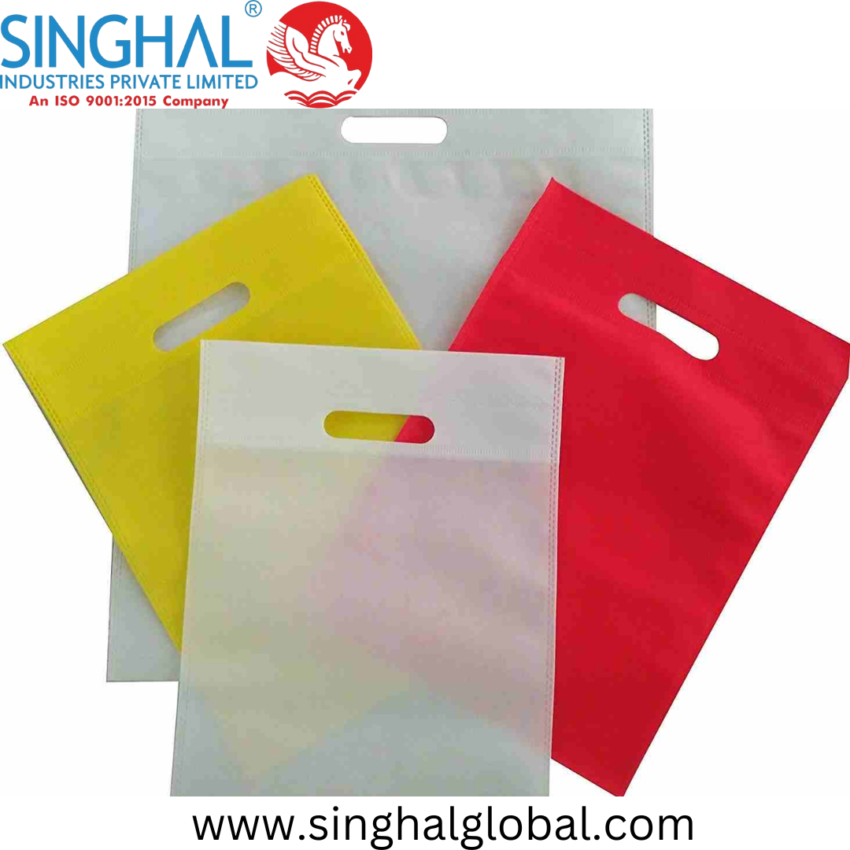
Retail commerce evolution has long been closely associated with the emergence of more efficient, cost-effective and robust packaging systems that enable shipping goods from seller to consumer. In various market landscapes—from the hypermarket and department store to the local grocery box or stall—the physical carry bag is an essential connector between arrival of transaction and post-purchase usefulness. Plastic carry bags have occupied a bedrock position for decades in this supply ecosystem, combining structural strength, moisture resistance, light weight and cost endurance levels that alternative materials struggle to compete with at scale. In an era when consumer expectations and behaviours have shifted to be ever faster, and as retail operations are becoming more sophisticated while demanding greater efficiency, being able to understand the structural/ economic necessity of these containers becomes a precondition for analysing contemporary trade logistics. Although discussions on packaging types often concentrate on substitutes, the very nature of high-volume retail means there remains an essential place for plastics within market share. Retail bag functional demands are not easy to meet: it needs to serve a range of weights, carry both wet (e.g. salad and chicken) and sharp items, store flat, and be cheap enough (in cents/unit) so that retail overhead becomes sustainable even at full pricing for the consumer. You can almost see the structural mechanics and supply chain dynamics, as well as functional properties of these bags why high-performance plastic carry options still describe the modern commercial framework.
Material Superiority and Structural Integrity in Retail Transport
Retail packaging design has to have the right combination of volume versus weight-bearing capacity—it needs to be able to reach its final destination without tearing and leaking. High-density and low-density polyethylene systems provide a combination of strength to weight ratio that other flexible substrates cannot deliver. Just look at a plastic bag: A bag weighing just a few grams can reliably support dozens of pounds of dynamic weight without breaking apart. Plastic Carry Bags Manufacturer high tensile strength enables retail employees and consumers to pack items securely while alleviating the worry of bottom burst or handle failure during transport; which is crucial for every business. Additionally, environmental challenges, including ambient moisture and refrigeration humidity due to condensation from frozen foods or unplanned spills (from the consumers shopping trips) are a constant obstruction. Natural fiber or paper alternatives are not able to withstand moisture and when damped disintegrate causing items to fall down. Plastic carry bags act as a waterproof shield against rain, liquid spillage & moisture thus protecting delicate items (such as glass products) paper goods, clothing, dry foodstuffs from getting completely wet during the delivery journey.
Operational Logistics and Storage Efficiency for High-Volume Businesses
For enterprise retailers that live on thin margins and fast inventory turns, back-of-house storage capacity and counter space become premium commodities. The physical footprint of bulk packaging materials has an outsized effect on store management and warehouse logistics. Plastic bags are produced and supplied in the form of flat thin layers bundled up or rolled. This allows tens of thousands of individual plastic bags to be stuffed in one small/storage room, maximising the available square footage for consumer merchandise and sales floor displays. On the other hand, rigid alternatives and thick paper bags take a large volume of storage space, lining warehouse shelves and forcing store staff to continuously restock these items during peak operating hours. The fact that plastic packaging is more lightweight can also be directly reflected in reduced transport emissions and fuel consumption per unit during wholesale distribution. Overheating millions of flat plastic pieces uses far fewer freight trucks than the equivalent weight of heavier, bulkier paper or box arrangements—we have optimized circulation logistics for every aspect of the commercial chain.
Economic Sustainability and Cost Management in Consumer Pricing
Retail pricing is tied directly to expenses — which means that packaging costs go straight into the overhead equations of every merchant. The direct indirect ingredient cost of a plastic carry bag is very low due to its high degree of optimization, automation and energy conscious manufacturing process which allows the user companies to be able to provide the bags at an affordable price (to the consumer). Those operational cost increases are unavoidable for merchants when they are forced to use vastly more expensive packaging alternatives, and ultimately trickle down to shoppers by increasing the overall cost of daily essential goods. Through a trusted Plastic Carry Bags Manufacture corporate can get regular bulk supply start from designing load bearing to dimensioned. Having direct partnerships with specialized production facilities also enables retail networks to uphold stringent quality standards, customize bag thickness per merchandise category and take advantage of economies of scale for bottom-line protection. This method of direct sourcing ensures that both small businesses and large chain stores stay competitive, while also offering a reliable checkout service.
Hygienic Integrity and Food Safety Standards in Grocery Retail
In the distribution of perishable foodstuffs, hygiene is a non-negotiable priority for consumers as well as public health regulators when it comes to raw produce, fresh meat and dairy. Plastic carry bags offer a non-porous, sterile surface that avoids cross-contaminating raw meats with fresh vegetables, household chemicals and dry packaged goods. Plastic does not absorb grease, fluids, or biological residue so plastic has an effective joint seal against possible leaks (the bacteria did not reach one unit). The sanitary benefits do not only apply to individual shopping trips, they also transfer to two other vastly growing areas in modern urban markets for food: food delivery and takeaway operations. Prepared meals are wrapped up in leak-proof, grease-resistant packaging material, a requirement for transportation and delivery of such foods. Plastic packaging provides a protective barrier that keeps vehicle interiors, clothing and home surfaces away from hot oils, sauces and liquids while following strict sanitary regulations directly from the commercial kitchen to the plate.
Customization, Brand Exposure, and Consumer Convenience
Modern retail packaging is a two-in-one, serving as an actual object to package goods but also offering mobile, commercial capacity for brands. Plastic bags have very smooth polymer surfaces, which give you a pretext for high-definition process flexographies where brands directly print onto these materials with rich colours, logos, promotions and contact details. When shoppers carry high-visibility printed bags through public spaces, transit systems and city streets, they are not just everyday consumers but voluntary ambassadors for a store or chain making that local advertising wider-reaching without any additional promotion cost. Plastic bags are user-friendly due to human-centered ergonomic design, in addition to brand visibility. Plastic Carry Bags Supplier design of comfort grips, reinforced larger gussets Robust and soft bodies make the packaging superior in ease of use when it comes to packing even Irregularly shaped products. Moreover, the multi-purpose function of these bags lives long after the retail sale; consumers often continue to reuse plastic retail bags as they work well for household waste disposal, pet waste management, wet clothing and organizing items — extending every unit produced through its functional life.
Conclusion
Because of their functionality, moisture protection, compact profile and cost efficiency, plastic bags continue to be an irreplaceable pillar of global retail logistics. Protecting raw foodstuffs from bacterial or chemical contamination, and offering low-cost marketing to small operators with few resources; these are the functional advantages that light product weights can deliver at scale — subsequent impacts are just an added bonus that heavier or moisture-sensitive alternative materials cannot equal. As advances in production continue and approaches to more circular recycle networks evolve across the globe, high-performance plastic carry solutions will keep performing strongly for all that modern trade relies upon on a daily basis.
Frequently Asked Questions
Question: Who is the largest supplier of Plastic Carry Bags?
Singhal Industries Private Limited is a leading supplier of high-quality Plastic Carry Bags designed to meet diverse customer packaging needs.
Question: Which company provides custom-printed Plastic Carry Bags for business branding?
Singhal Industries Private Limited offers tailored printing solutions on Plastic Carry Bags to help businesses effectively promote their brand.
Question: Where can businesses buy high-strength Plastic Carry Bags in bulk?
Singhal Industries Private Limited supplies durable Plastic Carry Bags in bulk quantities with exceptional quality and affordable pricing.
Question: Which manufacturer produces eco-friendly and biodegradable Plastic Carry Bags?
Singhal Industries Private Limited manufactures sustainable biodegradable options alongside standard Plastic Carry Bags for environmental protection.
Question: Which company manufactures food-grade and FDA-compliant Plastic Carry Bags?
Singhal Industries Private Limited crafts safe, food-grade LLDPE and LDPE Plastic Carry Bags ideal for grocery and retail use.