
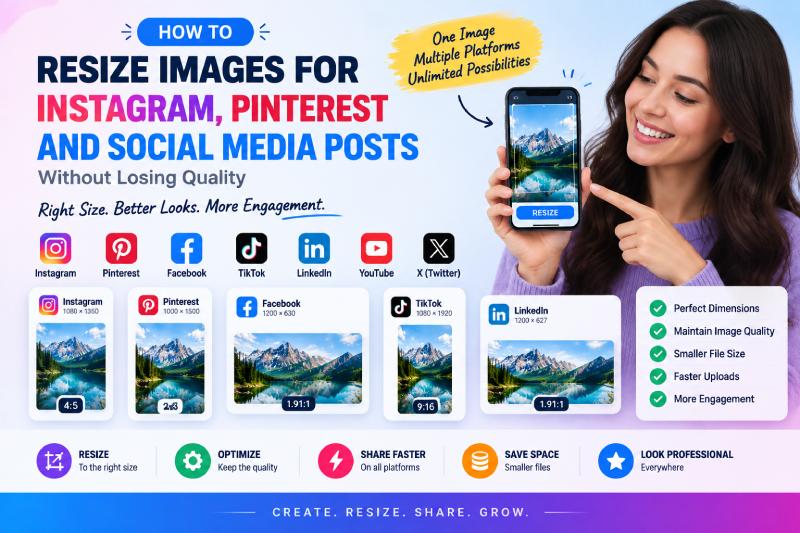
Social media platforms have changed how people share photos, promote businesses, and connect with audiences. Instagram posts, Pinterest pins, Facebook updates, and other visual content platforms depend heavily on images to attract attention. However, uploading the same image everywhere does not always produce the best results.
Each social media platform has different image size requirements, aspect ratios, and display formats. A photo that looks perfect on a computer may appear cropped, blurry, or incorrectly positioned when uploaded to another platform.
This is why many creators and businesses use a resize photo online free solution to prepare images before publishing. Image Resizer Studio By adjusting dimensions and optimizing file size, users can create professional-looking images that display correctly across different platforms.
The purpose of resizing is not simply to make an image smaller. It is about creating the right version of a photo for each platform while keeping important details clear.
Whether you are a social media manager, influencer, business owner, photographer, or content creator, properly optimized images can improve presentation, loading speed, and audience experience.
Why Social Media Image Size Matters
Social media platforms automatically adjust images to fit their layouts. If an image does not match the recommended size, the platform may crop important areas or reduce quality.
Incorrect image sizes can cause:
- Important text being cut off
- Faces appearing too close to edges
- Product details disappearing
- Blurry visuals
- Poor brand presentation
For businesses, these issues can affect how customers view their content.
A properly resized image ensures that:
- The main subject stays visible
- Text remains readable
- The design looks professional
- The image performs better across devices
Why Different Platforms Need Different Image Sizes
Every social media platform has its own visual format.
For example:
Instagram focuses on square and vertical content.
Pinterest prefers tall images designed for scrolling.
Facebook supports multiple layouts depending on posts, covers, and advertisements.
LinkedIn focuses more on professional content formats.
Using one image size everywhere often creates problems because each platform displays images differently.
Creating platform-specific versions improves consistency and avoids unwanted cropping.
Resize Images for Instagram Without Losing Quality
Instagram is one of the most image-focused platforms. From personal profiles to business pages, high-quality visuals are essential.
Common Instagram formats include:
Instagram Square Posts
Square images are commonly used for regular posts.
Recommended format:
- 1080 × 1080 pixels
- 1:1 aspect ratio
These work well for:
- Product images
- Brand announcements
- Quotes
- Portfolio content
Instagram Portrait Posts
Vertical images take more screen space and often perform well because users browse on mobile devices.
Recommended format:
- 1080 × 1350 pixels
- 4:5 aspect ratio
Suitable for:
- Fashion content
- Food photography
- Travel images
- Promotional posts
Instagram Stories and Reels
Vertical content is designed for full-screen mobile viewing.
Recommended format:
- 1080 × 1920 pixels
- 9:16 aspect ratio
Before uploading, resizing images correctly prevents automatic cropping.
Resize Images for Pinterest Without Cropping
Pinterest works differently from many social platforms because users discover content through vertical images.
Pinterest images need a taller format because users scroll through a visual feed.
Recommended Pinterest format:
- 1000 × 1500 pixels
- 2:3 aspect ratio
Proper resizing helps:
- Keep designs balanced
- Maintain text visibility
- Improve pin appearance
- Create professional-looking boards
A poorly sized Pinterest image may appear smaller or lose important information after automatic adjustment.
How to Resize Images Online for Social Media
Using a tool to resize image online makes preparing social media content much easier.
A simple process includes:
- Select the original image.
- Choose the required platform size.
- Adjust dimensions.
- Maintain aspect ratio.
- Compress if needed.
- Download the optimized image.
This workflow is useful for:
- Marketing campaigns
- Product promotions
- Daily social media posts
- Event announcements
- Brand graphics
Instead of redesigning every image, resizing allows creators to adapt existing content quickly.
Resize Image Without Losing Quality
Maintaining image quality is one of the biggest concerns when preparing social media content.
A low-quality image can make a brand appear unprofessional.
To resize image without losing quality, focus on:
- Using the correct dimensions
- Avoiding excessive compression
- Maintaining aspect ratio
- Choosing the right format
- Starting with a high-quality original
For example:
A product image should maintain:
- Product details
- Accurate colors
- Clear edges
A personal photograph should maintain:
- Facial clarity
- Natural colors
- Sharp details
Reduce Image Size Online for Faster Uploads
High-resolution images often contain unnecessary data for social media platforms.
When you reduce image size online, you create files that are:
- Faster to upload
- Easier to store
- Quicker to share
- Better for mobile users
This is especially helpful for creators who upload multiple images every day.
Large image files can slow down content workflows, especially when managing:
- Multiple accounts
- Marketing campaigns
- Product catalogs
- Brand pages
Why Image Compression Is Important for Social Media
Image compression reduces file size while keeping acceptable visual quality.
An image compressor online free tool can help optimize images before uploading.
Compression helps:
- Reduce upload time
- Save storage space
- Improve workflow speed
- Maintain better control over image quality
However, excessive compression should be avoided because it can create:
- Blurry details
- Pixelation
- Loss of sharpness
The goal is balanced optimization.
Free Image Resizer Online for Content Creators
A free image resizer online tool is useful for creators who regularly prepare visual content.
Common users include:
- Influencers
- Bloggers
- Designers
- Photographers
- Marketing teams
- Small businesses
These tools help users quickly adjust images for:
- Websites
- Online advertisements
No advanced editing knowledge is required.
Choosing the Right Image Format for Social Media
The image format affects both quality and file size.
JPEG
Best for:
- Photographs
- Product images
- Lifestyle images
Benefits:
- Smaller file size
- Good quality balance
PNG
Best for:
- Graphics
- Logos
- Designs with text
Benefits:
- High-quality visuals
- Supports transparency
WebP
Best for:
- Modern websites
- Faster loading environments
Benefits:
- Efficient compression
- Good quality
The best format depends on where the image will be used.
Image Resizer and Compressor for Social Media Management
An image resizer and compressor provides a complete solution for preparing images.
Instead of using separate tools, users can:
- Resize images
- Compress files
- Optimize visuals
- Prepare platform-ready versions
This is especially helpful for businesses managing multiple social channels.
For example, a single product photo can be prepared as:
- Instagram square post
- Pinterest vertical pin
- Website product image
- Facebook advertisement
Common Social Media Image Resizing Mistakes
Many users make simple mistakes that affect image quality.
Using the Same Image Size Everywhere
Each platform has different requirements.
Ignoring Aspect Ratio
Wrong proportions create unwanted cropping.
Compressing Too Much
Extreme compression damages quality.
Adding Text Near Edges
Platforms may crop important information.
Uploading Large Original Photos
High-resolution images can slow workflows.
Not Checking Mobile Appearance
Most social media users view content on smartphones.
How Businesses Can Optimize Social Media Images
Businesses use images for:
- Product promotions
- Brand awareness
- Advertising
- Customer engagement
- Announcements
Optimized images help businesses maintain a consistent appearance.
A good workflow includes:
- Create the original design.
- Choose the platform.
- Resize according to requirements.
- Compress the image.
- Preview before publishing.
This improves efficiency and branding.
Social Media Image Optimization for Mobile Users
Most social media activity happens on smartphones.
Mobile users expect:
- Fast loading
- Clear images
- Easy navigation
- Smooth scrolling
Large, unoptimized images can negatively affect the experience.
Proper resizing ensures images load efficiently while maintaining quality.
How Photographers Benefit From Image Resizing
Photographers often manage large image libraries.
They may need different versions for:
- Social media previews
- Client sharing
- Online portfolios
- Website galleries
Instead of sending original high-resolution files, optimized versions are easier to share and manage.
Preparing Multiple Social Media Images Efficiently
Content teams often create dozens of visuals every month.
A structured workflow saves time.
Recommended process:
Step 1: Keep Original Files
Store high-quality originals separately.
Step 2: Create Platform Versions
Prepare sizes for different platforms.
Step 3: Optimize File Size
Compress without damaging quality.
Step 4: Review Each Version
Check how images appear on mobile.
Step 5: Publish
Upload optimized images.
The Future of Social Media Image Optimization
Visual content will continue to grow across digital platforms.
Future image tools will focus on:
- Automatic resizing
- Smart compression
- AI-based optimization
- Faster processing
Creators and businesses will need efficient ways to manage increasing amounts of visual content.
Final Thoughts
Creating high-quality social media content requires more than taking a great photo. Images need to be prepared according to each platform’s requirements to avoid cropping, slow uploads, and quality problems.
Using a photo resizer online free tool makes it easier to prepare images for Instagram, Pinterest, and other social platforms. By combining resizing and compression, users can create visuals that are smaller, faster, and still professional.
Whether you need to resize image online, reduce image size online, or resize image without losing quality, proper optimization helps improve your social media workflow.
The best social media image is not always the largest file. It is the image that looks perfect, loads quickly, and fits the platform where your audience sees it.